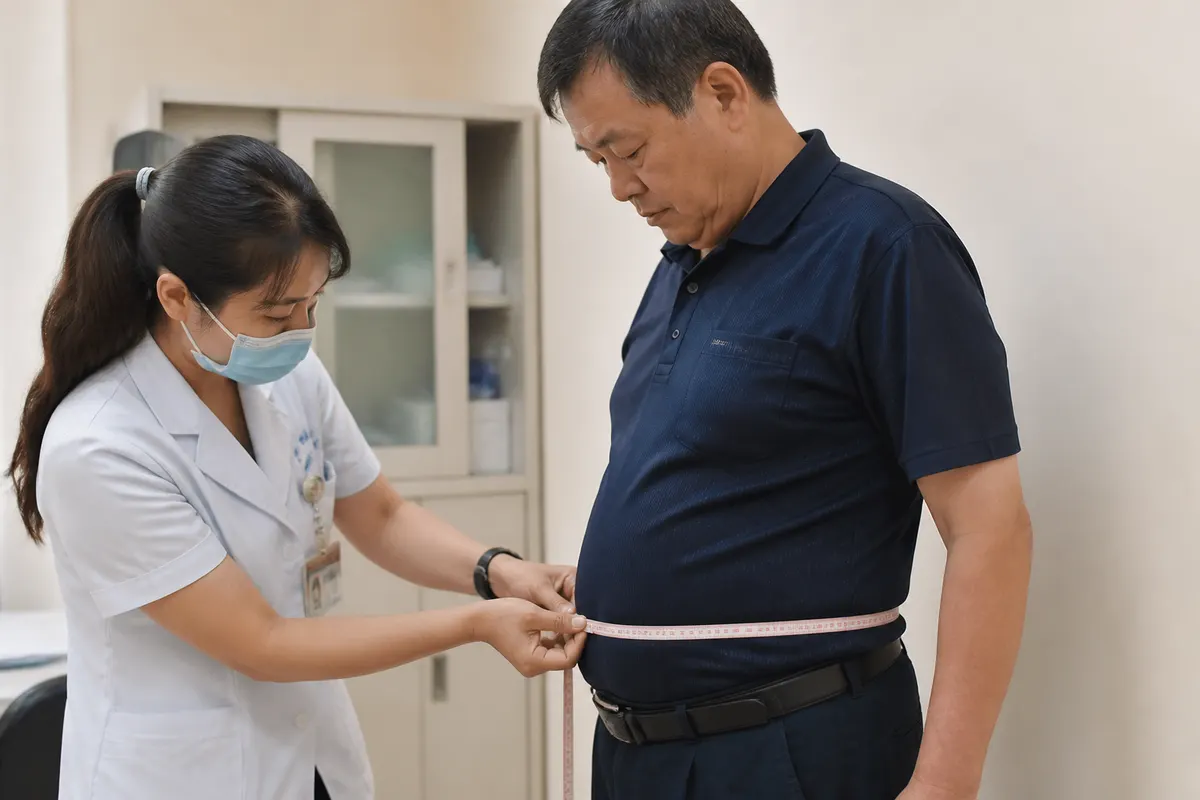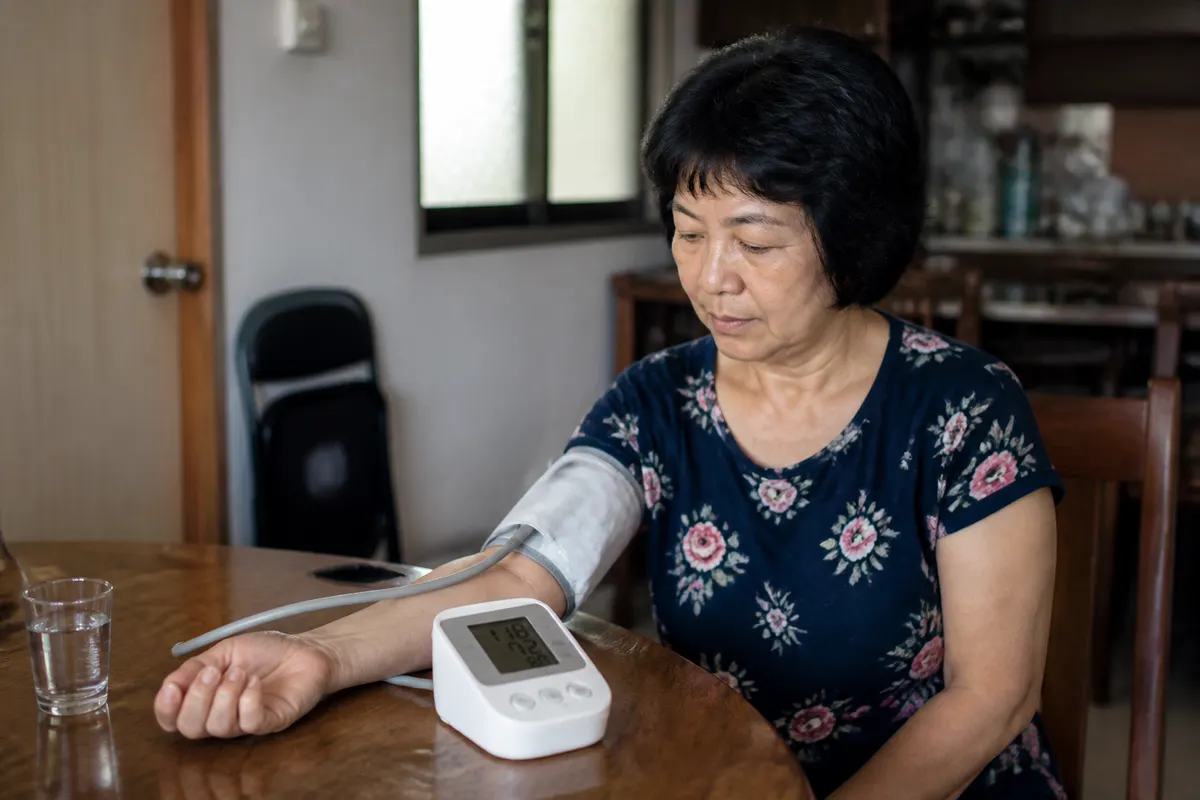
The European Society of Hypertension recommends recording home blood pressure for three to seven days rather than relying on one clinic reading. A seven-day log can reveal white-coat or masked patterns, but diagnostic thresholds and treatment decisions vary by country and individual risk.
The society's 2021 position paper calls for two readings each morning and evening, taken one minute apart after five minutes of seated rest. The paper says whether to discard the first day remains debated when longer logs are available.
Very high readings with symptoms need immediate care
Home monitoring is not a substitute for emergency assessment. The World Health Organization says a reading around 180/120 mmHg or higher accompanied by severe headache, chest pain, breathing difficulty, nausea, vomiting, confusion, dizziness or vision changes requires immediate care. Use the local emergency service when these symptoms occur with a very high reading.
Most hypertension causes no symptoms, so feeling well does not show that a reading is normal. A high result without emergency symptoms still needs clinical review, especially when repeated under correct conditions. Do not start, stop or change blood pressure medicine in response to a home log without the prescribing clinician's judgment.
The 722 method turns 28 readings into one average
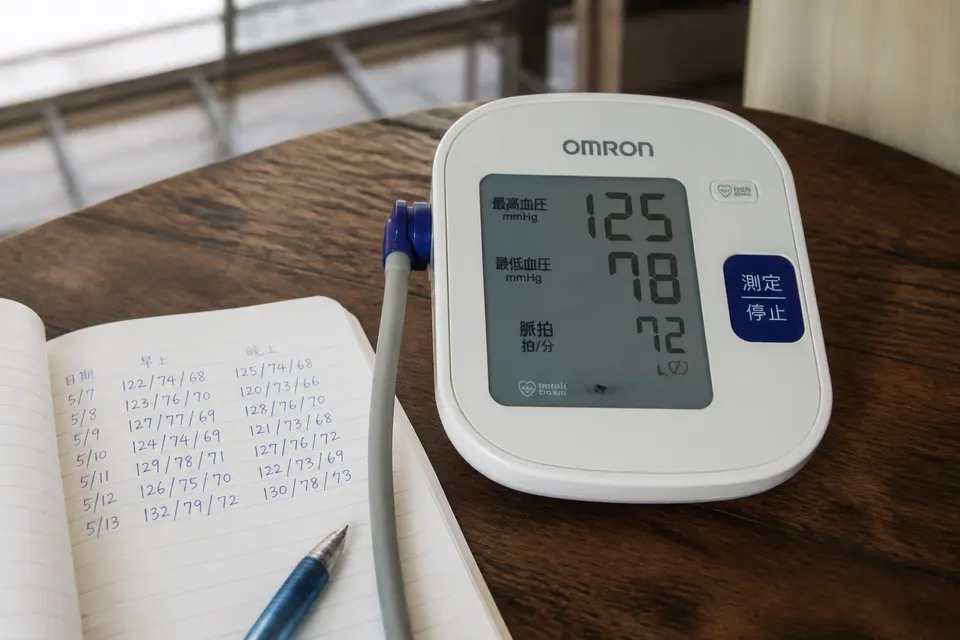
The shorthand 722 means seven days, two measurement sessions a day and two readings at each session. That produces four readings a day and 28 across the week. After excluding day one, average the morning and evening readings from days two through seven rather than selecting the highest or lowest result.
Measure in the morning before breakfast and before taking blood pressure medicine, unless a clinician has set a different schedule. Take the evening session before bed. Use roughly the same times each day, record every result and note unusual circumstances such as acute illness or missed medicine for the clinician who reviews the log.
A shorter schedule can still provide useful information. The European position paper allows three to seven days and prefers seven when practical. The 722 label is common in Taiwan, but the underlying multi-day approach is not a Taiwan-only measurement technique.
Preparation and posture affect the result
Avoid smoking, caffeine, food and exercise for 30 minutes before measuring. Empty the bladder, then sit quietly for five minutes in a room at a comfortable temperature. Do not talk or use a phone during the rest period or measurement.
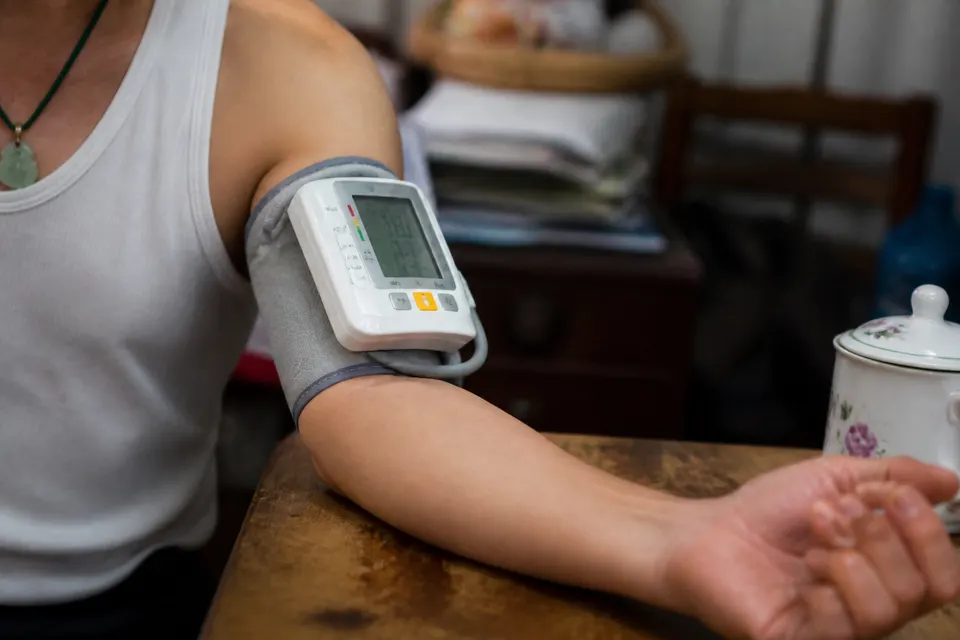
Sit with the back supported, feet flat on the floor and legs uncrossed. Rest the bare arm on a table so the middle of the cuff is at heart level. Keep the arm and hand relaxed, take the second reading after one minute, and use the same arm throughout the log unless a clinician has advised otherwise.
Cuff size and device validation matter as much as posture. STRIDE BP lists independently validated monitors and identifies the populations and cuff sizes covered by each validation study. Its preferred home devices use an upper-arm cuff and can store or transfer multiple readings.
Clinic and home readings can show opposite patterns
White-coat hypertension describes blood pressure above the diagnostic threshold in a clinic but below the relevant threshold at home or on 24-hour ambulatory monitoring. Masked hypertension is the reverse: clinic readings are below the threshold while home or daytime ambulatory readings are high. Neither pattern can be identified from one location alone.
A home log can raise suspicion of either pattern, but a clinician may use 24-hour ambulatory blood pressure monitoring to confirm it. Treatment depends on the full cardiovascular risk assessment, organ health, other conditions and whether the person already takes blood pressure medicine.
Masked hypertension warrants attention because clinic readings can appear reassuring. A 2018 meta-analysis of nine observational studies and 14,729 participants associated masked hypertension with higher odds of cardiovascular events and all-cause death than normal blood pressure. The pooled studies followed participants for an average of 9.5 years, but their observational design cannot establish cause and effect.
Thresholds are not interchangeable across countries
The number used to classify a home average depends on the guideline. The European position paper retains 135/85 mmHg as the home threshold for hypertension. It also notes that lower thresholds have been proposed and that outcome data do not settle every boundary.
Taiwan's 2022 guideline, issued by the country's cardiology and hypertension professional societies, uses 130/80 mmHg for both home and clinic classification. That is a Taiwan-specific clinical framework, not a universal home threshold. A reader should take the complete log to a clinician and ask which national or professional guideline applies.
A diagnostic threshold is also different from an individual treatment target. Age, cardiovascular disease, diabetes, kidney disease, pregnancy, frailty, symptoms and medicine side effects can change clinical decisions. A value crossing one published boundary does not by itself determine whether medicine should begin or change.
Some groups need a separate measurement plan
Children
Adult thresholds do not apply directly to children, and cuff fit is especially important on smaller arms. Use a device validated for children and have a pediatric clinician interpret the results by age and body size. Do not use an adult 722 average to diagnose a child.
Pregnancy
Pregnancy has separate blood pressure risks and clinical thresholds. Use a monitor validated for pregnancy or pre-eclampsia and follow the schedule provided by the pregnancy care team. Contact that team about an unexpected high reading rather than waiting to finish a seven-day log.
Chronic illness and regular medicines
People with cardiovascular disease, diabetes, kidney disease or other chronic conditions may have a different monitoring schedule or treatment target. Record readings as directed and keep taking prescribed medicine unless the prescriber changes it. Symptoms of low blood pressure, repeated unusually low readings or large fluctuations also need clinical review.
Use the log as a clinical record
Bring the device and the full record to an appointment. A clinician can compare the monitor with clinic equipment, check cuff fit and decide whether the pattern calls for repeat home measurement, ambulatory monitoring or other assessment. Stored readings are preferable to a selectively copied list.
APPI News could not verify one globally accepted interval for repeating a seven-day log when blood pressure is stable. Monitoring frequency should reflect the reason for measuring, recent medicine changes, pregnancy, other health conditions and the clinician's plan.
Frequently asked questions
Does one high home reading diagnose hypertension?
No. Rest, repeat the measurement with correct posture and preserve both results. Diagnosis uses repeated measurements and a guideline appropriate to the country and clinical setting.
Should the first reading of every session be discarded?
No. The 722 schedule in Taiwan's 2022 professional-society guideline keeps both readings from each morning and evening session but excludes the entire first day when calculating the multi-day average.
Can a wrist monitor be used?
An independently validated wrist device may be necessary when a suitable upper-arm cuff cannot be used, but wrist position can introduce error. Ask a clinician to check the device and technique rather than assuming that any wrist model is equivalent to a validated upper-arm monitor.
Which threshold should be used for the average?
Use the threshold in the guideline followed by the clinician interpreting the log. The cited European paper uses 135/85 mmHg for home readings, while Taiwan's 2022 professional-society guideline uses 130/80 mmHg.
Can medicine be adjusted from the home average?
Not without the prescribing clinician's plan. The average is evidence for a clinical decision, not a stand-alone instruction to start, stop or change treatment.
Sources and further reading
- Home blood pressure monitoring: methodology, clinical relevance and practical application(European Society of Hypertension via PubMed Central)
- Hypertension(World Health Organization)
- Validated blood pressure monitors(STRIDE BP)
- 2022 Guidelines of the Taiwan Society of Cardiology and the Taiwan Hypertension Society for the Management of Hypertension(Acta Cardiologica Sinica via PubMed Central)
- Masked hypertension and cardiovascular outcomes: an updated systematic review and meta-analysis(Integrated Blood Pressure Control via PubMed Central)