
The US Centers for Disease Control and Prevention (CDC) says most sore throats are caused by viruses and improve on their own within one week. Fluids and salt-water gargling may reduce discomfort, but breathing or swallowing difficulty, dehydration and worsening symptoms call for medical assessment rather than more home treatment.
A sore throat can also accompany group A streptococcal infection, allergies or smoke exposure. The symptoms can overlap, so appearance and pain alone do not show whether an antibiotic is needed.
Breathing or swallowing difficulty needs prompt care
Seek emergency care for difficulty breathing or an inability to swallow. Prompt medical assessment is also warranted for blood in saliva or phlegm, excessive drooling in a young child, dehydration, a rash, joint swelling and pain, or symptoms that worsen or fail to improve within a few days. The CDC lists these warning signs and says a baby younger than three months with a temperature of 38°C or higher needs immediate clinical advice.
Dehydration itself is a reason to seek clinical care. A young child who cannot swallow saliva, is drooling more than usual or is working hard to breathe needs urgent assessment. Local emergency numbers and care routes differ by country.
Rapid deterioration also changes the threshold for care. England's NHS says a severe sore throat that quickly worsens, swelling inside the mouth or throat, difficulty speaking, an inability to swallow, breathing difficulty or difficulty opening the mouth can signal an abscess around a tonsil and requires emergency care.
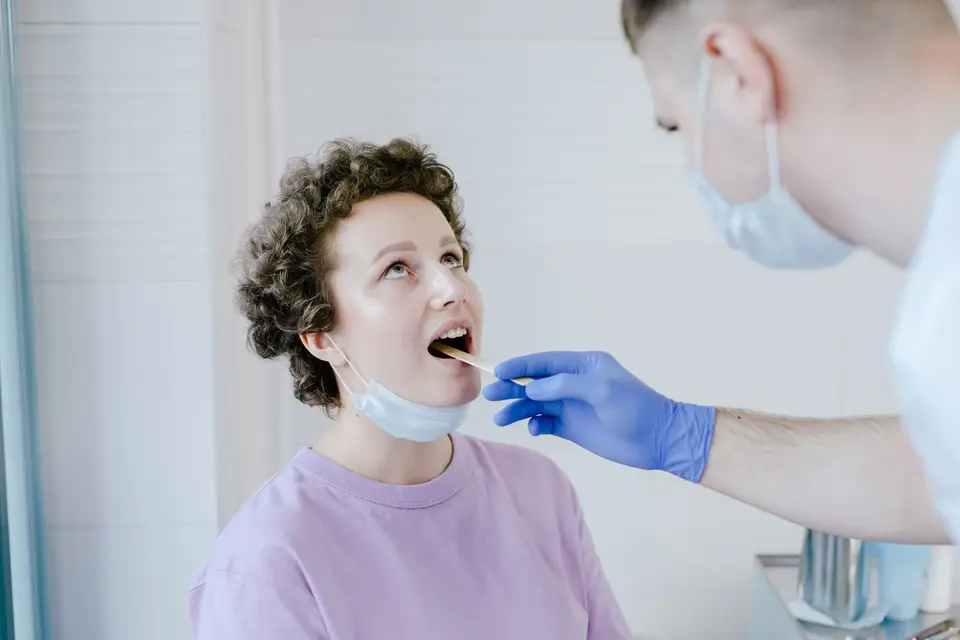
Fluids and salt water may ease discomfort
Regular fluids help prevent dehydration and can make swallowing less uncomfortable. Warm or cool drinks can be chosen according to comfort. Rest and avoiding smoke are also part of public guidance for respiratory infections.
Adults who can gargle safely may try warm salt water. England's National Health Service (NHS) advises dissolving half a teaspoon of salt in a glass of warm water, gargling and then spitting out the solution without swallowing it. The NHS page says children should not try this method.
Salt water is a comfort measure, not a test or cure. The cited guidance does not show that gargling shortens the infection, and APPI News could not verify a single salt concentration adopted by health authorities in every country.

Strep throat requires testing, not guesswork
Cough, a runny nose, hoarseness or conjunctivitis point more often toward a viral cause, while a rapidly starting sore throat, fever, pain on swallowing and swollen lymph nodes can occur with group A strep. These patterns overlap and cannot confirm the cause without clinical assessment.
The CDC says clinicians use a rapid strep test or throat culture to diagnose strep throat and usually prescribe antibiotics after a positive result. A throat culture can find some infections missed by a rapid test, and US guidance gives different follow-up procedures for children and adults after a negative rapid result.
Antibiotics do not help a viral sore throat. When a clinician prescribes one for confirmed or suspected bacterial infection, it should be taken exactly as prescribed rather than stopped when pain improves. The drug, course and follow-up depend on the diagnosis, medical history and country-specific clinical guidance.
Common home-care mistakes can delay assessment
Continuing home treatment after breathing, swallowing or dehydration warning signs appear can delay care for an airway problem or serious infection. A worsening one-sided swelling or increasing difficulty opening the mouth also needs assessment even if the illness began like an ordinary sore throat.
Antibiotics should not be used for a viral sore throat. A positive strep test can guide antibiotic treatment, while a negative culture means group A strep is not the cause. Using an antibiotic without that assessment can expose a person to side effects without treating a viral illness.
The NHS advises against letting children inhale steam from a bowl of hot water because of the risk of scalding. It also says hot drinks should not be given to small children. These hazards do not change the need for care when warning signs are present.

Children, pregnancy and chronic illness need separate decisions
Infants and children
Honey must not be given before 12 months of age. The CDC says honey in food, water, formula or on a pacifier can cause botulism in children younger than 12 months. The restriction applies even when honey is being considered only to soothe the throat.
The CDC advises against lozenges for children younger than four because of age-related safety concerns. Product labels and national recommendations can set other limits. A child with drooling, difficulty breathing or swallowing, dehydration, a rash, worsening symptoms, or reduced alertness needs clinical assessment.
Pregnancy
England's NHS advises pregnant people with symptoms of a respiratory tract infection to contact a clinician. Fluids remain a basic self-care measure, but medicine choices can change during pregnancy. A pharmacist, midwife or clinician should check any pain reliever, medicated lozenge, cold product or supplement before use.
Weakened immunity, chronic illness and regular medicines
England's NHS also advises clinical contact for respiratory symptoms in people with weakened immunity or a long-term heart, lung or kidney condition. These groups may have a lower threshold for assessment when symptoms worsen. A clinician or pharmacist can review symptom treatments alongside current prescriptions.

Frequently asked questions
How long does an ordinary sore throat last?
The CDC says most sore throats improve within one week. Symptoms that worsen or fail to improve within a few days warrant medical assessment.
Can warm salt water cure a sore throat?
No cure is established. England's NHS lists warm salt-water gargling as a comfort measure for adults who can gargle safely, while its instructions say children should not try it.
How can viral and strep throat be distinguished?
Symptoms can suggest one cause, but they overlap. A clinician may use a rapid strep test or throat culture when group A strep is suspected.
When is a sore throat an emergency?
Difficulty breathing or an inability to swallow requires emergency care. Drooling in a young child, dehydration, blood in saliva or phlegm, rapid worsening, severe one-sided swelling, a muffled voice or difficulty opening the mouth also needs prompt assessment.
Can an infant have honey for throat discomfort?
No. Honey must not be given to a child younger than 12 months because it can cause botulism.
Sources and further reading
- Sore Throat Basics(US Centers for Disease Control and Prevention)
- Respiratory tract infections(National Health Service in England)
- Tonsillitis(National Health Service in England)
- Testing for Strep Throat or Scarlet Fever(US Centers for Disease Control and Prevention)
- Foods and Drinks to Avoid or Limit(US Centers for Disease Control and Prevention)