The University of Pennsylvania's Annenberg Public Policy Center reported on August 11, 2026, that 61 percent of US adults somewhat or strongly opposed construction of new data centers in their area, up from 49 percent in a spring survey. The poll measured opposition, but it did not ask respondents to select water use, electricity demand, noise or any other reason for their answer.
Four months of polling therefore show a change in US opinion, not the cause of that change. The June 16 to July 19 survey covered 1,320 US adult citizens, was weighted to national population benchmarks and had a margin of error of plus or minus 3.5 percentage points.
Texas turns resource questions into project disclosures
Governor Greg Abbott of the US state of Texas directed the Public Utility Commission of Texas and the Electric Reliability Council of Texas (ERCOT) on August 3 to audit every data center advancing through ERCOT's grid-interconnection process before those projects move forward. The governor's office said a project that failed to meet the two bodies' requirements would be denied a connection to the Texas grid.
The directive asks each project for annual and peak electricity demand, on-site generation, annual and peak water demand, water sources, reuse plans and cooling technology. It also covers tax incentives and other public support, ownership, noise and light controls, traffic, setbacks and emergency coordination.
This is narrower than a statewide construction ban. The directive addresses projects in ERCOT's grid-interconnection queue rather than every land-use or building permit issued by a local government.
National estimates cannot predict one site's impact
Lawrence Berkeley National Laboratory's 2024 model puts direct water consumption by all US data centers in 2028 at about 145 billion to 275 billion liters, or 145 million to 275 million cubic meters. The range comes from scenarios for equipment shipments, operating patterns, facility types, cooling systems and their efficiency; it is not a sum of meter readings from future facilities.
The laboratory's update published in June 2026 estimates that data centers could account for 11.8 percent of total US electricity use in 2030, with scenarios ranging from 9.5 percent to 15.3 percent. Its reference case is 649 terawatt-hours, while compounded uncertainty scenarios span 521 to 843 terawatt-hours.
Both reports describe national scenarios. A proposed site's demand still depends on its installed hardware, utilization, operating hours, climate, cooling configuration and power supply, so a national average cannot establish whether a particular community has enough grid or water capacity.
Cooling choices move demand between water and power
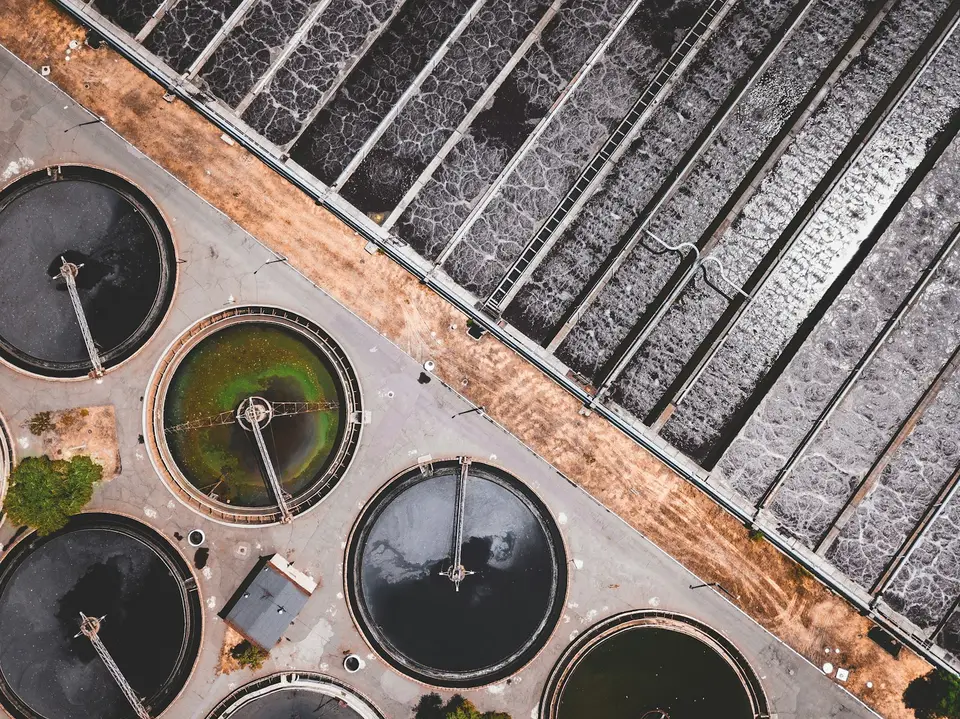
Guidance from the US Department of Energy's Federal Energy Management Program says cooling-tower consumption comes mainly from evaporation and blowdown, the water drained to control dissolved minerals. The guidance says higher cycles of concentration can reduce blowdown, while air-side and water-side economizers can cut water and energy use when climate and system design allow them to operate.
Other measures carry their own loads. The same guidance says reverse osmosis can return treated blowdown to a cooling tower but increases energy demand and maintenance, while direct liquid cooling still needs a final path for rejecting heat and may remain connected to a cooling tower.
A project record should therefore identify the complete heat-rejection system, not stop at labels such as air cooled, liquid cooled or closed loop. Annual consumption, peak-day demand, source water, reuse, discharge and the response to dry conditions belong beside normal and peak electricity demand.
Taiwan has a current energy rule and a separate draft
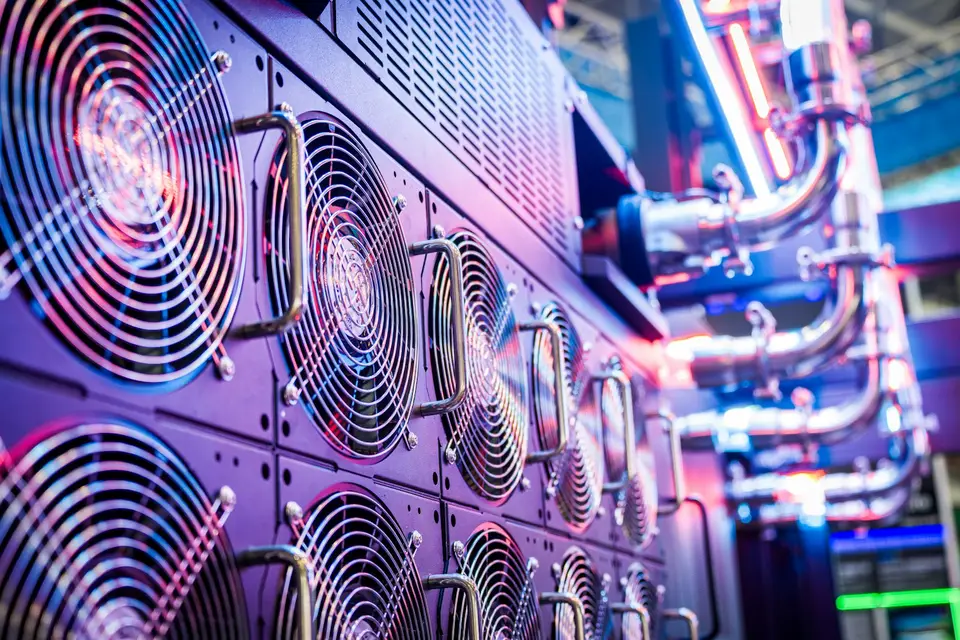
Taiwan's Energy Administration is the central authority responsible for the country's energy policy and energy supply-and-demand planning. The agency says hyperscale and colocation data centers with at least 5 MW of contracted electricity capacity must submit an Energy Utilization Manual before construction or expansion and adopt best available techniques. Its English-language summary sets power usage effectiveness ceilings of 1.3 for hyperscale facilities and 1.4 for colocation facilities.
The ministry's 2025 national electricity report includes added demand from data centers and AI technology in its forecast of about 2.5 percent average annual electricity-demand growth from 2026 through 2035. That forecast also incorporates economic growth, temperature, semiconductor expansion and expected energy savings, so 2.5 percent is not a data-center-only growth rate.
On July 1, 2026, Taiwan's Ministry of Economic Affairs proposed a separate amendment that would add five industry-benefit categories to the energy review: investment and output, employment, supply-chain effects, support for the AI sector, and information security and resilience. The proposal would also bring the host local authority or industrial-park authority into the review before the file reaches the Energy Administration.
Taiwan's official English law database still identified November 3, 2025, as the latest revision of the regulations when checked on August 24, 2026. APPI News did not find a later promulgation or an official English version of the July proposal, so the five industry-benefit categories remain a draft rather than a current legal requirement.
A review record should separate forecasts from commitments
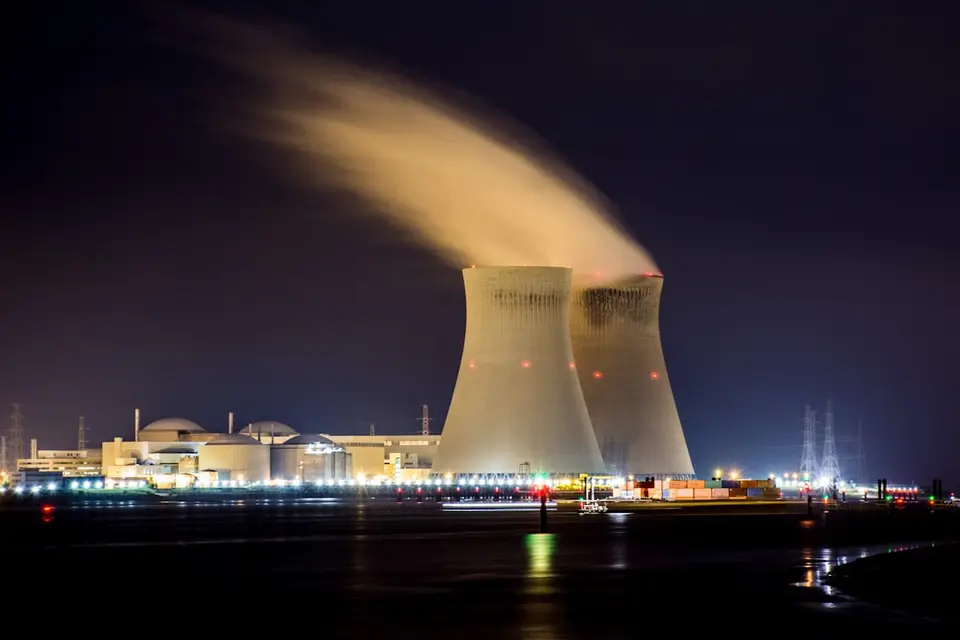
The US and Taiwan records use different legal processes, but they expose the same information problem: a nameplate capacity or national forecast does not show how one project will affect one grid connection, water system or public budget. A project-level file can make those differences visible without assuming that every data center has the same footprint.
- Electricity: Record contracted and on-site capacity, expected annual use, normal and peak demand, the grid-connection point, the connection date and which upgrades are required.
- Cooling and water: Identify the cooling and final heat-rejection systems, annual and peak water demand, water sources, reuse, discharge and operating changes during dry periods.
- Public costs: List tax incentives, grants and other public support, then state who pays for grid, water, road and emergency-service upgrades.
- Community effects: Provide measurable plans for noise, light, setbacks, traffic and emergency response, with the party responsible for each commitment.
- Local benefits: Distinguish projected investment, employment and supply-chain activity from binding commitments, and state how each result will be measured.
Facility demand also has to be built from the proposed equipment rather than an inherited server-room average. APPI News's AI rack power planning guide explains how peak rack load, redundant feeds and cooling equipment change the site-level capacity record.
Frequently asked questions
Does the 61 percent survey result show why US residents oppose data centers?
No. The Annenberg survey measured support and opposition to new data centers in respondents' areas, but it did not ask them to rank water, electricity, noise, traffic or other possible reasons.

Does liquid cooling eliminate data center water use?
No single answer applies to every design. A liquid loop can move heat efficiently inside a facility, but site water demand depends on the final heat-rejection equipment, climate, operating conditions and whether water is reused.

Is Taiwan's five-part industry-benefit test already in force?
APPI News could not verify that it had been promulgated by August 24, 2026. Taiwan's existing energy-review and efficiency requirements for qualifying data centers remain separate from the July proposal.
Sources and further reading
- Opposition to Local Data Centers Rises Sharply, Annenberg Survey Finds(Annenberg Public Policy Center, University of Pennsylvania)
- Governor Abbott Directs Comprehensive Data Center Audit(Office of the Texas Governor)
- 2024 United States Data Center Energy Usage Report(Lawrence Berkeley National Laboratory)
- United States Data Center Energy Usage Report: 2025 Update(Lawrence Berkeley National Laboratory)
- Cooling Water Efficiency Opportunities for Federal Data Centers(US Department of Energy)
- Background(Taiwan Energy Administration)
- Information Service Providers Exceeding Specified Electricity Consumption Thresholds Must Submit Energy Utilization Manuals for Review and Approval(Taiwan Energy Administration)
- Ministry of Economic Affairs Releases the 2025 National Electricity Supply and Demand Report of Taiwan(Taiwan Energy Administration)
- Draft amendment adds an industry-benefit review for data centers(Taiwan Ministry of Economic Affairs)Chinese-language official release
- Regulations Governing the Assessment of Energy Development and Utilization(Taiwan Ministry of Economic Affairs)