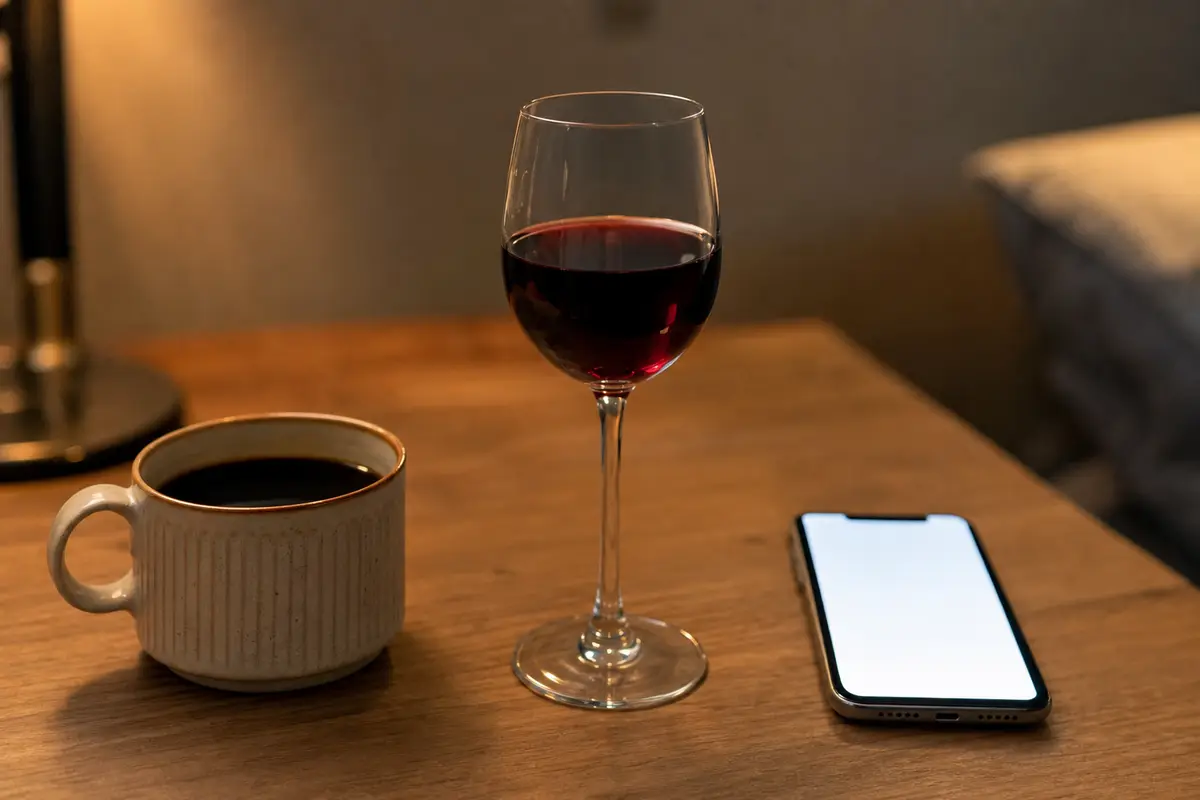
A 2025 systematic review and meta-analysis of 27 studies in healthy adults found that alcohol delayed rapid eye movement (REM) sleep and reduced its duration. A 2023 meta-analysis of 24 studies linked caffeine with 45 minutes less total sleep, nine minutes longer to fall asleep and 11.4 minutes less deep sleep on average.
Screen evidence is less settled: after reviewing 35 experimental or intervention studies and five systematic reviews, a 2024 expert panel did not agree that pre-sleep screen light harms sleep in children, adolescents or adults. It also failed to reach consensus that screen use in general harms adult sleep, so a blanket claim that blue light steals deep sleep exceeds the available consensus.
Loss of consciousness or abnormal breathing after alcohol is an emergency
England's National Health Service (NHS) lists slow or irregular breathing, a seizure and loss of consciousness as signs of alcohol poisoning, and calls for an emergency response when poisoning is suspected, a seizure occurs, consciousness is lost or breathing stops. In other countries, the equivalent response is to call local emergency services, stay with the person and monitor breathing until help arrives.
England's NHS also advises people not to drive when sleepy. Sleepiness that creates an immediate risk while driving or doing hazardous work takes priority over changing caffeine or screen timing.
Caffeine timing should be counted back from bedtime
The 2023 caffeine review found lower sleep efficiency, more time awake after sleep onset, more light sleep and less deep sleep after caffeine exposure. Its pooled estimates describe average differences between caffeine and control conditions, not a guaranteed effect for every drinker.
England's NHS advises avoiding tea or coffee for at least six hours before going to bed. That is a bedtime-relative interval rather than a universal ban after noon, which would fall differently for a shift worker and someone who sleeps at 10 p.m.
The meta-analysis found that reductions in total sleep depended on both the amount consumed and how close consumption was to bedtime. Because drinks vary in caffeine content and people respond differently, the study does not establish one clock time that fits every person.

Alcohol's sedating effect does not establish better sleep
The 2025 alcohol review found that REM disruption appeared at lower exposure and worsened as exposure increased. Only higher exposure shortened the time to sleep onset, while REM sleep began later and lasted less time.
The review could not determine alcohol's effect on total sleep time, sleep efficiency or time awake after sleep onset because those estimates had substantial uncertainty. It therefore does not support a fixed claim that every drinking night cuts sleep by 35 minutes.
England's NHS applies the same six-hour avoidance window to alcohol that it gives for tea and coffee. The interval is sleep-hygiene guidance, not evidence that every effect disappears at exactly six hours.
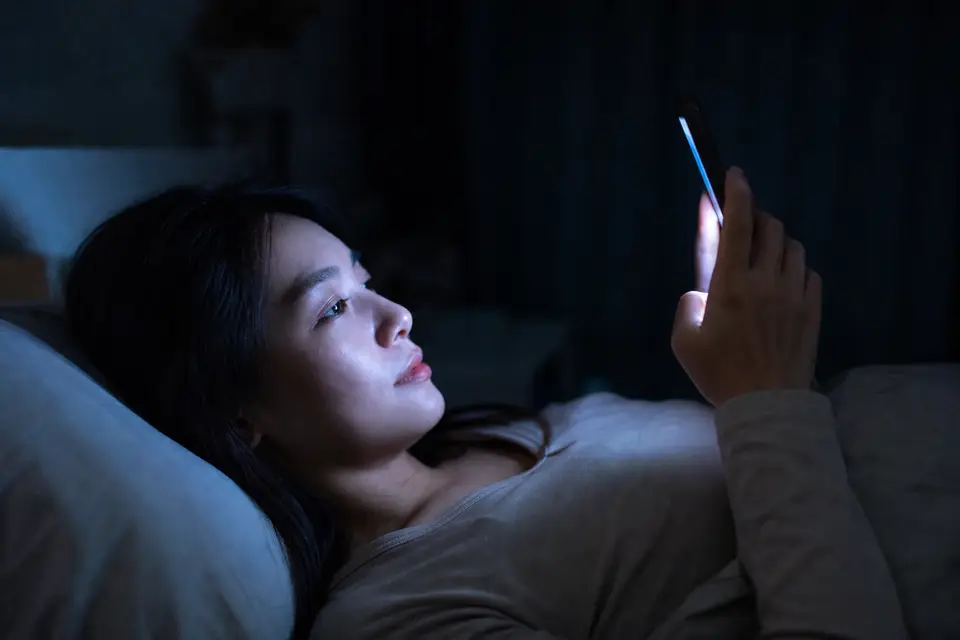
Blue light is only one proposed screen mechanism
The 2024 National Sleep Foundation panel identified four proposed routes from screens to poorer sleep: time displaced by use, mental arousal from content, alerting light and interruptions such as notifications. Experimental evidence was too limited and inconsistent for the panel to agree that screen light itself harms sleep in any age group.
Night mode changes the spectrum of display light, but it does not recover time spent on a device or remove stimulating content and notifications. Treating a color setting as a complete sleep intervention therefore leaves most of the proposed pathways unchanged.
A 2023 Cochrane review included 17 randomized trials with 619 adults and found that the effect of blue-light-filtering lenses on sleep quality was indeterminate. Six small trials reporting sleep outcomes produced mixed results across different populations, and the certainty of that evidence was very low.
England's NHS pairs a wind-down period of at least one hour with advice to avoid television and devices such as smartphones immediately before bed. A screen-free wind-down is a practical habit to test, but the evidence does not support promising a measured gain in deep sleep from blue-light filters or glasses.
Children, pregnancy and medicines need separate advice
The 2024 screen panel did agree that screen use in general and pre-sleep content impair sleep health in children and adolescents. It did not agree that screen light was the cause, and the adult caffeine and alcohol findings do not establish schedules for children.
The World Health Organization says alcohol use during pregnancy raises the risk of fetal alcohol spectrum disorders, miscarriage, stillbirth and premature delivery. The sleep-timing reviews do not provide pregnancy or breastfeeding guidance, so people in these groups should use local antenatal advice and speak with a clinician.
The US National Institute on Alcohol Abuse and Alcoholism says alcohol can interact with prescription medicines, nonprescription products and some herbal remedies, and that older adults face particular risk. People with a chronic condition or regular medicine use should ask a clinician or pharmacist how alcohol and caffeine fit their care rather than treating the six-hour sleep interval as an interaction rule.
Persistent insomnia needs assessment beyond sleep hygiene
England's NHS recommends clinical assessment when changed sleep habits have not helped, sleep trouble has lasted for months or the problem makes daily life hard to manage. The same page notes that medicines, long-term pain, restless legs, sleep apnea and other conditions can disturb sleep.
US and European guidelines place cognitive behavioral therapy for insomnia (CBT-I) first for chronic insomnia in adults, while sleep-hygiene education alone is not an established treatment. Changing caffeine, alcohol or screen timing does not replace assessment or structured care when symptoms persist.
APPI News could not verify a single international cutoff that applies to caffeine, alcohol or screens for every adult at the time of writing. Persistent poor sleep or daytime fatigue should be assessed on its own terms rather than attributed to one of these exposures without evaluation.
Sources and further reading
- The effect of caffeine on subsequent sleep: A systematic review and meta-analysis(Sleep Medicine Reviews)
- The effect of alcohol on subsequent sleep in healthy adults: A systematic review and meta-analysis(Sleep Medicine Reviews)
- The impact of screen use on sleep health across the lifespan: A National Sleep Foundation consensus statement(Sleep Health)
- Blue-light filtering spectacle lenses for visual performance, sleep, and macular health in adults(Cochrane)
- Insomnia(National Health Service in England)
- Alcohol poisoning(National Health Service in England)
- Harmful interactions: Mixing alcohol with medicines(US National Institute on Alcohol Abuse and Alcoholism)
- Alcohol(World Health Organization)