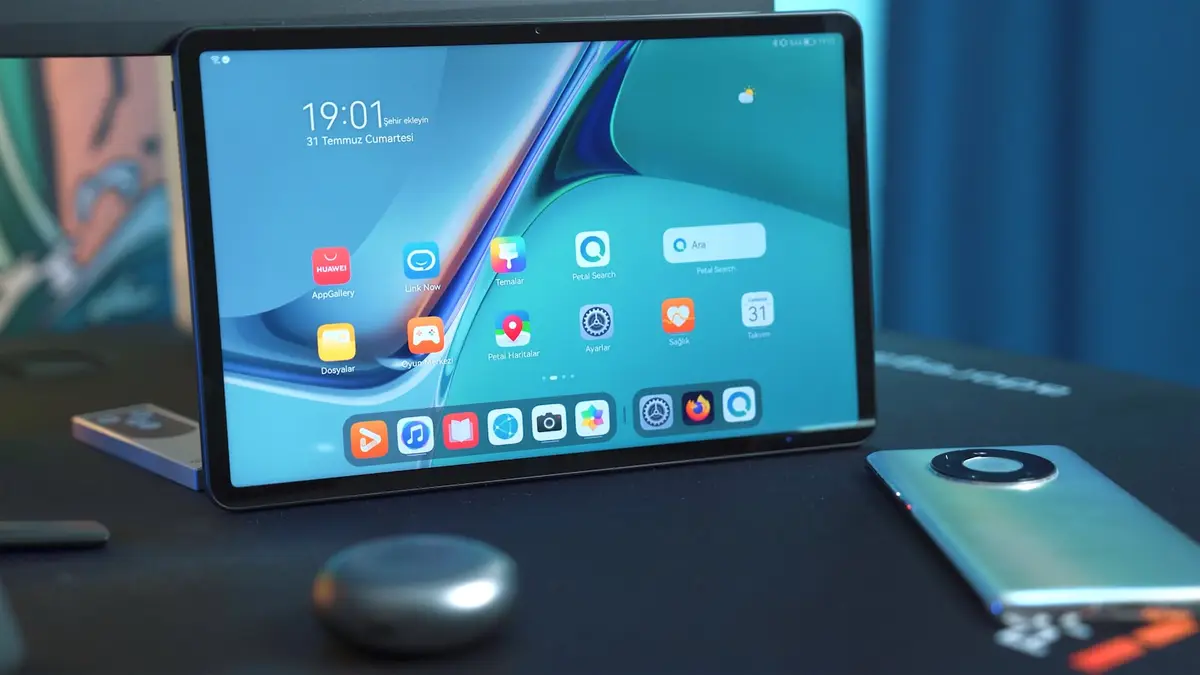
Samsung unveiled its eighth-generation Galaxy Z foldables on July 22, 2026, with the Galaxy Z Fold8 built around a 7.6-inch inner display. That larger workspace can reduce app switching, but buyers still carry a thicker phone and face market-specific repair costs.
The practical question is how often the phone will be opened for a task that benefits from more screen area. Reading long documents, keeping two supported apps visible and reviewing content beside a message can use the format. Photography, calls and one-app social feeds do not automatically gain the same advantage.

The larger display must replace a real daily step
Samsung says the Galaxy Z Fold8 has a 7.6-inch main display with a 4:3 aspect ratio, which becomes 3:4 when rotated, and a 5.5-inch cover display. The company presents the two orientations for video, games, e-books and web browsing. Those dimensions create more room than a conventional phone, but screen size alone does not establish that a buyer needs it.
A useful test is to record one week of phone use before buying. Tasks that repeatedly require switching between a document and a message, or zooming and scrolling through a PDF, are candidates for the inner screen. If most sessions stay inside one app, the foldable mechanism adds hardware without removing a recurring step.

App support also matters. Samsung warns that supported apps for split view may vary and that some features differ by country, language, carrier and software version. A buyer should test the exact work, reading and messaging apps involved rather than assume every app will use the larger canvas well.
Closed dimensions remain part of every trip
The main screen is available only after the phone is opened, while its closed dimensions follow the buyer throughout the day. Samsung lists the Fold8 at 201 grams, 4.5 millimeters thick when open and 9.7 millimeters thick when folded.
Apple lists the iPhone 17 at 177 grams and 7.95 millimeters thick. On those manufacturer specifications, the Fold8 is 24 grams heavier and 1.75 millimeters thicker when closed. Cases can widen that difference, so an in-store pocket and one-handed typing test provides more useful evidence than a specification table alone.

IP48 is not a dust-tight rating
Samsung gives the Fold8 an IP48 rating and says its water-resistance testing involved immersion in up to 1.5 meters of fresh water for up to 30 minutes. The company also says water resistance is not permanent and may decline with ordinary wear.
Samsung's guide to the International Electrotechnical Commission's IEC 60529 system says the first digit 4 protects against solid objects 1 millimeter or larger, while ratings 5 and 6 denote dust-protected and dust-tight enclosures. The Fold8's rating therefore should not be read as a promise of dust-tight construction. Sand or dusty work environments deserve more weight in the buying decision than water protection alone.
The crease claim still needs time
Samsung says its Flex Titanium display structure helps minimize the fold crease and improve durability. This is a manufacturer claim about a newly released device, not an independent finding that the crease disappears or stays unchanged over years of use.
APPI News could not find an independent long-term durability dataset for the Fold8 at the time of writing. Buyers who notice reflections or surface changes should inspect the screen under bright light and at an angle before committing. A short demonstration cannot predict years of hinge and display wear, but it can show whether the visible crease is already distracting.
Repair and resale costs cannot be globalized
Samsung's repair prices, warranty coverage and optional protection plans differ across markets. The source report cited a Taiwan repair schedule, but that figure does not describe costs in other countries and is not used here. Buyers should obtain the local out-of-warranty inner-screen price and read the accidental-damage terms before comparing the Fold8 with a conventional flagship.
The same limitation applies to resale value. APPI News could not locate the original dataset behind the source report's average one-year depreciation figures, so those numbers were omitted. Local trade-in quotes for the exact storage capacity provide a more defensible comparison than a cross-market average with an unknown sample.
A four-part test before buying
A foldable has a clear use case when the inner screen replaces frequent app switching, a separate small tablet or repeated zooming through documents. The value is weaker when the phone stays closed for most tasks. Count those openings for a week, test the required apps in split view, carry a device of similar weight, and obtain local repair and trade-in quotes.
The Fold8 shows that a book-style foldable can now weigh close to a conventional flagship while still offering a much larger inner display. It also remains thicker when closed, lacks a dust-tight rating and carries a new display structure without independent long-term evidence. The buying decision turns on repeated use of the open screen, not the novelty of opening it.
Frequently asked questions
Who is most likely to benefit from a foldable phone?
People who regularly read long documents, compare information between supported apps or replace a small tablet with their phone have the clearest use case. Buyers whose daily use centers on calls, photos and one app at a time may see less benefit from the inner screen.
Does the Galaxy Z Fold8 eliminate the screen crease?
No verified evidence supports that conclusion. Samsung says Flex Titanium minimizes the crease, while APPI News could not find independent long-term testing showing that it disappears or remains unchanged over time.
Is IP48 the same as the IP68 rating found on some conventional phones?
No. Under the IEC 60529 scale described by Samsung, the first digit 4 covers solid objects at least 1 millimeter across; the first digit 6 means dust-tight. Both ratings use 8 for water protection, but their certified protection against solids differs.
How should repair cost be compared?
Use the manufacturer's current out-of-warranty inner-display quote for the buyer's country, then add any insurance fee and deductible. Repair prices from Taiwan or another market should not be treated as a global price.