AAP reported on September 4, 2026, that two more Australians had confirmed they were safe, bringing the number located since the August 26 floods to seven while 36 remained unaccounted for. ABC News reported the same day that more than 1,200 people had died and that communities along the Bhotekoshi River, including places where Australians disappeared, remained isolated.
The Australian figure is a consular case list, not a count of confirmed deaths. It can fall when a traveler contacts relatives or officials from outside the disaster zone, as earlier updates in the search demonstrated.
Seven Australians were found as the search expanded
The two Australians in the September 4 update said they did not require consular help, following five people confirmed safe two days earlier. The report said Nepali teams were expected to search sites identified by Australia, including the Kailash Hotel and Royal Himalaya Hotel, using teams on foot, helicopters and drones.
Australia's Department of Foreign Affairs and Trade said specialist drone operators would join a 15-person Disaster Assistance Response Team and provide rapid mapping and imaging for Nepal's search operation. The department's crisis page said roads, transport networks and other infrastructure had been severely affected, limiting access to parts of the flood zone.
Different lists produced different totals
Nepal's Ministry of Foreign Affairs reported on August 27 that 359 bodies had been recovered and 596 foreign nationals from 33 countries remained missing, including 35 Australians. The ministry said those figures remained subject to verification during the search and rescue operation.
That early table covered foreign nationals associated with the Bhote Koshi river area at a specific point in the response. By September 4, AAP reported that more than 5,000 people were unaccounted for across the wider disaster area, while the separate Australian case list had fallen to 36.
The figures cannot be combined as if they came from one register. Reports differed in date, nationality, whether they covered Nepal alone or also Tibet, China, and whether “missing” meant a formal consular case, an unverified local report or a worker believed to be inside a damaged site.
The recovery operation spread far downstream
The August 26 surge struck Timure and Syaphrubesi in Nepal's Rasuwa district near the border with China, damaged roads, bridges and buildings, and entered the Trishuli river system. The connected waterways carried people and debris into downstream districts, extending the search well beyond the northern border area.
By 6 a.m. Nepal Time on August 29, police had recovered 233 bodies in Chitwan and 158 in Nawalparasi East, compared with 13 in Rasuwa; the national count was 616 at that hour. The national total rose to 669 by 4 p.m.
Nepal Police documented remains using photographs, fingerprints, post-mortem examinations and DNA samples, with some DNA material sent to Kathmandu for testing. The wide recovery area and the number of unidentified remains slowed efforts to match bodies with missing-person records.
The cause and further flood risk remained unresolved
Nepal's Ministry of Foreign Affairs said on August 29 that the cause had not been fully determined and that agencies were monitoring the river system for additional downstream risk. A barrier lake had formed on the Chinese side of the border, but Nepal's government had not confirmed a major lake or dam collapse and said the competing accounts had not been reconciled.

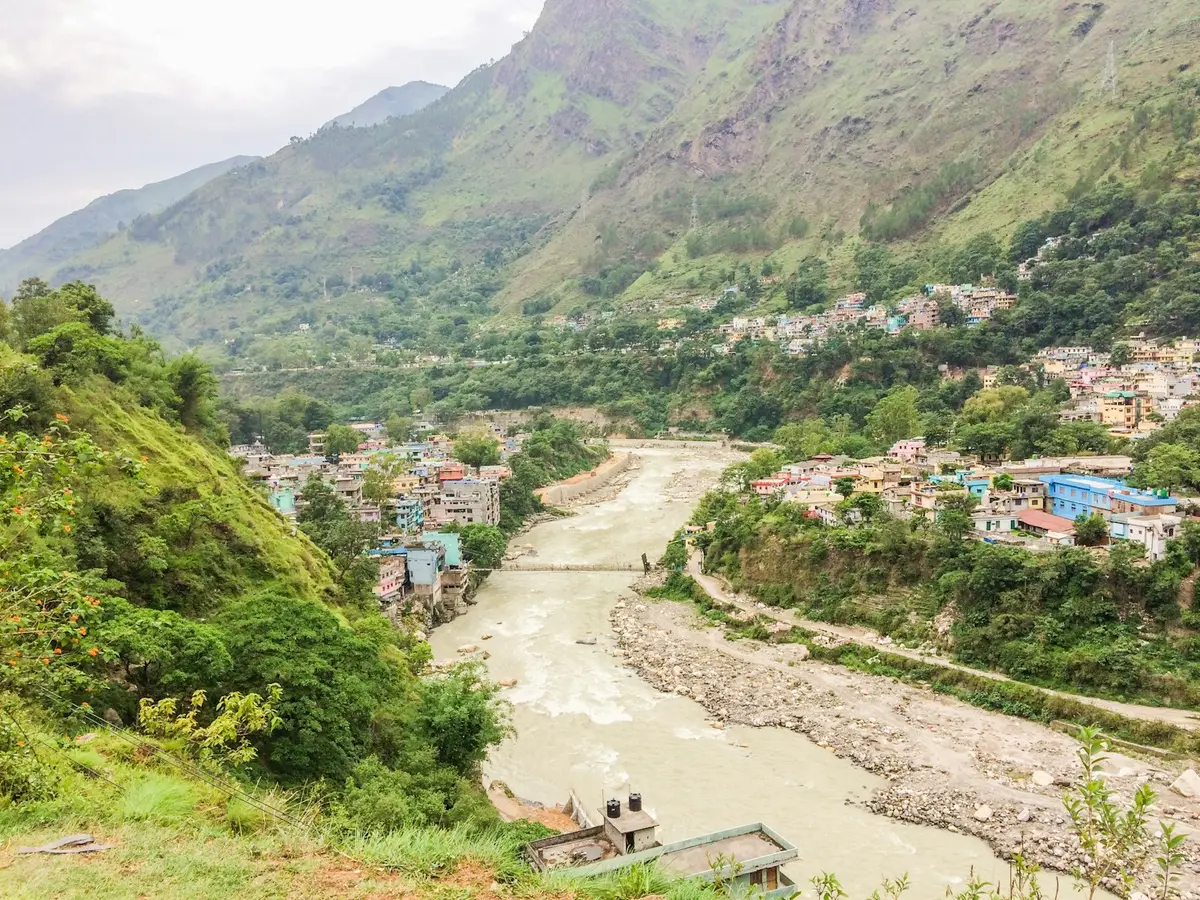
A mountain road and bridge in Nepal (illustrative image). Photo by Paul Huisman on Unsplash.
Searches reached tunnels and isolated settlements
ABC News reported on August 31 that Nepal's disaster-management authority believed at least 933 workers were trapped at about six hydropower projects. The report also said one tunnel located by rescue teams was full of water and that crews were looking for another entrance.
The 933 figure was an operational estimate, not a verified count of people found inside the tunnels. It also predated the September 4 update, so it should not be read as a current tally of deaths, survivors or people still missing.
ABC News found communities along the Bhotekoshi River still completely isolated more than a week after the flood. The continued loss of road and communications access helps explain why search teams were using aerial mapping and why missing-person lists could change without a physical rescue.
An August 29 briefing kept most of Nepal open to travelers
Nepal's foreign ministry said on August 29 that areas outside Rasuwa, Nuwakot, Dhading and Chitwan remained open to foreign travelers. The briefing did not provide route-by-route operating status for damaged roads, bridges, trekking routes, lodging or border crossings.
Nepal's Ministry of Foreign Affairs established an Emergency Control Room to coordinate information and consular assistance for foreign nationals affected by or missing after the flood, and published hotline, WhatsApp and email contacts. Its notice directs diplomatic missions, families and members of the public to use those channels for case information; current transport and accommodation availability requires separate confirmation from the operator.
How this plays out outside Taiwan
For travelers outside Taiwan, an operating flight to Kathmandu does not show that a northern Nepal itinerary is usable. A trip may include an international flight, a road transfer, a trek, a hotel and a Nepal-Tibet land crossing, and each component can have a different status after flood damage. National advisories also apply different risk levels and legal rules. Travelers therefore need separate evidence for route availability, contract rights and consular contact.
As of September 5, Australia's Smartraveller advised travelers to exercise a high degree of caution in Nepal overall and to reconsider travel to flood-affected areas near the Bhotekoshi and Trishuli rivers in seven named districts. It also told travelers to postpone overland travel between Nepal and Tibet, China, including Mount Kailash and Lake Manasarovar circuits. The page says transport may be disrupted or canceled and directs passengers to confirm schedules with airlines, tour operators or agents before leaving. That distinction matters when an international flight is operating but the booked land sector is not.
For purchases covered by Australian law, the Australian Competition and Consumer Commission says consumer guarantees apply to travel within Australia, international services departing Australia, and inbound services booked through an Australian provider's website. If a delayed or canceled service is not replaced within a reasonable time, the provider must offer a different replacement or a refund. A traveler who cancels because of concern while the provider can still supply the service does not automatically receive the same remedy; the booking terms generally determine the outcome. The commission advises consumers to ask for unclear terms to be confirmed in writing.
As of September 5, the United Kingdom's Foreign, Commonwealth & Development Office said the August 26 flood had severely damaged buildings, roads, transport and communications in Rasuwa and the Nepal-China border area, with Gorkha, Nuwakot and Dhading also affected. Its Nepal guidance tells road travelers during the monsoon to check that a road is open and prepare for plans to change or be canceled at short notice. For a booking that qualifies as a package under the United Kingdom's Package Travel and Linked Travel Arrangements Regulations 2018, regulation 12 allows termination without a fee when unavoidable and extraordinary circumstances at the destination significantly affect the package or carriage there; regulation 14 requires the resulting refund within 14 days. Those package provisions do not automatically cover every separately purchased flight, room or tour.
The US Department of State placed Nepal at Level 2, “Exercise increased caution,” on September 4 but said not to travel for any reason to the Rasuwagadhi-Timure-Syafrubesi area of Rasuwa district, including the Nepal-China crossing. The department cited flood damage, disrupted transport and communications, continuing recovery operations and the risk of more flooding and landslides. It also directs US citizens to enroll in the Smart Traveler Enrollment Program so the US embassy can send alerts and make contact during an emergency.
For scheduled flights to, from or within the United States, the US Department of Transportation requires an automatic refund when an airline cancels or makes a significant change and the passenger does not accept replacement transport, a credit or other compensation. The deadline is seven business days for a credit-card purchase and 20 calendar days for other payment methods. That rule covers an airline's change to the flight; it does not make an operating flight refundable merely because a road, hotel or trek in Nepal is unavailable.
Singapore's Ministry of Foreign Affairs tells Singaporeans to avoid flood-affected Rasuwa, Nuwakot, Dhading, Gorkha and Chitwan, and to check local road and weather conditions before a journey. It urges travelers to eRegister, obtain comprehensive travel insurance and stay in contact with hotels, trekking agencies, guides or local tour operators. Consular cases are routed to Singapore's High Commission in New Delhi or the ministry's 24-hour duty office. The same page says Singaporeans may obtain a Nepal visa on arrival for stays of up to 90 days, with fees payable in US dollars and credit-card payment described as unreliable.
The government pages reviewed for this report do not provide a live inventory of every road, hotel, trek or border service. A route check needs to separate the airline, ground operator, lodging and crossing permit, with each provider's answer recorded in writing. Booking confirmations, cancellation notices, a dated government advisory and an insurer's claim number establish who stopped performance and when. That record matters because Australian, UK and US rules distinguish a provider cancellation or affected package from a traveler deciding not to use a service that remains available.
What remains unverified
APPI News could not independently reconcile the Nepal and China casualty totals or verify the national missing-person lists person by person as of September 5, 2026. The published numbers came from snapshots compiled at different times and for different geographic areas.
Official advisories identify broad danger zones but do not confirm the status of an individual booking. Airlines, ground operators, hotels, trekking companies and insurers remain the sources for current service availability and contract-specific remedies.
Sources and further reading
- Nepal endured months of political upheaval. Devastating floods are now testing its new government(ClickOrlando / Associated Press)
- Floods test Nepal's new prime minister as a costly rebuild looms(Associated Press)
- PM Shah addresses five queries over government's handling of Bhotekoshi floods(The Kathmandu Post)
- Nepal floods test PM Balen's young government(DW)
- Rasuwa flood: 1,357 bodies found, 5,326 still missing(Onlinekhabar English)
- Families wait for the missing at Trishuli 3B, 13 days on(Onlinekhabar English)
- Two people rescued from hydropower tunnel 9 days after Nepal floods(ABC News Australia / Reuters)
- Daily Situation Update on Bhote Koshi River Floods — 05 September 2026(Nepal Ministry of Foreign Affairs)
- Latest Updates on Flash Floods-27 August 2026(Nepal Ministry of Foreign Affairs)
- Nepal Travel Advice & Safety(Australian Government Smartraveller)
- Travel delays and cancellations(Australian Competition and Consumer Commission)
- Nepal travel advice(UK Foreign, Commonwealth & Development Office)
- Safety and security - Nepal travel advice(UK Foreign, Commonwealth & Development Office)
- The Package Travel and Linked Travel Arrangements Regulations 2018(UK Legislation)
- Nepal Travel Advisory(US Department of State)
- Refunds and Other Consumer Protections(US Department of Transportation)
- Nepal(Singapore Ministry of Foreign Affairs)