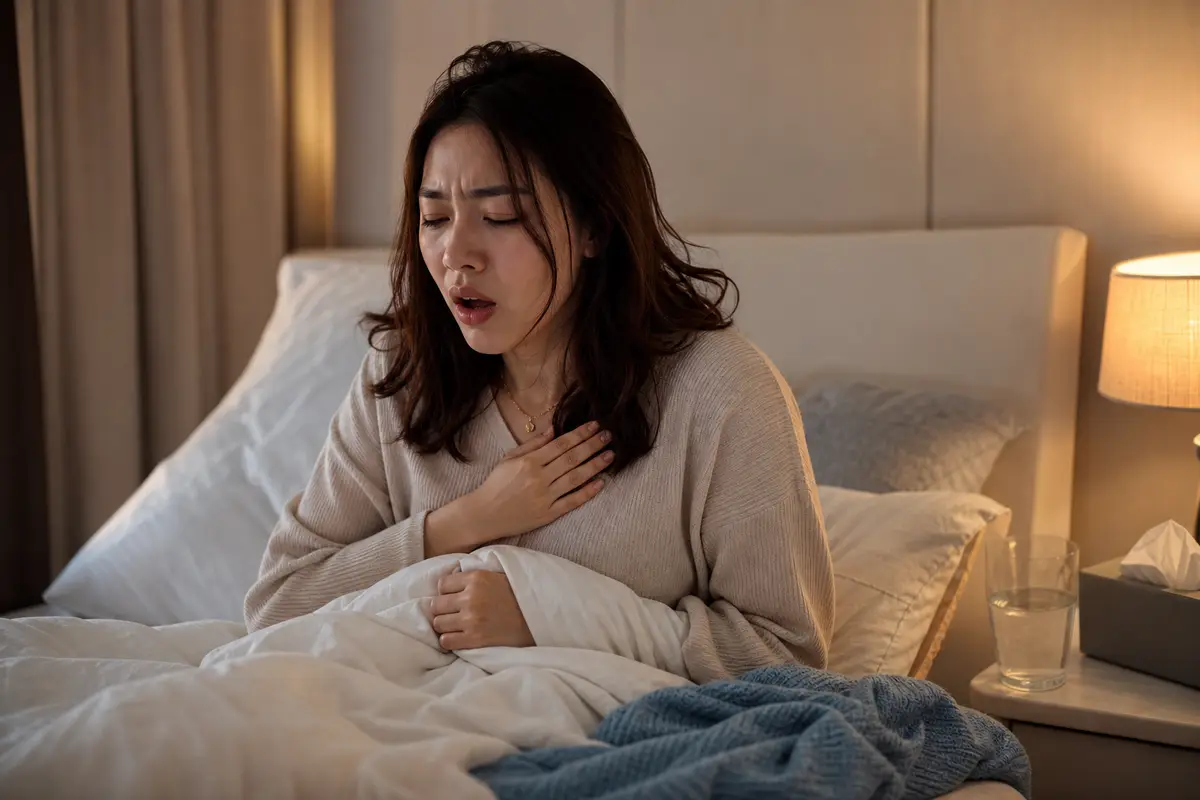
A 2025 systematic review found that psychological approaches reduced headache days among adults with tension-type headache, though most trials raised some risk-of-bias concerns. Heat or cold packs may help when neck pain accompanies a headache, but they cannot establish the cause and should not delay urgent assessment when warning signs appear.
The World Health Organization (WHO) describes tension-type headache as pressure or tightness, often like a band around the head, that can spread into or from the neck. That pattern can help a clinician classify a headache, but symptoms alone cannot confirm the diagnosis or exclude another condition.
Sudden severe pain or neurologic symptoms need emergency care
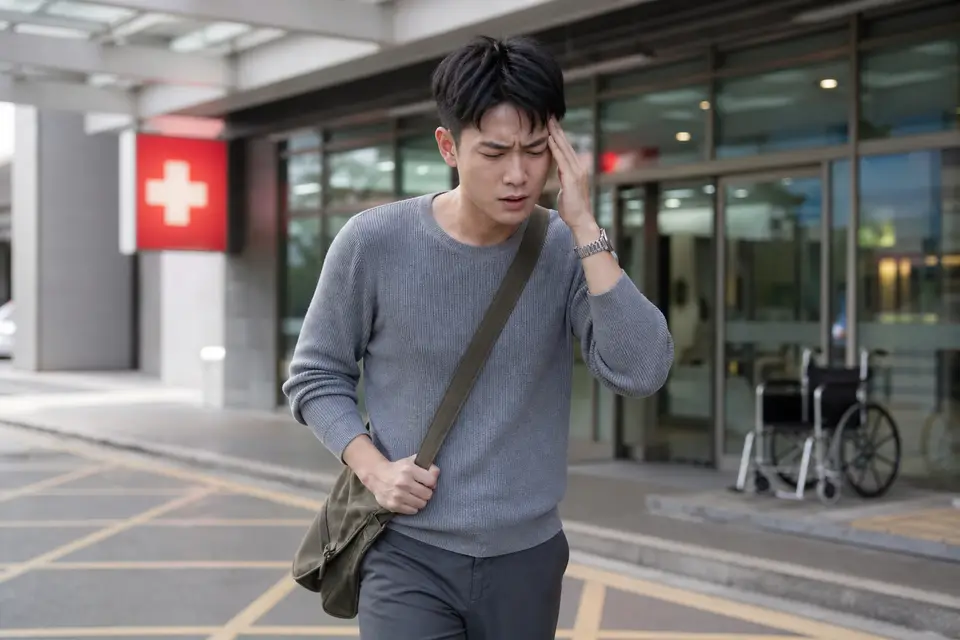
Seek emergency care for a headache that starts suddenly and is extremely painful, or for headache with a seizure, weakness or numbness, new trouble speaking, walking or remembering, confusion, marked drowsiness, or loss of vision. England’s National Health Service (NHS) also lists a very high temperature with a stiff neck or light sensitivity as an emergency combination.
Urgent assessment is also warranted when headache occurs with vomiting or new vision problems, or is triggered or worsened by coughing, sneezing, bending down or exercise. A headache that is worsening, recurring frequently or no longer responds to the usual measures needs clinical review rather than repeated self-treatment.
Relaxation can help, but the evidence covers structured programs
A 2025 systematic review included 19 randomized trials with 1,069 adults and found that psychological interventions reduced monthly headache days compared with control groups. The interventions included relaxation training, biofeedback, cognitive behavioral therapy, mindfulness and other structured psychological approaches.
Only five studies with 383 participants contributed to the pooled estimate for monthly headache days. The reviewers rated that evidence as moderate quality, while 18 of the 19 included trials had some risk-of-bias concerns and results for pain intensity varied widely between studies.
A separate review of 16 randomized trials in adults with migraine, tension-type headache or both found small improvements in pain intensity and headache-related disability from educational or psychological self-management programs, but no improvement in headache frequency. The reviewers warned that the interventions and follow-up periods differed substantially.
These findings support structured relaxation or self-management as options, not a promise that one breathing sequence will stop an attack. A clinician can help select a program for recurrent headaches, while persistent or changing symptoms still require assessment.

Neck packs, sleep and a headache diary are practical options
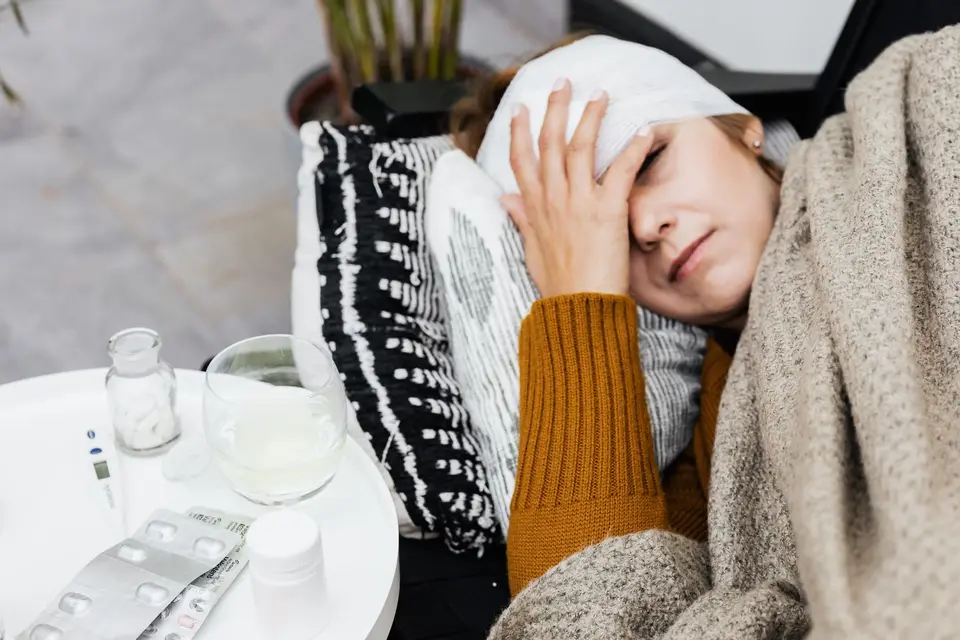
The NHS lists exercise, yoga and massage among relaxation activities for tension headaches, and suggests a low, firm pillow plus heat or cold packs when neck pain accompanies the headache. It also advises changing sleep habits when insomnia may be contributing.
The guidance does not set one pack temperature or session length for every device and health condition. A pack should be used only as its manufacturer directs, and questions about suitability belong with a clinician.
WHO lists regular sleep and exercise schedules, hydration, a healthy diet and a headache calendar among lifestyle measures used in headache care. A diary can record timing, duration, accompanying symptoms, possible triggers and any medicines used, giving a clinician a clearer history if headaches continue.
Frequent use of medicines for headache can itself contribute to medication-overuse headache. This article does not set a personal medicine limit because the relevant threshold depends on the medicine class and pattern of use; a pharmacist or clinician can review recurrent use without requiring the person to increase or stop a medicine independently.
Children, pregnancy and long-term conditions need separate decisions
Children
Adult headache routines should not automatically be applied to a child. The Royal Children’s Hospital Melbourne lists waking from sleep, early-morning pain, unexplained vomiting, sudden severe onset, progressive worsening, focal neurologic symptoms and a new seizure among pediatric headache warning signs.
The hospital’s guideline supports adequate hydration, good sleep habits, healthy exercise and attention to triggers for children with primary headache, but treatment depends on the diagnosis. A child with a new pattern, repeated headaches or any warning sign needs pediatric assessment rather than an adult home-care plan.
Pregnancy
The NHS advises urgent assessment during pregnancy for a severe headache, vision changes, pain below the ribs, vomiting or a sudden increase in swelling of the face, hands, feet or ankles. These can be signs of pre-eclampsia, which usually begins after 20 weeks of pregnancy.
Rest, relaxation, adequate fluids and sleep are non-drug options in that guidance. Any medicine decision during pregnancy belongs with a clinician, midwife or pharmacist because the suitability of common pain medicines changes during pregnancy.
Chronic illness, reduced sensation and regular medicines
The cited sources do not establish one pack routine for people with reduced skin sensation, impaired circulation, a neurologic condition or another chronic illness. People in these groups should ask a clinician whether heat or cold is appropriate before using a pack.
Regular medicines can also change the assessment of a new headache or the safety of adding a pain medicine. A prescriber or pharmacist should review possible adverse effects and interactions; prescribed treatment should not be stopped solely because a headache has developed.
Frequently asked questions
Can a warm pack be used for a tension headache?
A heat or cold pack is an option when neck pain accompanies the headache, according to NHS guidance. The evidence does not define one temperature, duration or placement for every person and device.
Does a tight, band-like headache confirm tension-type headache?
No. WHO uses pressure or tightness as a typical description, but several headache disorders and secondary causes can overlap in symptoms. New, severe, changing or recurrent pain needs clinical assessment.
Can relaxation stop a headache?
Structured psychological interventions reduced monthly headache days in a 2025 review, but the trials tested different programs and most raised some risk-of-bias concerns. A brief relaxation exercise may be tried when no warning signs are present, without treating it as a guaranteed result.
When is a headache an emergency?
Emergency signs include sudden extremely severe pain, a seizure, weakness or numbness, confusion, speech or walking difficulty, loss of vision, or a very high temperature with neck stiffness or light sensitivity.
Should children follow the same routine as adults?
No single adult routine should be assumed safe or effective for a child. Night-waking pain, early-morning headache, unexplained vomiting, progressive worsening, neurologic symptoms or a seizure requires prompt pediatric assessment.
Sources and further reading
- Migraine and other headache disorders(World Health Organization)
- Tension headaches(National Health Service in England)
- Headaches(National Health Service in England)
- Efficacy of psychological treatment for tension-type headache: a systematic review and meta-analysis(The Journal of Headache and Pain)
- Non-pharmacological self-management for people living with migraine or tension-type headache(BMJ Open)
- Headaches in pregnancy(National Health Service in England)
- Clinical practice guideline: Headache(The Royal Children’s Hospital Melbourne)