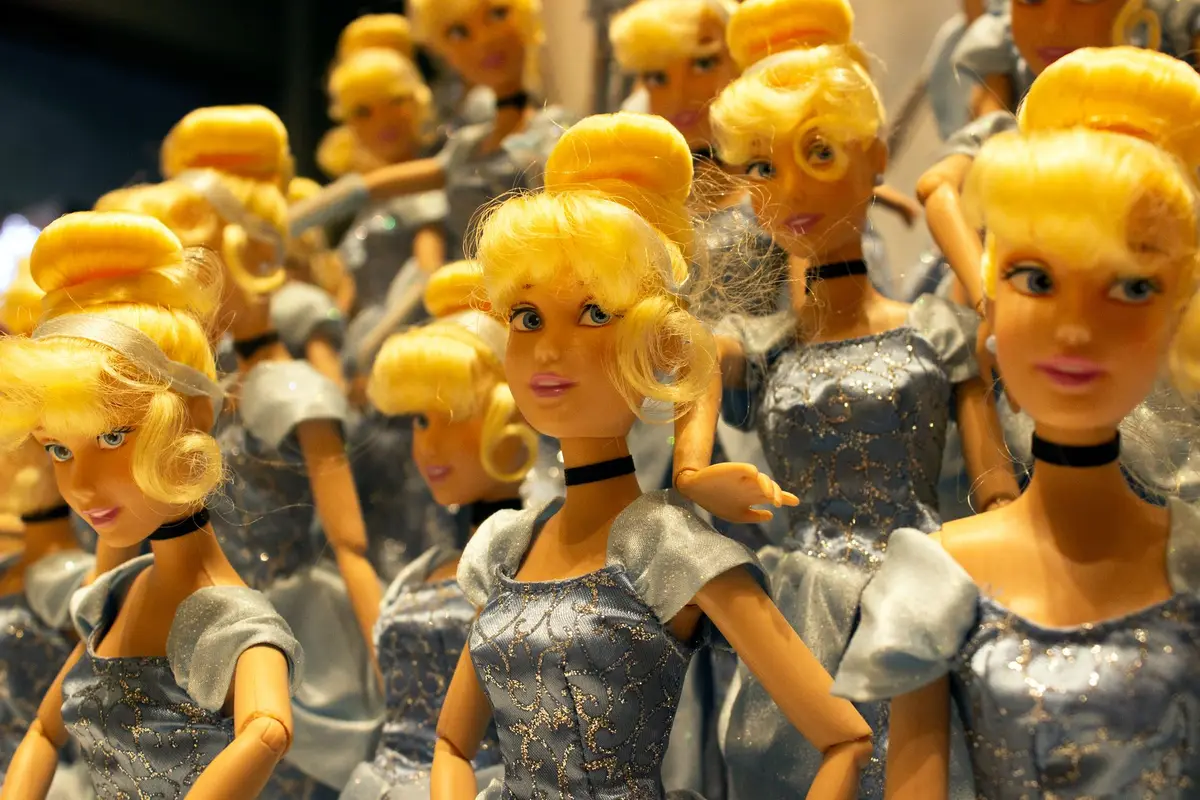
Australian researchers reported in PLOS ONE on June 16, 2026, that four Fashionista Barbie dolls had body ratios closer to a young-adult reference group than the original Barbie. A newer Ken moved closer on most individual girth measurements, but his overall proportions showed less improvement.
The study revisited a 1996 anthropometric analysis of the original Barbie and Ken. Researchers from the University of New South Wales and Adelaide University measured the Curvy, Petite, Tall and Standard Barbie models introduced in 2016, along with a newer Malibu Ken.
Dolls were scaled to the same adult height
The team measured the dolls at the neck, chest, waist, hips, limbs and other body sites. It then used allometric scaling to model every doll at a height of 170.18 centimeters, a standard reference height used in anthropometric work.
Those results were compared with the same South Australian student data used in the 1996 paper. The reference group consisted of 135 women and 50 men aged 18 to 35, allowing the researchers to compare the new measurements with the earlier analysis on a consistent basis.
The original dolls' waist-to-height ratios were extreme relative to the reference data. The paper placed them at a z-score of about minus 5.19, corresponding to fewer than one person in 10 million if the reference measurements followed the assumed distribution.
Fashionista Barbie ratios moved toward the reference group
The four Fashionista Barbie models had larger waist-to-height ratios than the original doll, although they remained unusually low at about one in 1,000 relative to the reference population. Their waist-to-hip and chest-to-waist ratios nevertheless fell within the 95 percent confidence ellipse calculated for the young women in the comparison group.
Curvy Barbie was closest to the reference mean across most of the scaled girth measurements. Across the newer Barbie range, 80 percent of measured body sites and all three proportions moved closer to the reference data than the original doll's measurements.
The results also challenge a recurring claim that Barbie's chest girth is disproportionately large. The measured chest values had negative z-scores, meaning they were below the mean after the dolls and reference participants were scaled to the same height.
Ken's girths improved more than his proportions
The newer Ken was closer to the male reference mean for every individual girth except the ankle. That amounted to improvement on 90 percent of the girth measures examined in the paper.
The ratio results pointed in the other direction. Only one of the three ratios moved closer to the male reference group, and the newer Ken remained outside its 95 percent confidence range, largely because of a narrow waist. The researchers concluded that Ken's individual measurements had become more human-like while his combined proportions had moved slightly farther from the comparison group.
The study did not test effects on children
More realistic dimensions do not establish that the newer dolls change how children view their own bodies. The study measured plastic dolls and compared them with adult anthropometric data; it did not assign children to play with different models or measure later body satisfaction.
The paper reviewed earlier research in which children still associated the Curvy model with larger body size and often preferred thinner Barbie types. Those findings came from separate studies with their own designs and cannot show that a particular doll causes a lasting change in body image.
The human comparison has limits
The South Australian reference participants were university students who had volunteered for body-composition research. The authors said they were leaner than the wider population, so the sample should not be treated as a national picture of adult bodies in Australia or elsewhere.
Human measurements have also changed since the original comparison. Rising average waist measurements can narrow the statistical gap between dolls and people even when a doll's design remains unchanged, making it difficult to attribute the entire shift to Mattel's redesign.
The analysis covered specific Fashionista models introduced in 2016, not every Barbie and Ken sold since then. APPI News did not independently measure current products or verify whether later production runs retained the reported dimensions, leaving the study as a comparison of the sampled dolls rather than the entire brand.