
The public case page names the company and its two officers as respondents. It does not decide the responsibility of any celebrity, advertising agency, publisher or platform, but it illustrates two tests that food endorsements often blur: whether the commercial relationship is transparent and whether the underlying product claim has adequate support.
An endorsement does not change the evidence standard
The Codex Alimentarius Commission, the food standards body established by the Food and Agriculture Organization of the United Nations and the World Health Organization, provides a common international baseline for nutrition and health claims. Its Guidelines for Use of Nutrition and Health Claims say health claims should rely mainly on well-designed human intervention studies and that authorities should assess the totality of relevant evidence, including findings that support, contradict or leave the proposed effect unclear.
Codex does not turn a personal account into evidence for everyone who buys the product. A testimonial may accurately describe one person's experience while still implying a broader outcome that the advertiser has not established for the finished food, its intended audience or the advertised conditions of use.
US FTC health-products guidance says advertisers are responsible for misleading uses of endorsements and cannot make a claim through a consumer or expert that would be deceptive or unsupported if the advertiser made it directly. The same guidance says an honest experience alone does not substantiate the result implied for other consumers.
Responsibility follows participation, knowledge and control
The International Chamber of Commerce says its code was updated in 2024 and serves as the benchmark for almost 50 self-regulatory codes. Article 24 gives marketers overall responsibility and assigns responsibility to other participants in proportion to their activity, expected professional knowledge and control. The list includes agencies, media, influencers, affiliate networks, social platforms and advertising-technology companies.
The ICC document is a self-regulatory code rather than a global statute. It says agencies should exercise due care when creating communications, while publishers, media owners and platforms should act diligently when accepting advertising and reject material that can readily be seen to breach the code. Those duties do not mean every participant receives the same penalty when national law is enforced.
The US Endorsement Guides, effective July 26, 2023, say advertisers may be liable for deceptive endorsements even when an endorser is not liable; endorsers may be liable for statements they know or should know are deceptive; and advertising agencies or similar intermediaries may be liable for creating or distributing endorsements they know or should know are deceptive. The guides also tell advertisers to instruct and monitor endorsers and to remedy noncompliance.
These tests distinguish a company that selects the claim, an agency that helps shape it, a service that only performs a limited production task and an endorser who adds an unsupported statement. The relevant facts are who approved the wording, who had access to the evidence, who could change or stop the material and what each participant knew or should have known under the applicable rule.
The complete advertisement carries the claim
The ICC describes the 2024 code as covering advertising, digital marketing, sponsorship, sales promotion and social media. Article 5 says text, sound and visual elements work together to create a communication's net impression, including claims made by implication, omission, ambiguity or exaggeration. A cautious spoken sentence can therefore sit inside a broader message created by captions, before-and-after images, organ graphics, scientific figures, testimonials and purchase links.
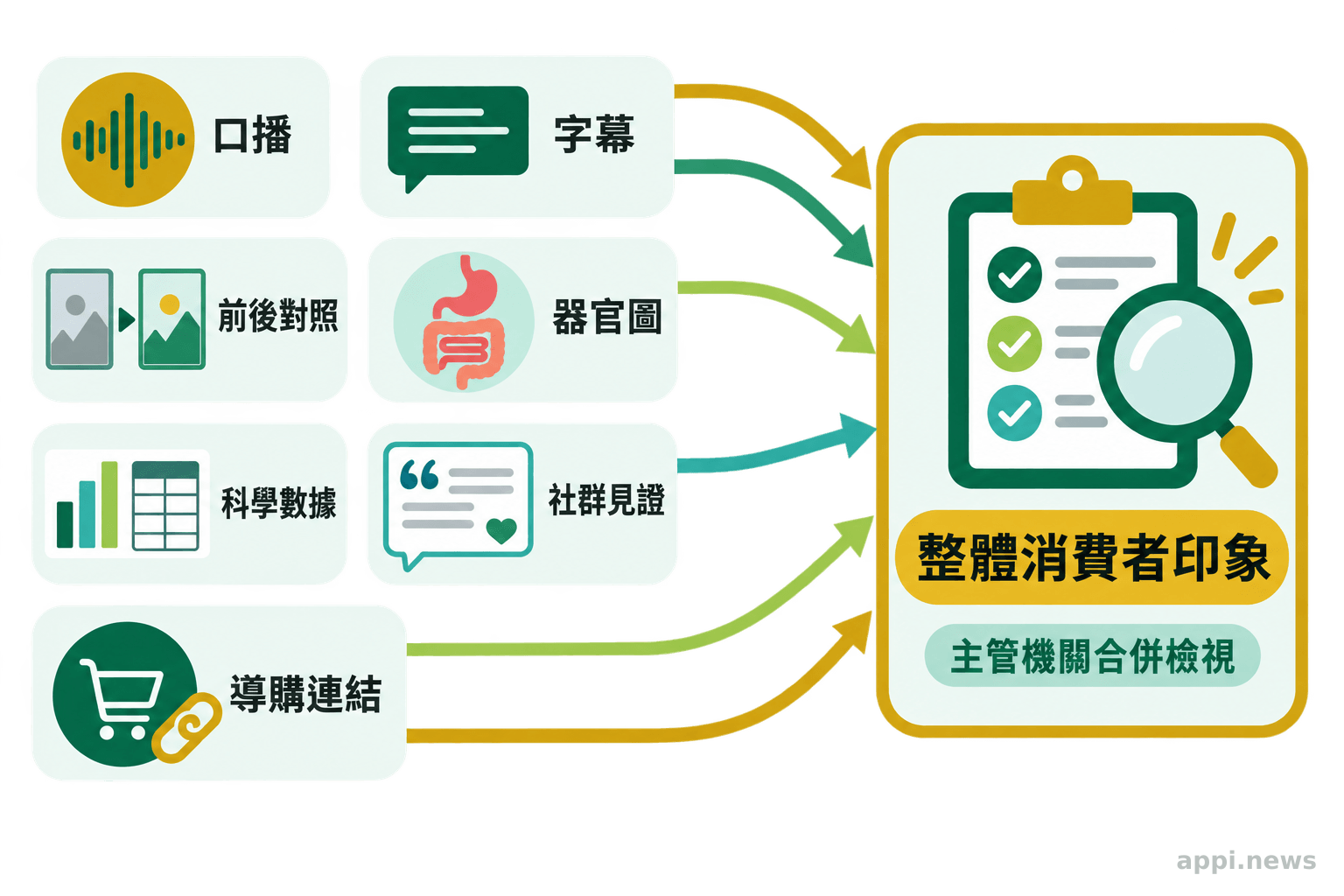
A review needs the final published asset rather than the script alone. Editing, added subtitles, a live remark or a changed sales page can alter the claim after an earlier version has been checked, so the evidence file and approval record need to identify the version that consumers actually saw.
Commercial disclosure is a separate test. United Kingdom Competition and Markets Authority guidance updated on September 3, 2025 says incentivized content must be clearly identifiable as advertising, reflect the creator's genuine experience and avoid false or unsupported statements. It covers direct payment, commissions, gifts, free or discounted products and promotions for a creator's own business, regardless of audience size.
A visible advertising label tells an audience that a commercial relationship exists. It does not validate a health claim, while evidence for a product claim does not excuse a hidden sponsorship.
Food-claim rules diverge across markets
European Union Regulation (EC) No 1924/2006 applies to nutrition and health claims in commercial communications for foods, requires health claims to be authorized under the regulation and bars health claims that refer to recommendations by individual doctors or health professionals. The restriction concerns the health claim and its source of authority; it is not a universal ban on every celebrity appearance in a food advertisement.
The FTC materials cited here use different US tests centered on deception, substantiation and disclosure. The United Kingdom creator guidance focuses on hidden advertising and unsupported statements in content governed by UK consumer law. Each source answers a jurisdiction-specific question, so their rules cannot be combined into one worldwide list of defendants, fines or approved wording.
Product category also matters within a country. A conventional food, food supplement, medicine or medical device can fall under different claim and advertising controls, and a status in one market does not establish permission in another. A statement that a product is “approved” remains incomplete unless it names the product, country, authority and scope of the decision.
A usable record connects the claim, evidence, role and version
A claim record captures every express and implied promise in the final video, image, caption, audio track and linked sales page. It identifies the advertised product, intended audience, outcome and time frame so that evidence is not matched to a narrower sentence than the audience received.
An evidence record connects each objective claim to the exact food or ingredient, formulation, human population, comparison, duration and measured outcome. The Codex approach also requires contrary and unclear findings to remain in the assessment rather than leaving only favorable material in the file.
A role record shows who supplied the claim, selected the endorser, reviewed the evidence, wrote or edited the material, approved the final version and controlled publication. Contracts and sponsorship disclosures document commercial relationships, but they do not replace records showing what each participant did and knew.
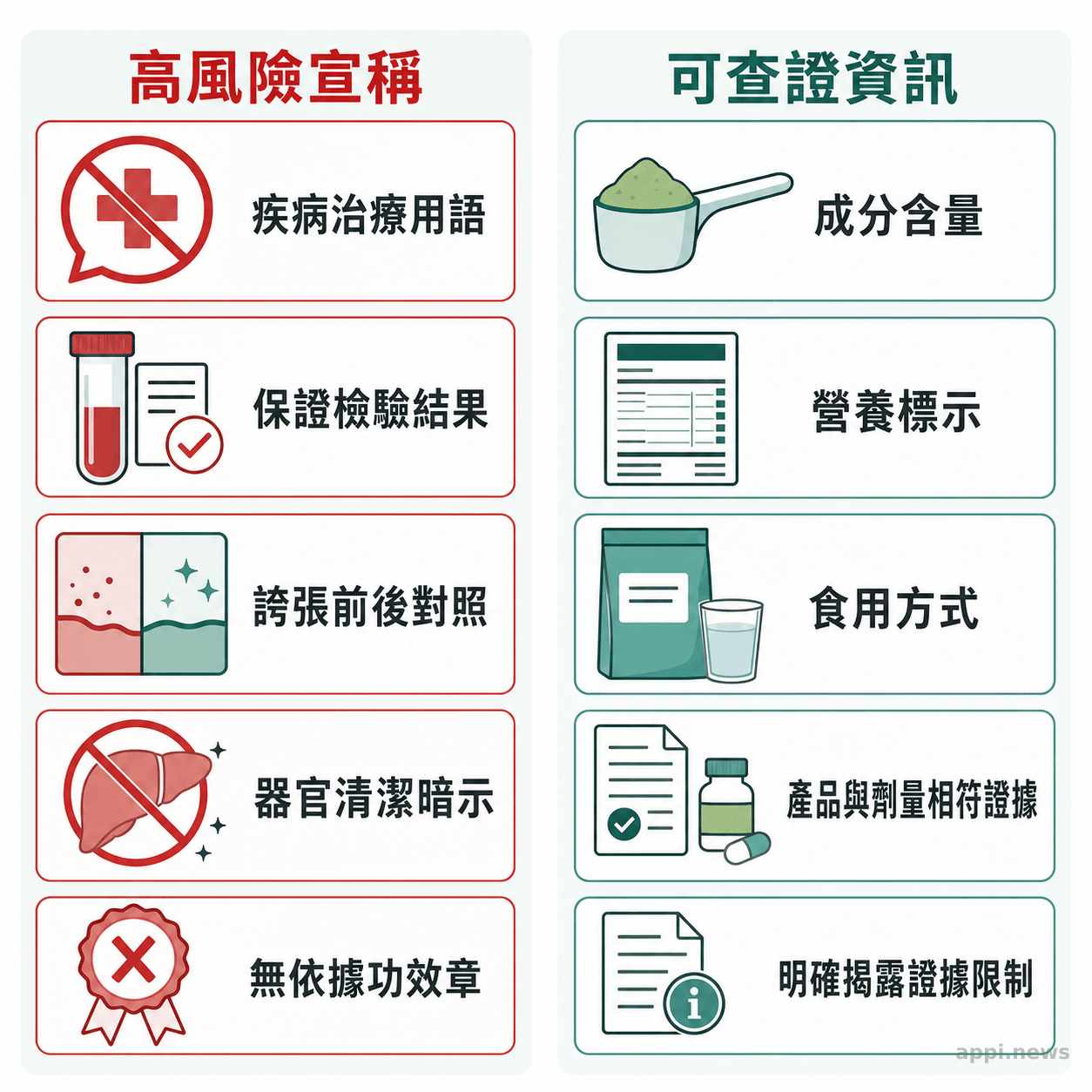
A version record links the approval to the exact broadcast cut, social post or landing page and records later changes or withdrawals. This prevents an approved script from being used as proof for a materially different edit, live endorsement or repost.
The available sources do not create a global liability table
The ICC code and Codex guidance establish shared principles, but neither allocates civil, administrative or criminal liability worldwide. National and regional rules determine who can be investigated, what mental state or level of control matters, what defenses apply and which remedies are available.
The TruHeight order resolves allegations against the named US company and two officers, not an unnamed endorser or distribution service. APPI News could not find a published global dataset comparing how often food advertisers, agencies, media and endorsers are held liable at the time of writing.
Sources and further reading
- TruHeight (Vanilla Chip LLC), In the Matter of(US Federal Trade Commission)
- ICC Advertising and Marketing Communications Code, 11th edition(International Chamber of Commerce)
- Guidelines for Use of Nutrition and Health Claims (CXG 23-1997)(Codex Alimentarius Commission)
- Health Products Compliance Guidance(US Federal Trade Commission)
- Guides Concerning the Use of Endorsements and Testimonials in Advertising(US Federal Trade Commission via the Federal Register)
- Regulation (EC) No 1924/2006 on nutrition and health claims made on foods(European Union)
- Social media endorsements: guidance for content creators(United Kingdom Competition and Markets Authority)