
An HbA1c result from 5.7% to 6.4% falls within the American Diabetes Association's prediabetes range for nonpregnant people. It indicates increased risk of type 2 diabetes, not a diagnosis of diabetes and not a prediction that progression is inevitable.
The US National Institute of Diabetes and Digestive and Kidney Diseases (NIDDK) says HbA1c estimates average blood glucose over the previous three months by measuring the share of hemoglobin with glucose attached. Unlike fasting plasma glucose, the test does not require fasting, and one unusually sugary meal the day before cannot by itself determine the result.
Symptoms can matter more urgently than a screening number
Marked thirst, frequent urination, blurred vision, unexplained weight loss or unusual fatigue warrants prompt clinical assessment, even when a previous screening result was normal. The World Health Organization says type 1 diabetes symptoms may appear suddenly, while type 2 symptoms can be mild for years.
Vomiting with an inability to keep fluids down, trouble breathing, fruity-smelling breath or several symptoms of diabetic ketoacidosis require emergency care. The US Centers for Disease Control and Prevention describes diabetic ketoacidosis as a life-threatening emergency that can be the first noticeable sign of diabetes. Local emergency numbers and services differ by country.
HbA1c measures a longer period than fasting glucose
Glucose attaches to hemoglobin inside red blood cells. Because the cells are continually replaced, HbA1c gives a weighted picture of recent glucose exposure rather than a reading from the moment blood was drawn. Changes in the most recent month have more influence on the result than changes earlier in the three-month period.
A fasting plasma glucose test measures glucose after at least eight hours without caloric intake. An oral glucose tolerance test (OGTT) measures the response to a glucose drink, including a reading two hours later. These tests examine different parts of glucose metabolism, so their classifications do not always agree.
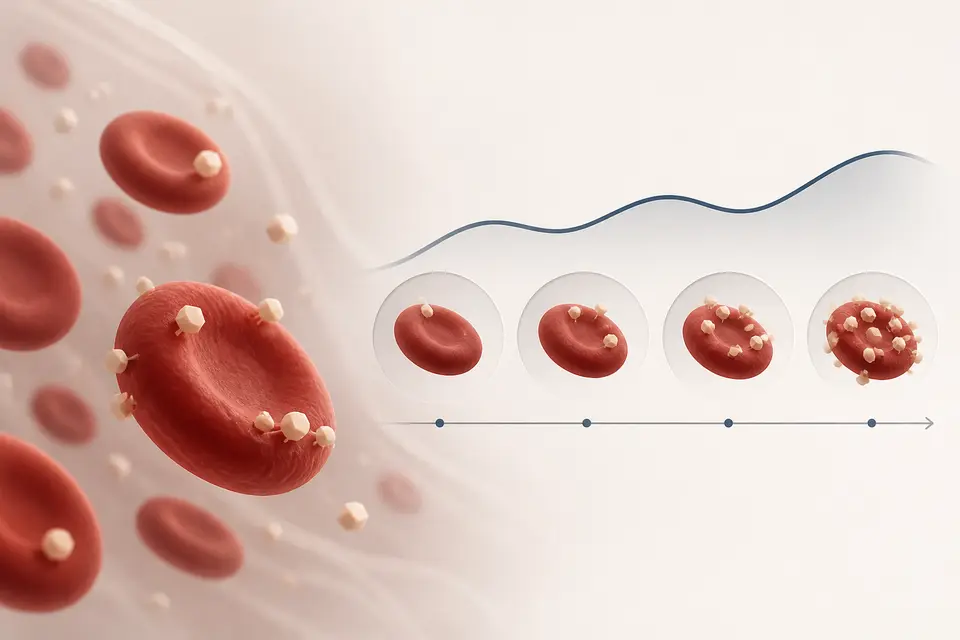
The American Diabetes Association uses an HbA1c below 5.7% as normal, 5.7% to 6.4% as prediabetes and 6.5% or above as diabetes. Its corresponding nonpregnancy ranges are 100 to 125 mg/dL (5.6 to 6.9 mmol/L) for fasting plasma glucose and 140 to 199 mg/dL (7.8 to 11.0 mmol/L) for the two-hour OGTT result.
Those intermediate-risk labels are not fully uniform worldwide. The World Health Organization uses the terms impaired fasting glycemia and impaired glucose tolerance and says progression to type 2 diabetes is possible but not inevitable. Readers should use the reference interval and diagnostic standard applied by their clinician and country rather than treating 5.7% as a universal legal or clinical boundary.
A second result may be needed
A laboratory value is not a diagnosis on its own. NIDDK advises repeating HbA1c or using another diabetes test on a different day when an asymptomatic person has a result in the diabetes or prediabetes range. Clear symptoms with very high glucose can change the need for confirmation, which is a clinical decision.
A normal fasting glucose result does not guarantee that HbA1c or a two-hour OGTT result will also be normal. The reverse is also possible. When results conflict, a clinician can review timing, laboratory methods, symptoms and conditions that affect either glucose or red blood cells.
The prevention trial tested a structured program
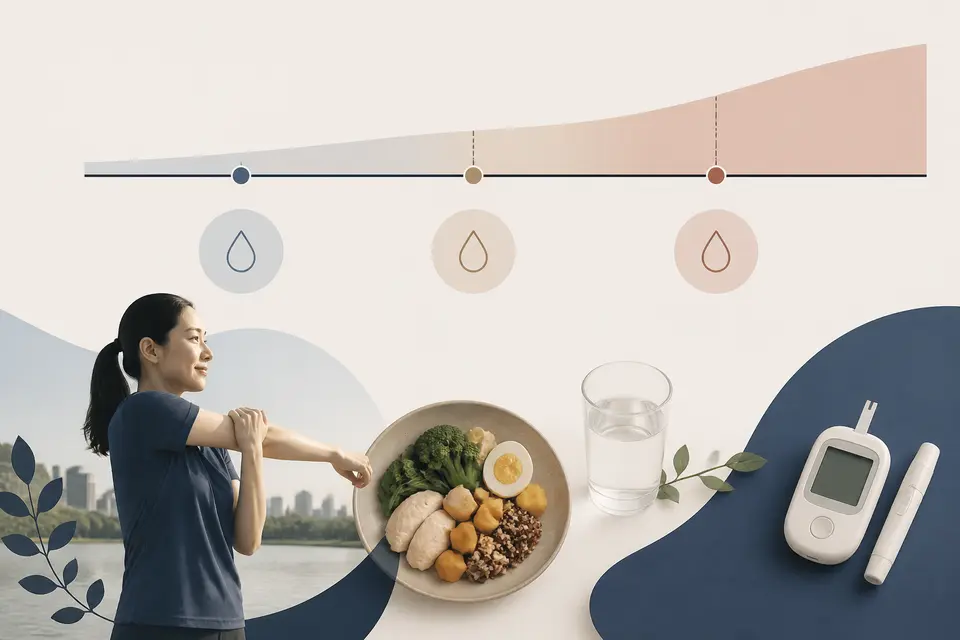
The US Diabetes Prevention Program enrolled 3,234 adults with overweight and elevated fasting and post-load glucose at 27 US centers. Participants were assigned to an intensive lifestyle program, metformin or placebo. The trial population and support provided matter when applying its results to people elsewhere.
After about three years, the lifestyle group had 58% lower incidence of type 2 diabetes than the placebo group, while the metformin group had 31% lower incidence. The lifestyle program targeted 7% weight loss and 150 minutes of physical activity a week and included at least 16 individual meetings in its first 24 weeks, followed by continuing contact.
The finding concerns a supported intervention and a relative reduction in new diagnoses. It does not prove that every person with an HbA1c of 5.7% can return to a lower range, nor does it establish that medicine is appropriate or inappropriate for a particular person. Medication decisions depend on medical history, pregnancy, kidney function, other conditions and local availability.
The World Health Organization recommends a healthy diet, regular physical activity, maintaining a healthy body weight and avoiding tobacco to prevent or delay type 2 diabetes. A structured program can help turn those broad goals into an individualized plan. Waist measurement may also add information about metabolic risk, as explained in APPI News's guide to waist-to-height ratio and BMI.
Red blood cell conditions can distort the result
HbA1c assumes a usual relationship between blood glucose and the life span of red blood cells. Recent blood loss, transfusion, erythropoietin treatment or hemodialysis can alter that relationship. Iron-deficiency anemia may produce a falsely high result, while kidney or liver failure can also affect accuracy.
Some hemoglobin variants, including variants associated with sickle cell disease and thalassemia, interfere with particular assays. NIDDK says a mismatch between HbA1c and blood glucose should prompt consideration of test interference and may require a different assay or a glucose-based test. The direction and size of an error cannot be inferred safely from the condition name alone.
Pregnancy, children and chronic illness need separate assessment
Pregnancy uses different screening pathways. NIDDK says clinicians may use HbA1c early in pregnancy to look for previously undiagnosed diabetes, but glucose challenge or OGTT testing is normally used to screen for gestational diabetes later in pregnancy. A pregnant person should use the schedule and cutoffs provided by their maternity care team.
HbA1c should not be used by itself to diagnose type 1 diabetes, which can progress quickly and occurs in children and adults. A child with thirst, frequent urination, weight loss, vomiting, deep breathing or increasing drowsiness needs prompt assessment rather than waiting for a routine HbA1c appointment.
People receiving dialysis, erythropoietin or regular transfusions, and those with anemia, kidney disease, liver disease or a known hemoglobin variant should tell the clinician interpreting the result. People taking regular medicines should not start, stop or change them because of a single screening result; the appropriate test and follow-up interval depend on the full clinical picture.
Frequently asked questions
Does 5.7% mean diabetes?
No. It is the lower boundary of the American Diabetes Association's prediabetes range for nonpregnant people. Diabetes begins at 6.5% under that standard, and an abnormal result often needs confirmation.
Can fasting the day before lower HbA1c?
Not in the way it can affect a same-day glucose reading. HbA1c reflects glucose exposure over roughly three months, with greater weight given to the most recent weeks.
Can a normal fasting glucose and an abnormal HbA1c both be real?
Yes. The tests measure different aspects of glucose metabolism and do not always identify the same people. A clinician can repeat testing and investigate interference when the difference is persistent.
Does a lower HbA1c after lifestyle changes mean the risk has disappeared?
No. A lower result can indicate improvement, but future risk depends on the broader metabolic picture and whether changes are sustained. Follow-up intervals should be set with a clinician under the guidance used in the reader's country.
Sources and further reading
- The A1C Test & Diabetes(US National Institute of Diabetes and Digestive and Kidney Diseases)
- Diabetes Diagnosis(American Diabetes Association)
- Diabetes Prevention Program(US National Institute of Diabetes and Digestive and Kidney Diseases)
- Diabetes(World Health Organization)
- Diabetic Ketoacidosis(US Centers for Disease Control and Prevention)