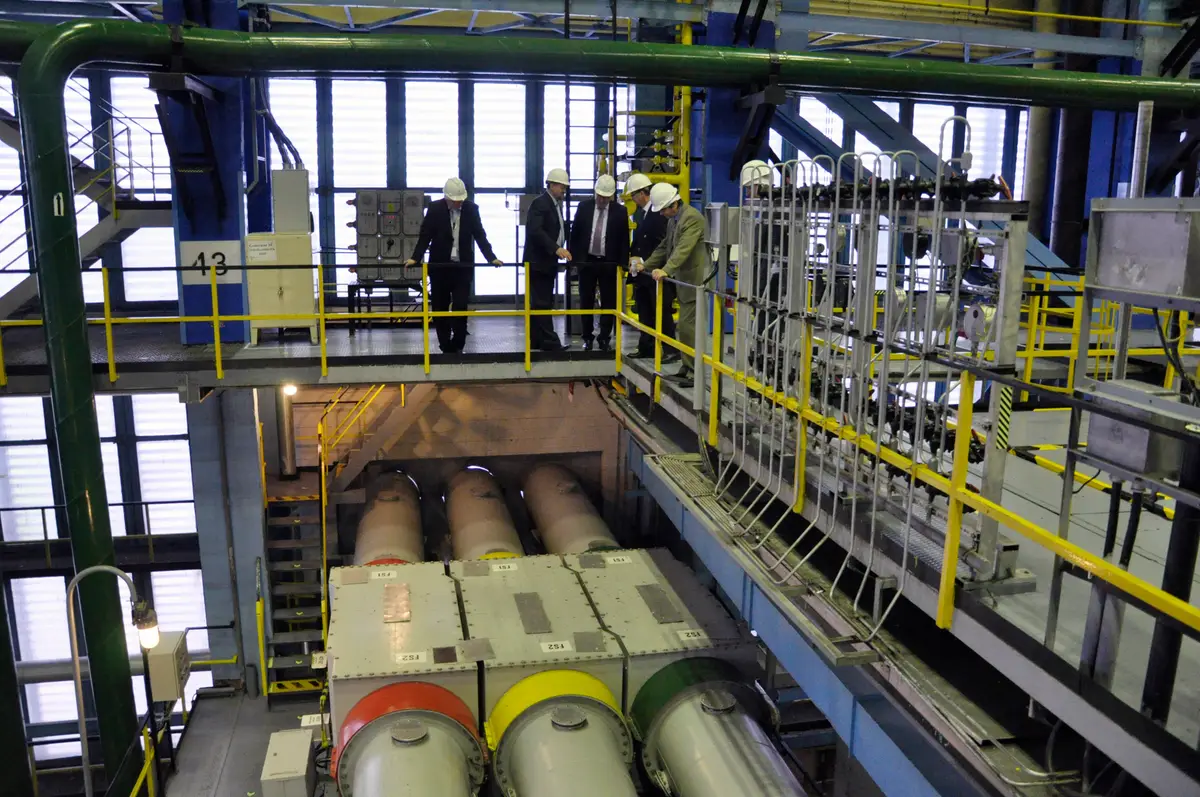
Hungarian engineers kept one turbine at the Paks nuclear plant running at 240 megawatts on August 3, averting an expected first full shutdown in the plant’s 44-year history. The remaining output was 12 percent of the usual 2,000 MW as record-low Danube levels restricted the plant’s normal access to cooling water.
Bloomberg initially reported on August 2 that one of the two reactors then operating had shut early that day and the final reactor would power down later. The later Associated Press account said the last turbine stayed online temporarily. This report therefore describes a near-shutdown rather than the completed full stop stated in the early coverage.
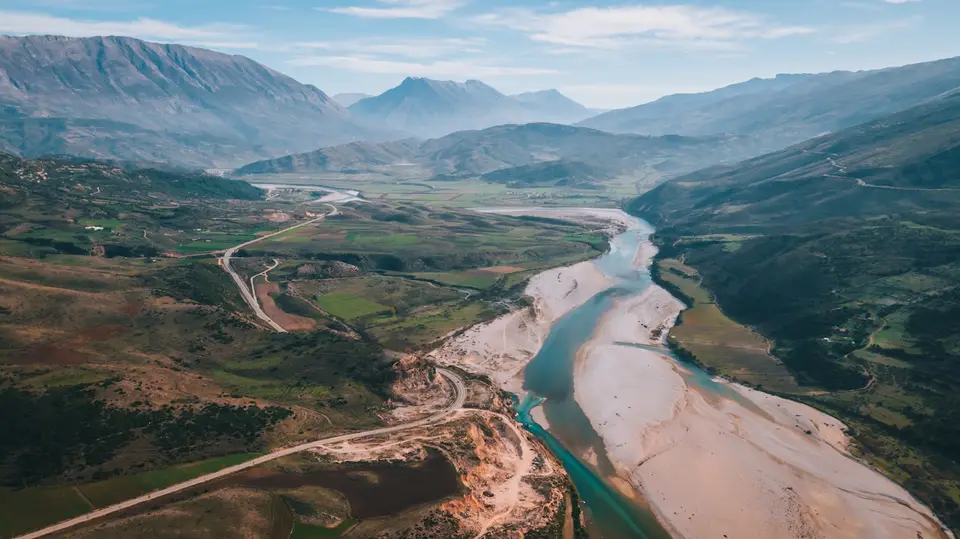
Low water restricts the plant’s normal cooling-water intake
An International Atomic Energy Agency technical report describes Paks as four 500 MW pressurized-water reactor units that draw cooling water directly from the Danube. River water enters through a cold-water canal and two intake structures, each serving two units, before pumps send it to condensers, plant systems and safety systems. The water returns to the river through a discharge canal.
The plant operator said the Paks gauge had fallen to minus 118 centimeters on July 29 and that workers had begun shutting Unit 3. Hungary’s atomic energy regulator said Unit 4 was cut to half power from 10:45 p.m. on July 31 as the Danube continued to fall.
Lower output did not mean reactor cooling had failed
The distinction matters because a plant still has to remove heat safely after electricity generation stops. The low Danube constrained routine intake and power production, while the regulator said the systems needed to keep the reactors safe remained available.
Hungary turns to imports and demand cuts
Paks normally accounts for nearly half of Hungary’s electricity production and about one-third of national consumption. Hungary used regional imports and renewable generation to cover part of the deficit, while the government asked large industrial users and households to reduce demand between 5 p.m. and 10 p.m.
The government also barred electric freight trains during those peak hours and allowed mandatory limits for large commercial and industrial consumers. Prime Minister Péter Magyar said the conservation effort reduced demand by 700 MW on August 2, almost three times the output still coming from Paks the next day.
The Danube shortage reaches beyond one power plant
The European Union’s Copernicus Climate Change Service found below-average spring river flow across much of central and eastern Europe in 2026, including the Danube catchment. The data show that the low-flow conditions developed before the August emergency, although they do not by themselves attribute the Paks reduction to human-caused climate change.
Romania faced a related constraint downstream. The Associated Press reported that the state-owned Cernavoda nuclear plant had closed one of its two reactors as Danube flow fell to 1,500 cubic meters per second, less than one-third of the July average, and Romanian authorities declared a national energy alert.
Copernicus and the World Meteorological Organization reported that 70 percent of European rivers had below-average annual flow in 2025, while heat and dry conditions contributed to record wildfire activity. The Paks episode shows how low water can also remove most of a major power station’s output even when its nuclear safety systems remain available.
Sources and further reading
- Record low Danube levels push Eastern Europe toward an energy emergency(Associated Press)
- Hungary stops nuclear plant for first time as Danube River dries up(Bloomberg via gCaptain)
- Further output reduction due to low water levels(MVM Paks Nuclear Power Plant)
- Further power reduction at the Paks Nuclear Power Plant(Hungarian Atomic Energy Authority)
- Hungary extraordinary national report on nuclear safety(International Atomic Energy Agency)
- May 2026 global climate highlights(Copernicus Climate Change Service)
- European State of the Climate 2025(Copernicus Climate Change Service and World Meteorological Organization)