Two Greek firefighting helicopters collided near Psatha, west of Athens, on August 2, killing a Greek crew member and a Danish crew member. A Greek and a British crew member were recovered alive after one of the aircraft crashed.
The collision came as high winds pushed fires through western Attica and forced more communities to evacuate. Three firefighters had died earlier that week, two on Crete and one in the Peloponnese, taking the reported death toll from wildfire response operations in Greece to five.
Wind restricts aircraft and drives coastal evacuations
Greek Prime Minister Kyriakos Mitsotakis said winds had repeatedly reached 100 kilometers per hour. Greece's civil protection minister said turbulence prevented some aircraft from collecting water or making drops, leaving ground crews to work in adverse conditions around Athens and on several islands.
More than 300 firefighters were sent to the Porto Germeno area, a coastal resort about 70 kilometers northwest of Athens. The fire reached the sea, damaged homes and forced about 300 people to be rescued by boat after some residents initially remained despite an evacuation call.
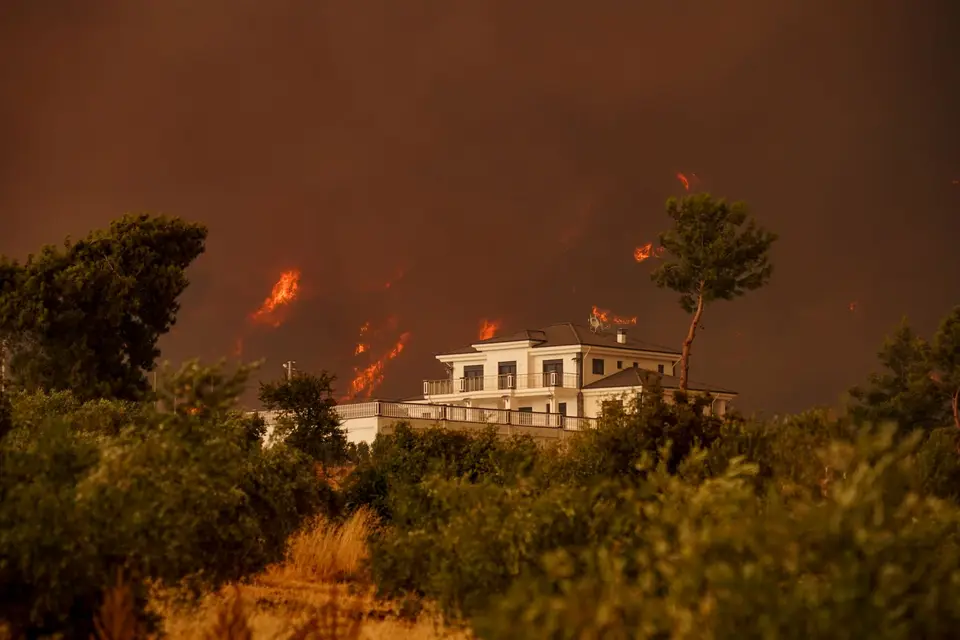
Firefighters later reported evacuating 254 people by sea on Friday and another 12 on Saturday. Officials ordered residents to leave Kandili, Agia Skepi and Toutouli as smoke and flames restricted access to coastal communities.
Early estimates put the affected area near Porto Germeno at 4,000 to 5,000 hectares. A later estimate cited by Euronews put it above 10,000 hectares, while fires across Greece had burned more than 12,000 hectares of forest and farmland by August 2. The reports did not provide a final official perimeter for the Porto Germeno fire.
Most Gironde evacuees return, but fire remains active
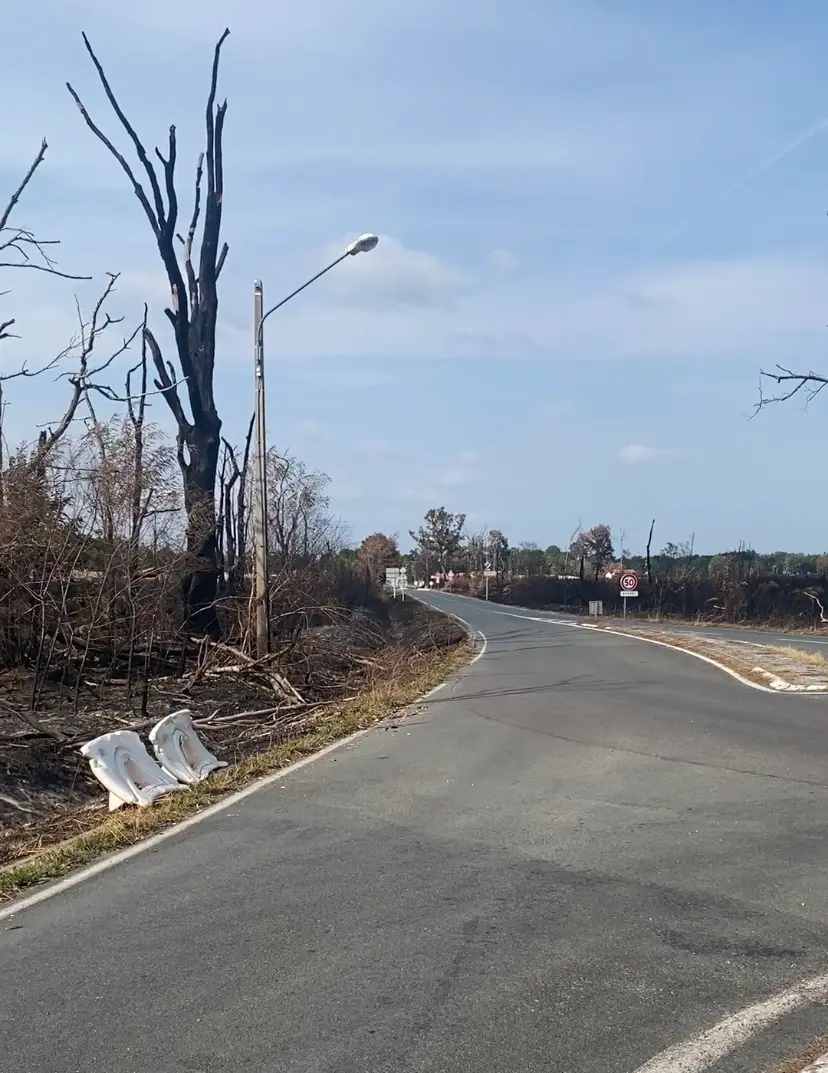
Conditions had eased farther west. The Gironde fire near Bordeaux was held within its perimeter after burning 42,000 hectares and destroying 240 homes. Of 220,000 people evacuated, 208,000 had been allowed to return by August 2.
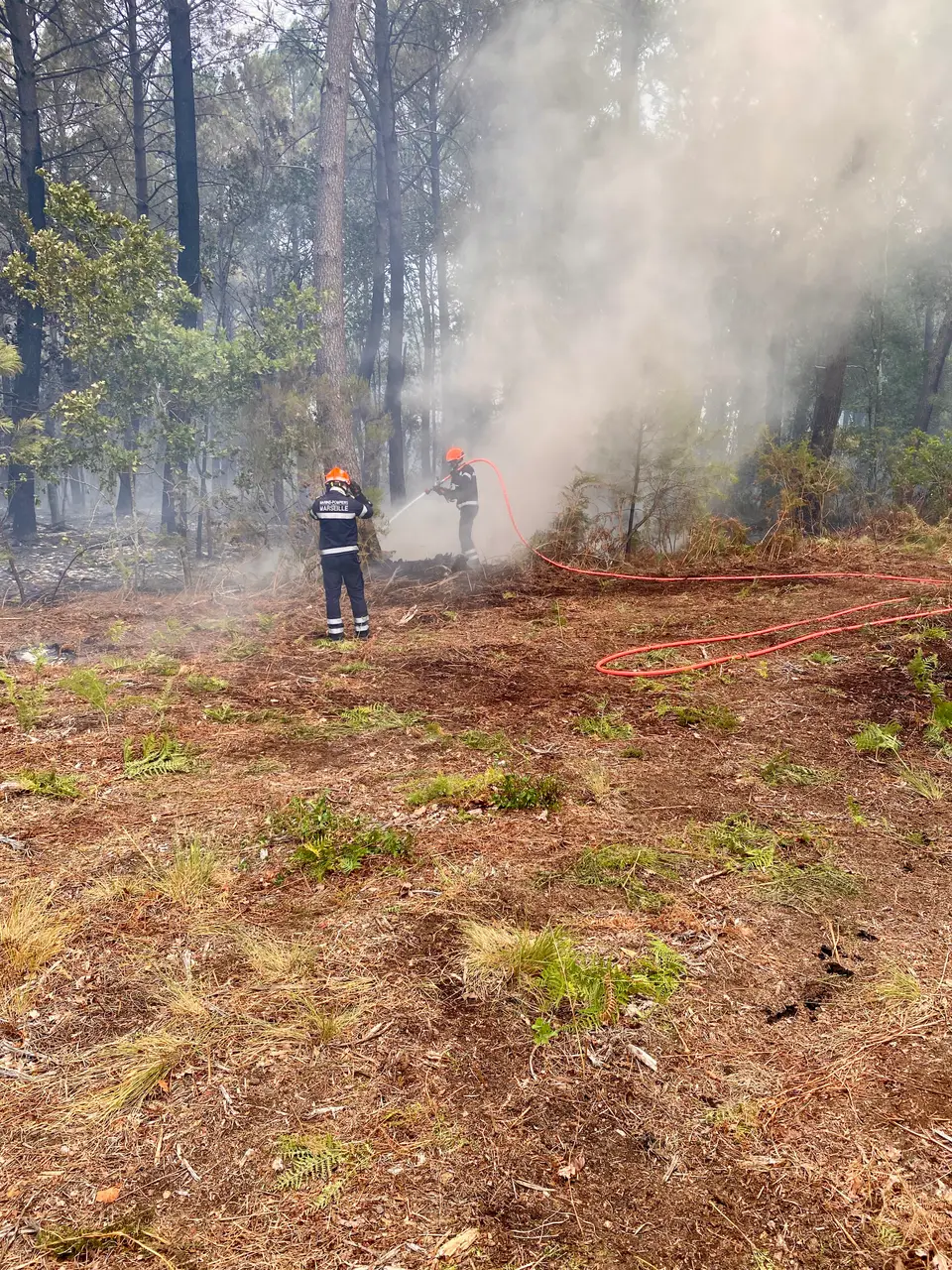
Containment did not mean the fire was extinguished. Hot spots remained inside the burned area, and dry conditions, high temperatures and afternoon winds left a risk of renewed spread. A separate fire in France's Var department also remained under surveillance after crews stopped its advance.
Spain's major fires were no longer advancing by August 2, but crews continued guarding burned areas against flare-ups. The Fermoselle fire in Zamora province had burned 11,134 hectares before it was brought under control, and most evacuees had returned home.
Europe's warming raises the background risk
The simultaneous fires followed repeated heatwaves and dry conditions across southern Europe. Climate change does not identify the ignition source of an individual blaze, but it changes the heat and moisture conditions in which fires can spread.
The European Union's Copernicus Climate Change Service says Europe has warmed more than twice as fast as the global average since the 1980s. It attributes the regional pace to several factors, including shifts in atmospheric circulation, declining snow cover, reduced aerosols and Europe's proximity to the Arctic.
For travelers, a fire listed as contained may still bring road closures, evacuation orders and poor air quality. Conditions and access can change within hours, so transport operators and the responsible national or local emergency agencies remain the relevant sources for live instructions.
Sources and further reading
- Europe's wildfires update: two helicopters collide while battling fire in Greece(Euronews)
- Firefighters in Greece struggle to save coastal resort as winds rage(AFP via The Times of Israel)
- Firefighting helicopters collide mid-air as Europe's wildfire emergency rages(Associated Press via The Irish News)
- Why is Europe warming so quickly?(Copernicus Climate Change Service)