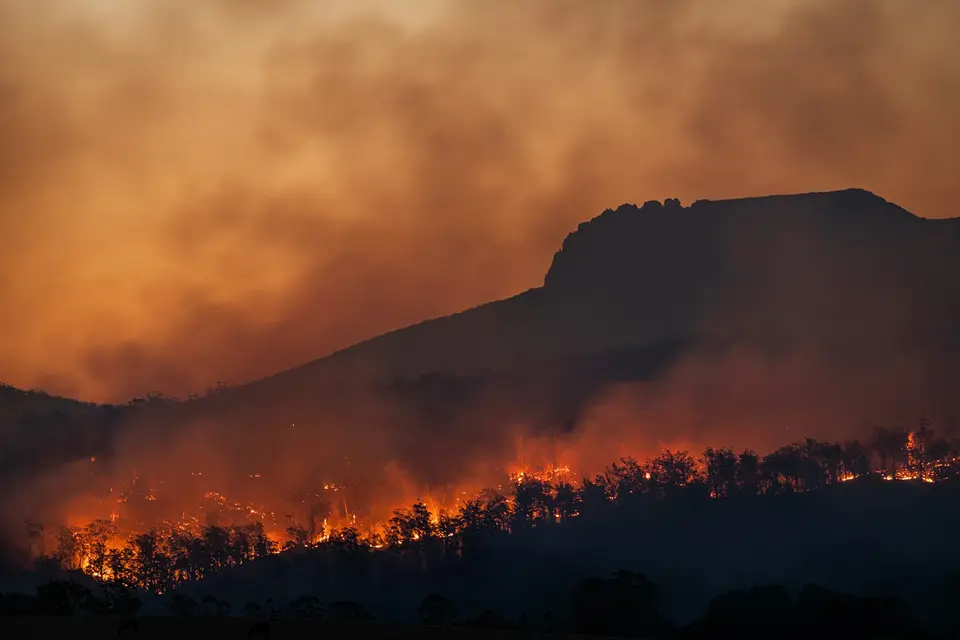
Indonesian firefighters had mostly contained the Mount Bromo wildfire by August 11, but two active hot spots remained and the national park stayed closed. The fire had affected nearly 900 hectares of dry grassland, other vegetation and protected edelweiss across 36 recorded hot spots.
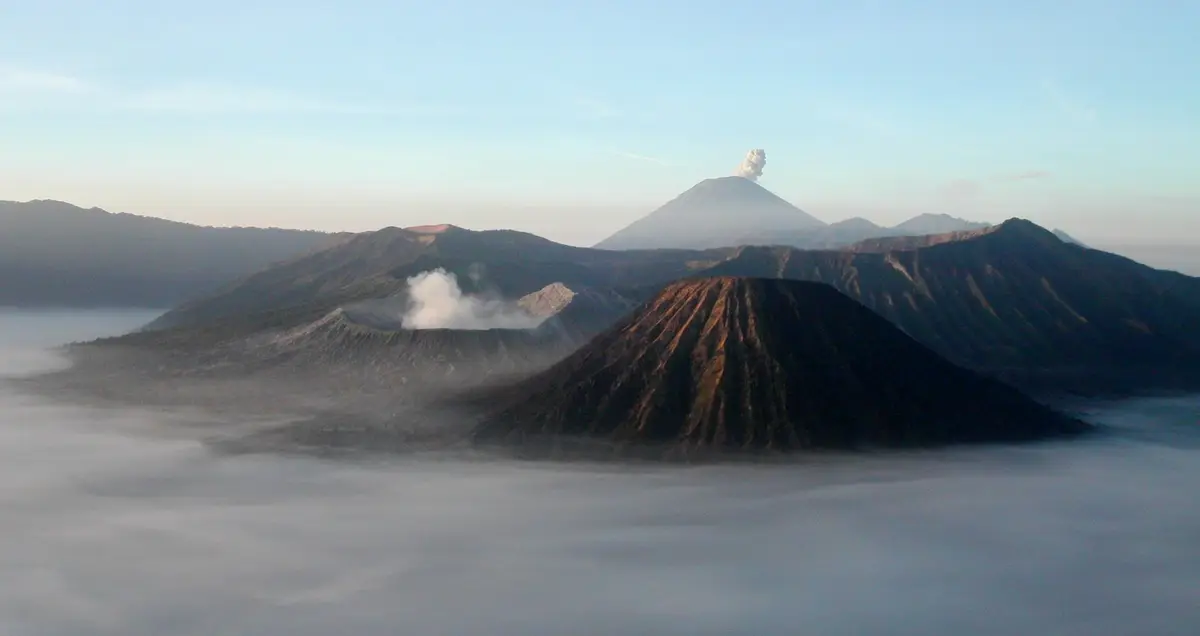
Mount Bromo lies within Bromo Tengger Semeru National Park in Indonesia's East Java province. The closure removed access to one of the country's best-known volcanic destinations while crews worked to prevent the fire from returning.
Burned-area estimate rose rapidly
Associated Press reports put the affected area at 60 hectares on August 6 and about 176 hectares by August 9, before it reached about 743 hectares on August 10 and nearly 900 hectares the next day. The changing totals were operational estimates rather than a final damage survey.
Indonesia's National Disaster Management Agency (BNPB), which coordinates national disaster response, identified Puncak 30 and Dengklek as the two remaining active locations on August 11. Suharyanto, the agency's head, said crews expected to extinguish them by August 14, which would allow two of the three water-bombing helicopters at Mount Bromo to be sent elsewhere.
Park closure has no announced end date
Indonesian authorities closed the park to visitors on August 8, and park chief Rudijanta Tjahja Nugraha said it would remain shut until further notice. No injuries or evacuations had been reported by August 10.
The public reports reviewed by APPI News did not give a reopening date or document a fire-specific refund process for park-issued tickets. Travelers with existing reservations will need current instructions from the park management office or the company that sold the booking.
Three helicopters were assigned to Bromo, not 35
Hundreds of firefighters, disaster personnel, police officers, soldiers, park rangers and volunteers joined the Mount Bromo response. Helicopters and drones supported the crews, who built firebreaks as steep volcanic slopes restricted access from the ground.
Three water-bombing helicopters were assigned to Mount Bromo on August 11, while more than 35 aircraft were deployed across Sumatra and Borneo. The larger number belonged to Indonesia's separate response to forest and peatland fires on those islands, not to the Mount Bromo operation.
Cause remains undetermined
Indonesia's disaster agency said on August 6 that local authorities had not determined how the Mount Bromo fire started. Later reports reviewed by APPI News did not provide an official finding, so the cause cannot be inferred from reports of illegal agricultural burning elsewhere in Indonesia.
Indonesia's Meteorology, Climatology and Geophysics Agency, the national weather service, forecast that a strong El Niño would prolong dry conditions and increase fire risk into early 2027. By mid-July, seasonal zones covering 54.5 percent of the country had entered the dry season, and the agency had recorded more than 4,900 hot spots by late July. Dry vegetation and strong winds can accelerate a fire without identifying its ignition source.
Wider fires affected other Indonesian islands
Indonesia's disaster agency said nearly 48,900 hectares of peatland had burned across six fire-prone provinces by August 10, with the largest affected area in West Kalimantan on Borneo. Schools in the provincial capital, Pontianak, suspended in-person classes after air quality reached unhealthy levels.
Those school closures and the cross-border haze reported in Malaysia were tied to fires around Borneo, not to the Mount Bromo fire on Java. The distinction separates the travel closure in East Java from the broader peatland emergency affecting other parts of Indonesia and Southeast Asia.
Sources and further reading
- Wildfire at Indonesia's Mount Bromo mostly contained as smoke forces school closures(Associated Press)
- Indonesia battles growing wildfires as Mount Bromo blaze spreads(Associated Press)
- Wildfire in Indonesian national park grows(Associated Press)
- Fire burns 60 hectares in Indonesia's Mount Bromo National Park(Associated Press)
- Indonesia warns strong El Niño to fuel drought until early 2027(Antara News)