
The Australian and New Zealand Committee on Resuscitation (ANZCOR) says rapid breathing can reflect illness or injury, or breathing beyond the body's needs during anxiety or a panic attack. Its first-aid guideline advises against paper bag rebreathing and puts assessment, calm support and continued observation first.
A bystander cannot safely diagnose the cause from rapid breathing alone. Heart and lung conditions, infection, a metabolic disturbance, poisoning, pain and psychological distress can produce overlapping signs.
Emergency warning signs come before breathing exercises
Call local emergency services if the person is not breathing normally, becomes unresponsive or deteriorates. Emergency help is also warranted when there is doubt about whether the episode is a panic attack or a different medical problem. Begin resuscitation if the person becomes unresponsive and is not breathing normally, following instructions from the emergency dispatcher.
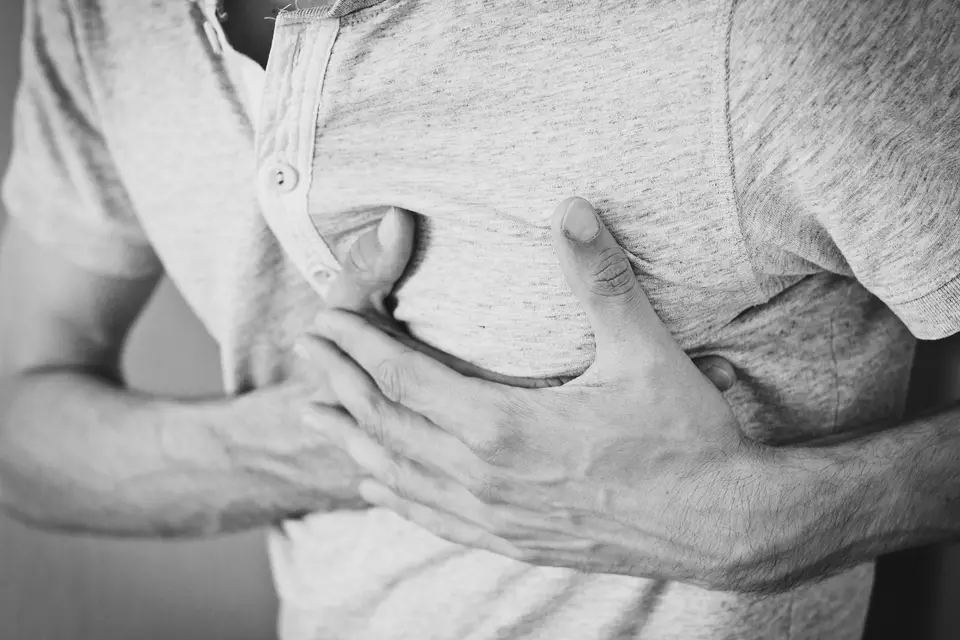
Severe difficulty breathing, an inability to speak, a tight or heavy chest, pain spreading to the arms, back, neck or jaw, pale or blue skin, or sudden confusion also requires immediate help. The National Health Service in England lists these signs as reasons for emergency assessment. Local emergency numbers and care routes differ by country.
Rapid breathing with chest pain, palpitations, clammy skin, pallor or another color change is less likely to be safely attributed to panic. ANZCOR says an ambulance should be called when a serious cause is suspected and recommends professional assessment if rapid breathing does not fully resolve or returns within 30 minutes.
Calm support and slow breathing follow an initial safety check
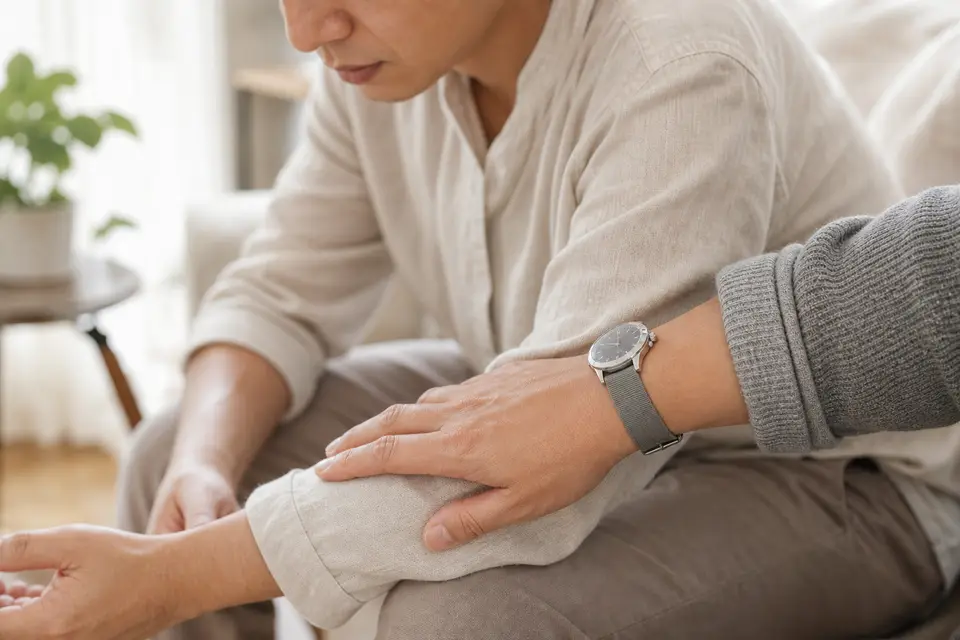
Stay with the person, speak calmly and watch for any change in responsiveness, skin color or breathing. Ask whether the same symptoms have happened before and whether a clinician has provided an action plan. Do not label a first episode as anxiety solely because the person appears frightened.
The US National Library of Medicine's MedlinePlus service limits home measures to people whose clinician has already attributed their hyperventilation to anxiety, stress or panic. It advises calm reassurance, slow exhalation through pursed lips and breathing from the diaphragm rather than the upper chest. It also advises medical attention for a first episode of rapid breathing or when symptoms continue or worsen despite home measures.
For a previously assessed pattern, the person can sit in a supported position, relax the shoulders and let each breath settle into a comfortable rhythm. One hand on the upper chest and one on the abdomen can help identify excessive upper-chest movement. The abdomen should move gently while the upper chest remains relaxed.
Cambridge University Hospitals in England recommends gentle diaphragmatic breathing, a short pause after breathing out and, during practice, breathing in for a count of three and out for a count of four. Its handout says to stop and seek advice if the exercises are painful.
Paper bag rebreathing can reduce oxygen
Do not place a paper or plastic bag over the mouth and nose. ANZCOR strongly recommends against any rebreathing technique for hyperventilation because it can produce critically low oxygen levels and cause harm. A bag can also delay recognition that rapid breathing is compensating for a serious condition.
The warning rests partly on a small laboratory study and three reported deaths. The 1989 study found that oxygen pressure fell by an average of 15.9 mm Hg after 30 seconds and 26.6 mm Hg after three minutes of paper bag rebreathing in 20 healthy adults. The paper also described three deaths after the method was mistakenly used for people with myocardial ischemia or low blood oxygen.
The experiment was not a clinical trial of first aid in people with panic attacks, and 20 participants cannot establish how often harm occurs. It does show that paper bag rebreathing can lower oxygen even in healthy adults, while the case reports show the danger of using it after an incorrect assumption about the cause.

Children, pregnancy and chronic illness need separate judgment
Children
ANZCOR's rapid-breathing guideline applies to adults and children, but it treats rapid breathing in a young child as more likely to have a serious cause than a panic attack. A child who has difficulty breathing, turns pale or blue, becomes confused, goes limp or stops responding needs immediate emergency help. A caregiver should seek clinical assessment instead of imposing an adult breathing count on a child whose cause has not been established.
Pregnancy
MedlinePlus lists pregnancy among possible medical causes of hyperventilation. APPI News could not verify a separate home-treatment sequence for pregnancy in the cited guidance. A first episode, a persistent episode or any emergency warning sign during pregnancy therefore requires clinical assessment rather than an assumption that anxiety is the cause.
Heart or lung disease and regular medicines
Rapid breathing in someone with heart or lung disease can be part of the underlying condition, and ANZCOR lists severe asthma and heart attack among emergencies that can resemble a panic attack. Follow an existing clinician-provided action plan and seek urgent help if the person deteriorates or has warning signs. Do not start, stop or change medicine on the basis of this episode without direction from a clinician.
Frequently asked questions
Should a paper bag be used for hyperventilation?
No. ANZCOR strongly recommends against rebreathing into a paper bag because oxygen can fall to dangerous levels and the method may be harmful when a serious condition has been mistaken for panic.
What should a bystander do first?
Check whether the person is breathing normally, stay with them and look for emergency warning signs. Call local emergency services if the person is unresponsive, deteriorating or may have another medical cause.
When can slow breathing exercises be used?
They are appropriate when a clinician has previously attributed the person's episodes to anxiety, stress or panic and no warning sign is present. Calm reassurance, relaxed shoulders, diaphragmatic breathing and a slow exhalation through pursed lips are the supported measures.
When does persistent rapid breathing need assessment?
ANZCOR recommends advice or assessment from a health professional when the breathing rate does not fully recover or the symptoms return within 30 minutes. Any deterioration calls for emergency help.
Can the same breathing count be used for a child?
No universal count is given here. ANZCOR applies its safety assessment to children but identifies rapid breathing in a young child as a reason to suspect a more serious cause and seek professional assessment.
Sources and further reading
- Guideline 9.2.8 — First Aid Management of Rapid Breathing (including Panic Attack)(Australian and New Zealand Committee on Resuscitation)
- Hyperventilation(US National Library of Medicine)
- Breathing exercises in the treatment of hyperventilation(Cambridge University Hospitals NHS Foundation Trust)
- Shortness of breath(National Health Service in England)
- Hypoxic hazards of traditional paper bag rebreathing in hyperventilating patients(Annals of Emergency Medicine via PubMed)