Indian scientist and author Srijan Pal Singh called for India to spread artificial intelligence resources beyond its elite engineering institutes in an interview published July 28, 2026. He argued that more universities and private companies should participate in AI development instead of leaving much of the work to the Indian Institutes of Technology (IITs).
Singh's proposal concerns who can obtain research support, computing capacity and a place in government-backed programs. It also comes as India's government is expanding shared computing infrastructure, though the available official figures do not show how evenly those resources are distributed.
Singh says policy depends too heavily on the IIT network
Singh told RT India's “In Conversation” program that India was relying too heavily on the IITs and should extend its policy focus to a broader range of higher-education institutions. The IITs are a group of prominent Indian engineering and technology institutes with a central role in research and technical training.
Singh said wider participation could create competition among institutions. He also called for private companies to have a larger role, arguing that advanced AI development has become a commercially competitive undertaking rather than a university research project alone.
The interview presented that position as Singh's assessment, not as a government policy announcement. APPI News could not find a published response from the IIT system or India's Ministry of Electronics and Information Technology addressing his criticism.
India's shared computing program has expanded
Official data provide some evidence that India's current policy is designed to serve users beyond the IITs. India's electronics ministry told parliament on March 25, 2026, that more than 38,000 graphics processing units had been added to the IndiaAI shared computing portal for startups and academic users.
The ministry said the IndiaAI Mission had approved 190 projects by that date. Its breakdown included 78 projects involving government bodies, 46 involving startups or small and medium-sized businesses, 30 involving early-stage startups, 27 involving researchers or universities, five involving students and four involving early-stage researchers.
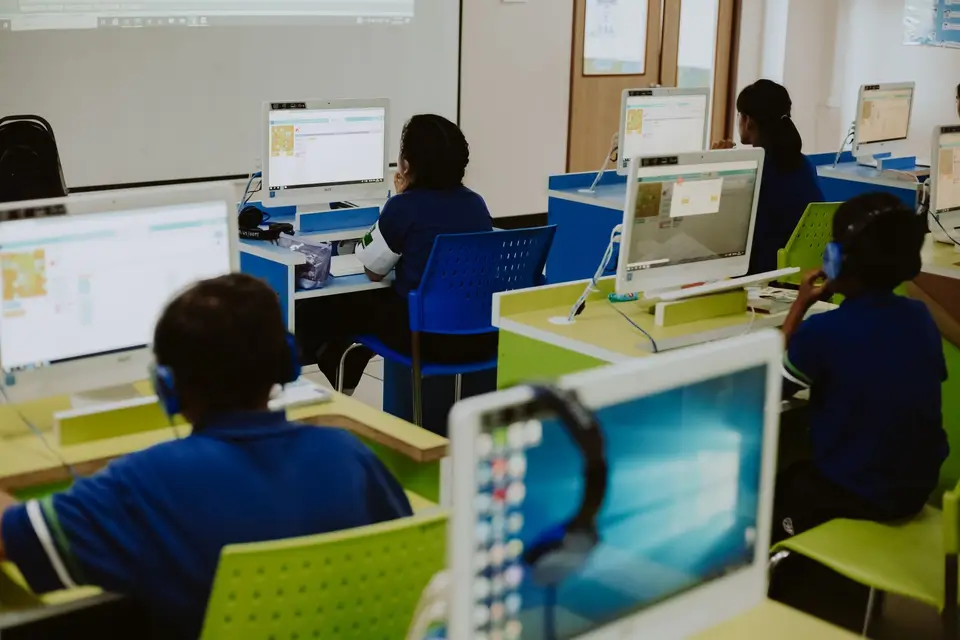
Those totals describe the types of recipients but not the geographic or institutional distribution of funding and computing time. They therefore do not establish whether access has moved away from a small number of leading institutes, the central concern raised by Singh.
Broader access is already part of the government's stated policy
The language of Singh's proposal overlaps with India's stated AI policy. India's electronics ministry said in December 2025 that its “democratizing AI” agenda covered wider access to computing capacity, datasets and foundation models. The ministry said the policy was intended to help countries and communities develop systems suited to local needs.
That overlap does not resolve Singh's criticism. The government releases describe program goals and nationwide totals, while his argument concerns whether opportunities remain concentrated among particular institutions. None of the reviewed sources offered a comparative measure of access across Indian universities.
A headline training figure remains unverified
Singh also said that India had delivered almost 25 million hours of AI training. The syndicated interview report did not identify the programs counted, the period covered, the number of learners or the method used to total those hours.
APPI News could not match the figure to a published dataset from India's electronics ministry. Without a definition or underlying data, it cannot be used to compare India's AI workforce capacity with that of other countries or to assess how widely training opportunities are available within India.
UPI serves as Singh's warning against a narrow benchmark
Singh pointed to India's Unified Payments Interface (UPI), the country's interoperable system for instant bank-account payments, as a successful digital platform. He said India should treat it as a foundation rather than the endpoint of its digital ambitions.
His comparison placed the emphasis on capacity: access to computing hardware, research institutions and commercial investment determines who can build AI systems. The official programs show that India is adding shared infrastructure, but the published totals do not yet answer his narrower question about which institutions can use it and on what terms.
Sources and further reading
- India must widen access to AI - top scientist (VIDEO)(India Gazette / RT.com)
- IndiaAI Mission Expands AI Ecosystem with Affordable Compute and Startup Support(Press Information Bureau, Government of India)
- India AI Impact Summit 2026 to focus on ‘Democratizing AI, Bridging the AI Divide’(Press Information Bureau, Government of India)