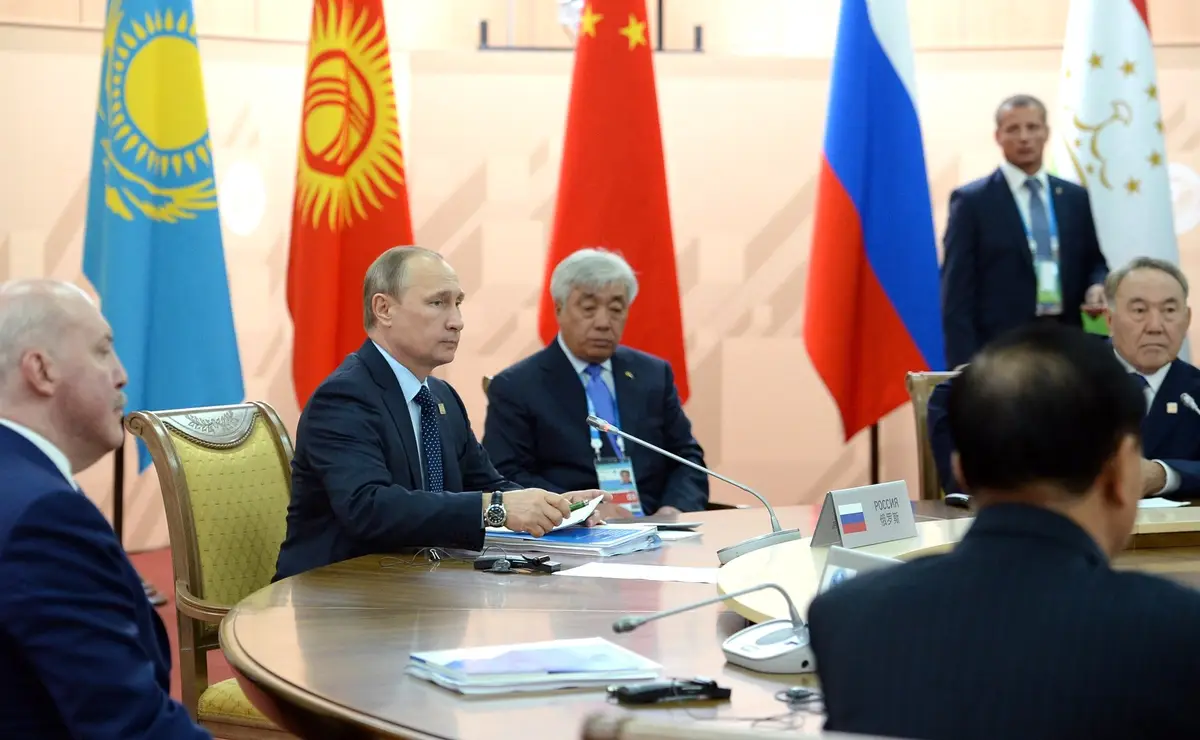
Pacific Islands Forum (PIF) leaders closed their 55th meeting in Palau on September 3 by registering concern about a recent intercontinental ballistic missile test and asking all states to give at least 24 hours’ advance notice of such tests. The final language did not name China, Nauru dissociated itself from the missile paragraph, and Kiribati had no representative in the closed leaders’ retreat.
The result stopped short of the explicit condemnation that Australia and Palau had sought before the retreat. Taiwan Foreign Minister Lin Chia-lung attended events in Palau under Taiwan’s separate development-partner status, while China attended through the Forum’s dialogue-partner channel and objected to Taiwan’s presence.
Consensus produced concern, not condemnation
The Pacific Islands Forum comprises 18 countries and territories, including Australia and New Zealand, and leaders normally reach decisions by consensus before recording them in a communiqué. The missile paragraph shows that a Forum position can still be published with a member formally distancing itself from a particular clause.
New Zealand Prime Minister Christopher Luxon said Nauru had dissociated itself from the statement but argued that the remaining leaders could still express a PIF position. The same report said Kiribati’s special envoy attended the summit but was not present in the daylong retreat, leaving the country’s view of the final missile clause unclear.
The Associated Press found no public evidence that pressure from Beijing caused the wider set of leader absences, and officials attributed several absences to illness or domestic politics. That distinction matters because the recorded dissent is evidence of disagreement, while claims about why other leaders stayed away remain unverified.
The July launch and the dispute over notice
China’s navy launched a long-range ballistic missile from a nuclear-powered submarine in the South Pacific on July 6, 2026, and Chinese state media said it carried a dummy warhead. The same report said New Zealand received notice only hours beforehand and that Australia and Japan were also notified in advance.
Australian Foreign Minister Penny Wong confirmed on July 6 that China had advised Australia of the planned sea-based test, said the launch was due within the next 24 hours, and described the information as falling short of the transparency and reassurance the region expected. China’s mission in Geneva later said relevant governments, including the United States, received advance notification and that Chinese aviation and maritime authorities issued warnings with impact coordinates 24 hours before the launch.
The public record available on September 5, 2026, does not reconcile those accounts. APPI News could not verify a complete list of recipients, the exact delivery time for each government, or the full flight path from independently published official data.
How this plays out outside Taiwan
For readers outside Taiwan, the first distinction is whether their government sits inside the Forum or engages through a partner channel. Australia and New Zealand are among the Forum’s 18 members, so they take part in the consensus process that produces a leaders’ communiqué. The United States, the United Kingdom and Singapore are among 21 Forum Dialogue Partners, which meet Forum leaders through a separate annual dialogue intended to support regional priorities. Those categories determine access and influence: Australia and New Zealand help settle member language, while the other three governments engage from outside the 18-member decision.
The communiqué also has a narrower domestic effect than a law or treaty. The Forum Secretariat describes leaders’ communiqués as guides for developing and implementing regional policies. It does not describe them as legislation that automatically changes the law in Australia, New Zealand or any partner country. A reader in Sydney or Auckland can treat the Palau language as a regional position their government helped negotiate, but not as a new offense, licensing condition or public-warning system.
Australia provides the clearest national case. Before the July launch, Wong publicly confirmed that Australia had received notice, while also calling the test destabilizing and the available reassurance inadequate. At the summit, Australia and Palau pressed for stronger language, but the issued position used “concern,” omitted China’s name and recorded Nauru’s dissent. Canberra could maintain a sharper national criticism even when the consensus-based regional document used terms that a broader group was prepared to release.
The 24-hour benchmark also appears in a separate initiative outside the Forum. On August 11, 2026, 41 governments delivered a statement at the Conference on Disarmament calling for at least 24 hours’ notice before launches of intercontinental ballistic missiles, submarine-launched ballistic missiles and space-launch vehicles. Australia, New Zealand, the United States and the United Kingdom were listed among the sponsors; Singapore was not. The statement asked launchers to provide the missile or vehicle’s generic class, notification window, launch area and planned direction, and to issue aviation and maritime notices. It is a political declaration by the governments named on it, not a universal regulation, and Singapore’s absence from the sponsor list does not by itself establish opposition.
The existing multilateral mechanism is the Hague Code of Conduct against Ballistic Missile Proliferation (HCoC). Its official FAQ says 145 countries had subscribed by March 2024 and describes participation as a voluntary political commitment to exchange pre-launch notifications through a restricted government channel and file annual declarations. The published subscriber list includes Australia, New Zealand, Singapore, the United Kingdom and the United States. China says it is not an HCoC member and therefore is not bound by that mechanism. This leaves Singapore inside the HCoC even though it did not join the August 11 statement, while China sits outside the code despite being the state at the center of the Palau dispute.
The HCoC text says a notification should identify the generic class, planned launch window, launch area and planned direction, but it does not set a minimum lead time. The August 2026 joint statement added an explicit 24-hour floor, and the Palau summit used the same minimum. Compliance with the HCoC and support for the newer 24-hour benchmark are therefore related but different questions. A government can subscribe to the code without having sponsored the August declaration, and the PIF cannot use the code to compel a non-subscriber.
Readers following the issue from these markets can check three different records for three different purposes. The Forum Secretariat’s publications show what the 18 members collectively release; national foreign ministries show whether an outside government has adopted the 24-hour position; the HCoC list shows formal participation in that existing notification channel. None of those pages is a live public launch alert: the HCoC says its notifications move through a restricted website for subscribing governments. APPI News could not verify a later HCoC subscriber list than the official page marked January 2024, so any later change should be checked with the HCoC secretariat rather than inferred from a government’s summit attendance.
Taiwan remains on a separate partner track
Taiwan, China and the United States are not among the Forum’s 18 members, but China and the United States hold dialogue-partner status while Taiwan is registered separately as a development partner. That structure allowed Lin to attend host-country events and the opening ceremony without giving Taiwan a place in the closed member consensus.
Palau hosted Lin at joint events and seated representatives from Beijing and Taipei in the same row at the opening, after which China’s Pacific envoy objected to Taiwan’s presence and Lin rejected Beijing’s position. The exchange concerned access to summit events and the status of outside partners; it did not make Taiwan a Forum member or a dialogue partner.
The missile clause affects Taiwan indirectly by setting a regional expectation for tests that cross or approach Pacific members. It does not constitute a PIF decision on Taiwan’s international status, cross-strait sovereignty or a Taiwan-specific defense commitment.
Sources and further reading
- The Pacific Islands Forum(Pacific Islands Forum Secretariat)
- Pacific leaders at summit fail to reach unanimous condemnation of China's ballistic missile launch(Associated Press)
- Pacific leaders 'push back' on China's conduct with 'unifying' criticism of ballistic missile test(ABC News Australia)
- China test-launches a ballistic missile in the South Pacific(Associated Press)
- Doorstop, Suva, Fiji(Australian Minister for Foreign Affairs)
- Joint Statement on Notifications of Ballistic Missile Launches(Ministry of Foreign Affairs of Latvia)
- Frequently asked questions about HCoC(Hague Code of Conduct)
- List of HCoC subscribing states(Hague Code of Conduct)
- Text of the HCoC(Hague Code of Conduct)
- Partnerships(Pacific Islands Forum Secretariat)
- China voices ire after Taiwanese officials attend Pacific summit(Associated Press)
- Remarks on the joint statement over China's SLBM test launch(Permanent Mission of China to the United Nations Office at Geneva)