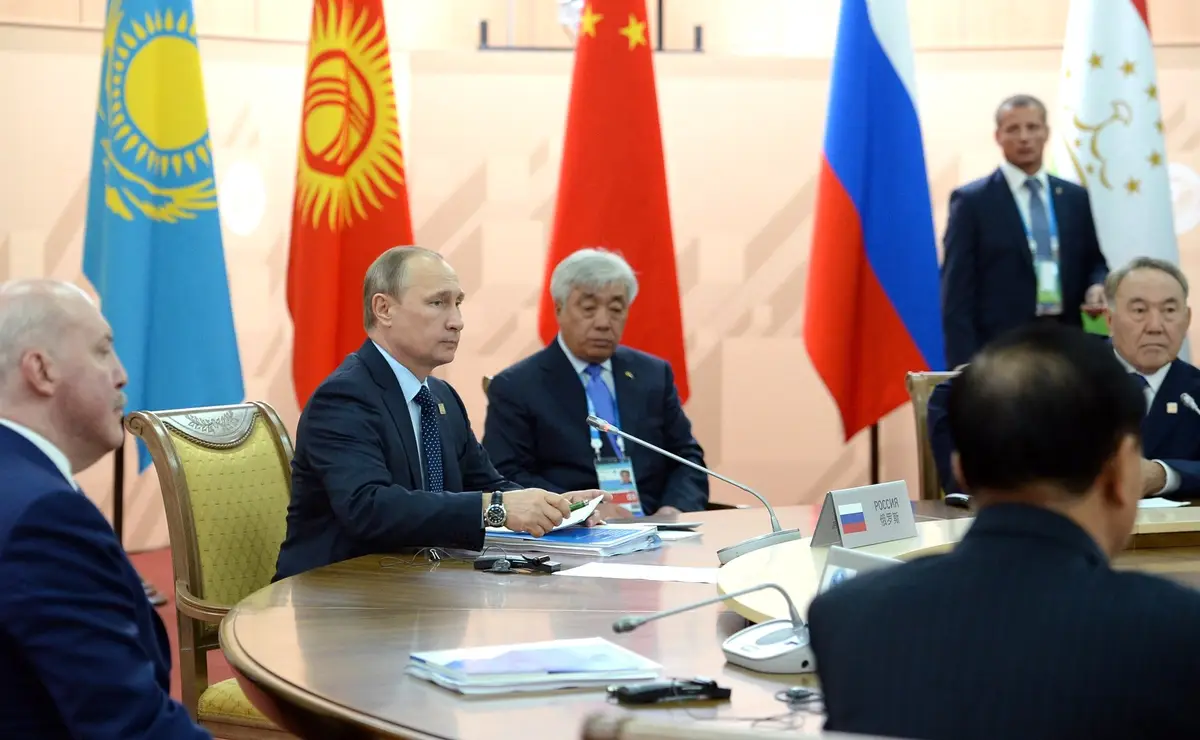
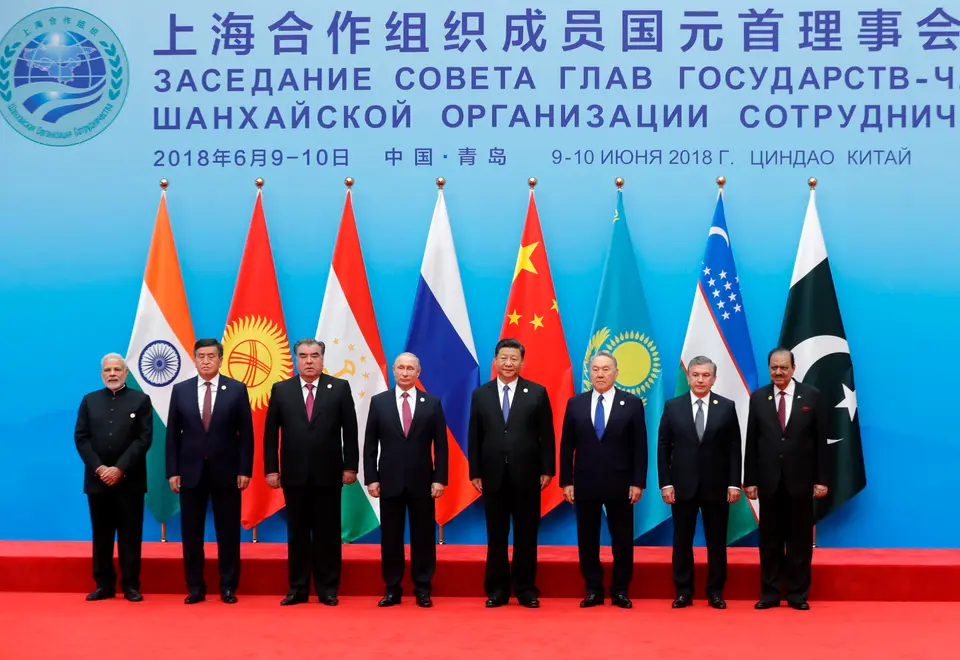
Chinese President Xi Jinping, Russian President Vladimir Putin and Indian Prime Minister Narendra Modi joined other leaders in Bishkek, Kyrgyzstan, on August 31, 2026, for the Shanghai Cooperation Organization (SCO) summit. The 25th-anniversary meeting gives China and Russia a venue to coordinate with major Eurasian states, but it does not create a unified political or military bloc.
The summit’s formal leaders’ session was due on September 1, after a first day dominated by bilateral meetings. At publication time, no final declaration had been issued, so this report separates verified institutional commitments from possible outcomes and Taiwan-related scenarios.
A 10-member forum with a broad mandate
The SCO was founded in 2001 by China, Russia, Kazakhstan, Kyrgyzstan, Tajikistan and Uzbekistan and now has 10 full members. The other four are India, Pakistan, Iran and Belarus; Afghanistan and Mongolia have observer status. Its permanent bodies are the Secretariat in Beijing and the Regional Anti-Terrorist Structure in Tashkent, Uzbekistan.
The SCO Charter lists regional security, counterterrorism, narcotics and transnational crime, trade, transport and energy among its areas of cooperation. Most decisions require consensus, and a state may stay out of a particular cooperation project without preventing interested members from proceeding. The charter also says the organization is not directed against other states or international organizations.
The mandate is broad, but it is not a collective-defense commitment. The SCO Secretariat says the organization does not have the attributes of a defense alliance.
Bishkek agenda spans security and economic coordination
SCO foreign ministers said after their July 24 meeting in Kyrgyzstan that the August 31–September 1 summit would address political, security and economic cooperation alongside international and regional issues. Their statement also called for wider trade, digital cooperation and changes to global economic governance. It repeated the organization’s position that it is not directed against other states and that cooperation should respect members’ national interests.
AP reported that Putin met Xi and Modi separately on August 31, while a meeting with Iranian President Masoud Pezeshkian was expected during the formal session the next day. The bilateral meetings allowed participants to pursue national priorities alongside the organization’s shared agenda.
Member interests constrain joint action
AP described the SCO as neither a unified political bloc nor a military bloc and reported that its members have distinct interests and substantial disagreements. India competes with China and Pakistan while using the forum to retain access and influence in Central Asia. Attendance therefore does not establish agreement with every position promoted by Beijing or Moscow.
The charter’s decision rules reinforce that limit. Members normally adopt decisions without a vote only when no state objects, and states that do not want to join a specific project may remain outside it. A summit declaration can express a shared position without creating a joint command or an obligation to use force.
China uses the SCO as part of a wider security network
A 2025 report by Japan’s National Institute for Defense Studies said China began international law-enforcement cooperation through the SCO in 2001 and later expanded joint patrols and policing partnerships in other developing regions. The report said such programs can cover counterterrorism, anti-corruption, training and technical assistance. It also cautioned that they may improve public-security capacity while putting pressure on democratic participation in authoritarian states.
That assessment describes a wider Chinese network, not a program that automatically binds every SCO member. Bilateral patrols and training arrangements remain separate from decisions adopted by the organization, even when China presents them as parts of a broader security approach.
What the summit does and does not mean for Taiwan
APPI News found no Taiwan-specific measure in the SCO foreign ministers’ July 24 statement, and AP’s August 31 summit report did not describe one. The final declaration was still pending at publication time, and the absence of Taiwan from these two public sources does not establish what leaders may have discussed privately.
The indirect relevance is diplomatic. The Japanese defense research report describes the SCO as one of the multilateral platforms through which China develops relationships with countries in the Global South. Those ties could shape how other governments respond publicly to a future Taiwan Strait crisis, but no source reviewed here shows that an SCO member has promised China political or military support in such a scenario.
Claims about an immediate threat to Taiwan’s semiconductor supply chain would also exceed the available evidence. The documents reviewed for this article announced no SCO action on Taiwan, semiconductor production, export controls or Taiwan Strait shipping; those issues remain risk scenarios rather than summit measures.
Final documents will show whether the agenda becomes policy
The next verifiable steps are the final Bishkek declaration and any agreements that identify participating states, funding, timetables or implementing agencies. A general pledge to deepen cooperation would not by itself establish a new military structure or a Taiwan policy.
The sharper test is whether all 10 members adopt actionable commitments or smaller groups proceed with optional projects. Either outcome must be read against the charter’s consensus rule and the members’ ability to opt out of individual initiatives.
Sources and further reading
- Leaders of China, Russia and India are among heads of state meeting to counter US influence(Associated Press)
- About Shanghai Cooperation Organisation(Shanghai Cooperation Organization Secretariat)
- Charter of the Shanghai Cooperation Organisation(Shanghai Cooperation Organization Secretariat)
- Statement by the Council of Foreign Ministers of the Shanghai Cooperation Organisation(Shanghai Cooperation Organization Secretariat)
- NIDS China Security Report 2025: The Rising Global South and China(National Institute for Defense Studies, Japan)