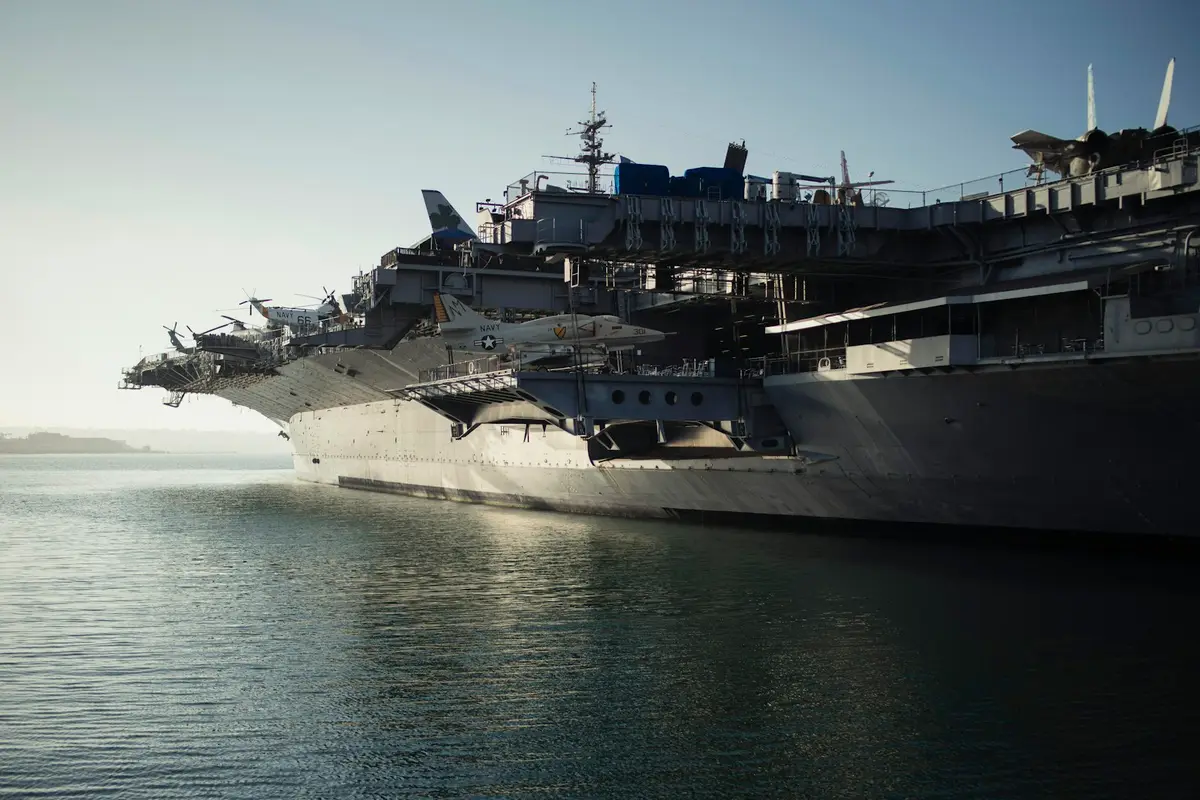
USS George Washington, the US Navy's only forward-deployed aircraft carrier in the western Pacific, was heading west and was expected to replace USS Abraham Lincoln in the Middle East, the Associated Press reported on August 15. The movement leaves the western Pacific without a US aircraft carrier for an unknown period.
The gap concerns one form of visible military presence rather than the entire US posture in the Indo-Pacific. This report does not assess the location or readiness of submarines, bombers, land-based aircraft or allied forces, so it cannot measure the region's full deterrent capacity.
A westbound transit opens the carrier gap
The US Navy identified George Washington as its forward-deployed aircraft carrier when the ship arrived in Da Nang, Vietnam, with a cruiser and destroyer for a scheduled port visit on July 30. The carrier is the flagship of Carrier Strike Group 5, which is based in Japan and normally operates in the US Seventh Fleet area.
USNI News reported that George Washington, USS Robert Smalls and USS Shoup were in the Strait of Malacca on August 13 after a westbound passage through the Singapore Strait. The route connects the western Pacific with the Indian Ocean and is consistent with movement toward the Middle East. The report attributed the ships' location to a US Navy official and publicly observed movements.
AP reported that George Washington was expected to replace Lincoln as one of two US aircraft carriers operating in the Middle East. APPI News could not locate a public US Navy order specifying the handover date, the route beyond the Strait of Malacca or when carrier presence would resume in the western Pacific.
Eleven carriers do not mean eleven are available at sea
The US Navy has 11 aircraft carriers and typically deploys two or three at a time, defense analyst Bryan Clark told AP. The fleet total does not represent simultaneous availability because carriers rotate through operations, training and maintenance.
USNI News reported that USS George H.W. Bush was operating in the Arabian Sea while USS Theodore Roosevelt was preparing for deployment at its home port in California. AP described a possible future deployment of Roosevelt that could allow George Washington to return to the Pacific, but the US Navy had not announced that sequence or a timetable.
Clark told AP that repeated extensions could create a maintenance backlog after ships return from operations. That assessment remains a projection, and public reporting does not establish which carrier will next enter the western Pacific or how long any replacement would stay.
Lincoln's deployment exceeds 260 days
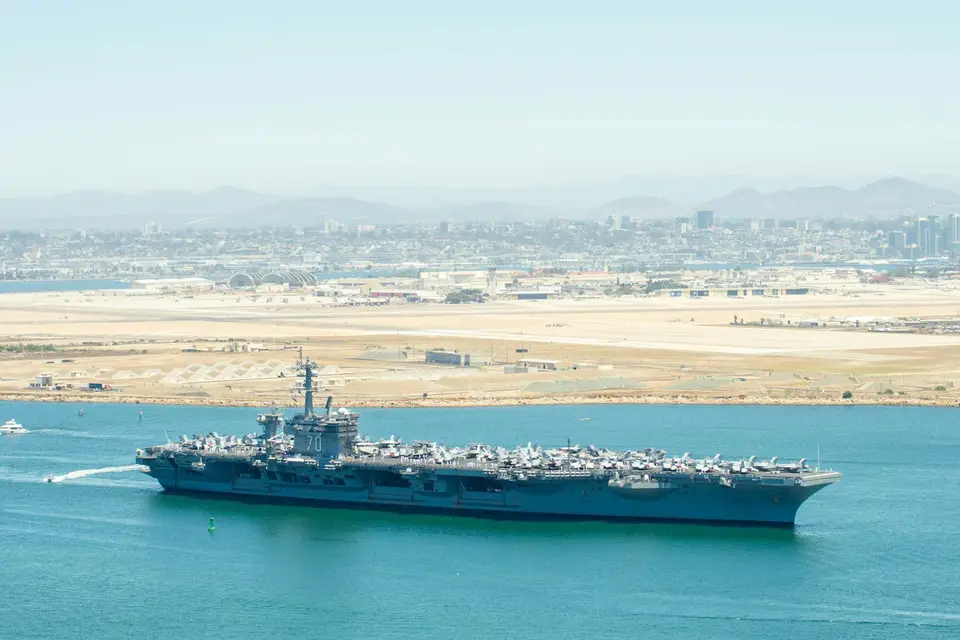
An AP correction published on August 14 said Lincoln had spent more than 240 consecutive days at sea while its overall deployment had exceeded 260 days. The two figures measure different periods and are not competing estimates. Lincoln left San Diego on November 21, 2025, reached the Middle East in January and remained beyond its planned May return.
The US Navy said combat had disrupted traditional supply hubs in the Middle East, forcing ship leaders to prioritize food, hygiene items and then mail. The same statement said sailors had access to clean water, air conditioning and healthy meals at the time it was issued. The official account acknowledges supply disruption while disputing reports that current conditions were unsafe.
The Navy said it had not observed an increase in suicidal ideation or attempts aboard Lincoln, but officials declined to release data on operational-security and patient-privacy grounds. A sailor who went overboard in early August was recovered and transferred for further care, and officials did not say whether the incident was being treated as a suicide attempt. Democratic members of the US Congress have requested information on food, sanitation and health care aboard the ship.
The regional impact is political as well as operational
Bryan Clark of the US-based Hudson Institute and Greg Poling of the US-based Center for Strategic and International Studies told AP that the carrier shift could weaken perceptions of US staying power among regional partners. Poling said the move conflicted with Washington's stated effort to reduce its Middle East commitments, while Clark said Beijing could use the opening for political messaging.
AP also reported that the departure alone was not expected to trigger a Chinese invasion of Taiwan, the self-governed island claimed by Beijing. The carrier gap coincides with Chinese military drills near the disputed Scarborough Shoal in the South China Sea and a live-fire exercise near Japan-administered Okinotori, but timing alone does not establish that the events are connected.
Aircraft carriers provide mobile air power and a visible signal of commitment, but their location is not a complete measure of regional defense capacity. The effect of George Washington's departure will depend primarily on how long the gap lasts and what other forces remain available during it.
What remains unknown
AP reported that the gap could be short if another carrier deploys within the next several months. As of August 15, however, the US Navy had not publicly identified a replacement ship or announced a date for its arrival in the western Pacific.
Public reporting establishes that Middle East operations have pulled the only forward-deployed US carrier out of the western Pacific while Lincoln remains beyond its original schedule. It does not establish how China will respond or when a US carrier will return; allied force adjustments are outside the public record used here.
Sources and further reading
- US pulls last aircraft carrier in Asia as Trump focuses on Iran and the Western Hemisphere(Associated Press)
- Carrier heads toward Mideast amid reports of issues aboard USS Lincoln(Associated Press)
- Trump says USS Lincoln's deployment 'not nearly long enough'(Associated Press)
- USS George Washington Heading West, Lincoln Deployment Nears 9 Months(USNI News)
- USS George Washington arrives in Da Nang, highlighting enduring U.S.-Vietnam partnership(US Navy)