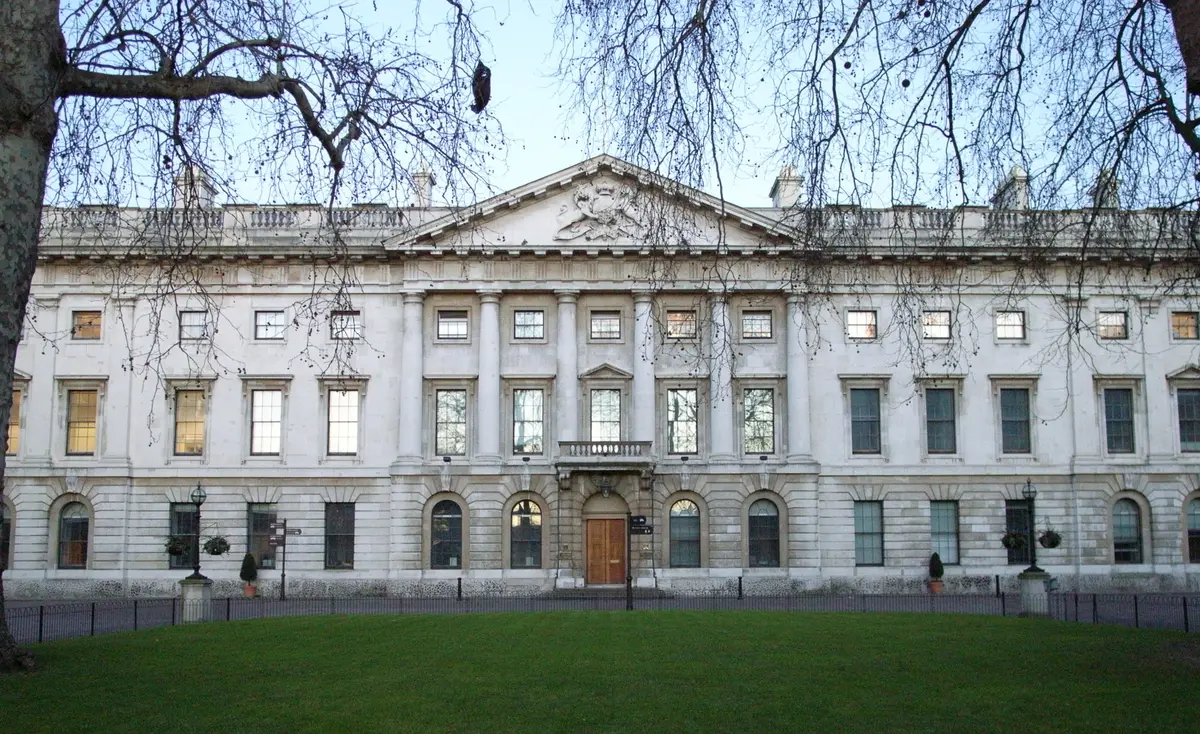
The UK High Court rejected a challenge to planning permission for China's proposed new embassy at Royal Mint Court in London on July 31. The Royal Mint Court Residents' Association said it would seek an appeal, leaving open the possibility of another round of proceedings.
A Press Association court report said Mrs Justice Lieven and Lord Justice Dingemans found no legal error in the UK housing secretary's approval and rejected the association's arguments concerning two undisclosed security documents. The report said the judges concluded that the residents had not been treated unfairly because the security assessment and blast-impact assessment were withheld.
Diplomatic status shaped the enforcement dispute
The residents argued that diplomatic protections could make ordinary planning enforcement ineffective after the site becomes embassy premises. That question matters because planning permission can carry conditions governing how a development is built and used, while diplomatic premises receive protections under international and UK law.
A legal analysis of the January approval said the UK housing secretary rejected the claim that planning conditions would be unenforceable, citing diplomatic responses that could ultimately include declaring a head of mission persona non grata or severing diplomatic relations. Those are government enforcement arguments, not remedies that have been used in connection with this development.
The same analysis said the United Kingdom's Foreign, Commonwealth and Development Office withdrew diplomatic-premises consent for Exchange Square on January 12. The change excluded a publicly accessible part of the site from the diplomatic protections planned for the rest of the compound.
Government approval followed two local votes against the plan

China bought the former Royal Mint site, opposite the Tower of London, in 2018. It later submitted plans to consolidate most of its accredited diplomatic premises in London at Royal Mint Court.
Tower Hamlets Council said its Strategic Development Committee opposed the application in December 2024 because of concerns about public safety, heritage, police resources and highway safety. The council had also resolved to refuse an identical redevelopment application in December 2022.
The 2024 vote did not determine the outcome. The UK housing secretary had called in the applications on October 14, 2024, a procedure that transferred the final decision from the local council to the national government.
The January decision authorized the redevelopment
The UK Ministry of Housing, Communities and Local Government published the decision granting planning permission and listed-building consent on January 20, 2026. The approved work includes restoration of listed buildings, partial demolition, extensions, a new entrance pavilion, landscaping and changes to roads and parking.
The permission resolved the planning application but did not end the legal dispute. The residents' case challenged the lawfulness of the decision-making process rather than asking the court to substitute its own planning judgment for that of the housing secretary.
In an earlier ruling on April 28, the same two judges refused the association permission to pursue a separate ground concerning undisclosed measures to protect nearby telecommunications cables. The court said that ground was not arguable and left the association's other challenges for the later hearing.
An appeal has not yet changed the approval
The association's announcement that it would appeal does not itself reverse or suspend the planning permission. A higher court would first have to accept the appeal and then decide whether the July ruling contained a legal error.
The public record available at the time of writing does not establish a construction start date. APPI News also could not find the July 31 judgment in the UK judiciary's public database, so the account of the court's findings on that date relies on the Press Association report.
Frequently asked questions
What did the High Court decide?
The court rejected the residents' challenge to the UK housing secretary's approval of the embassy redevelopment. According to the Press Association report, it found no legal error and no unfairness arising from the two undisclosed security documents.
Why does diplomatic immunity matter to the planning case?
The residents argued that protections for diplomatic premises could obstruct ordinary enforcement of planning conditions. The housing secretary said the United Kingdom retained diplomatic responses even where court-based enforcement might be constrained.
Can construction begin immediately?
The planning permission remains in place, but the public sources reviewed for this report do not provide a confirmed construction date. Further litigation could also affect the timetable.
Sources and further reading
- Chinese super embassy planning permission decision upheld at High Court(Cotswold Journal / Press Association)The verification environment could not retrieve this page directly, so no inline link is used.
- Called-in decision: Royal Mint Court, London, EC3N 4QN(UK Ministry of Housing, Communities and Local Government)
- Tower Hamlets refuses Chinese Embassy planning applications(Tower Hamlets Council)
- The planning permission for the new Chinese Embassy(Local Government Lawyer)
- Royal Mint Court Residents' Association v Housing Secretary and others(Courts and Tribunals Judiciary)