The US Food and Drug Administration cleared UpDoc on December 23, 2025, as prescription insulin-management software for adults with type 2 diabetes. The agency's K253281 database entry records a Traditional 510(k) decision of substantial equivalence, classifies the product as a drug-dose calculator and confirms that its predetermined change control plan was authorized.
UpDoc describes the product as the first cleared software medical device to use a patient-facing large language model (LLM). FDA records use a narrower description: voice and chat are ways to enter data, while insulin instructions come from clinician-defined treatment parameters and deterministic dosing logic.
What the United States cleared
UpDoc is software as a medical device for people aged 18 or older who have type 2 diabetes. It is available by prescription, and the cleared indication excludes people with type 1 diabetes.
The FDA decision summary divides the product into a provider web portal, a patient mobile app and a cloud application containing a Conversation Service called UpDoc Agent and a Clinical Service. Clinicians use the portal to configure insulin type, starting and maximum doses, an adjustment algorithm, glucose targets and safety protocols for an individual treatment plan.
Conversation and dose calculation have different roles
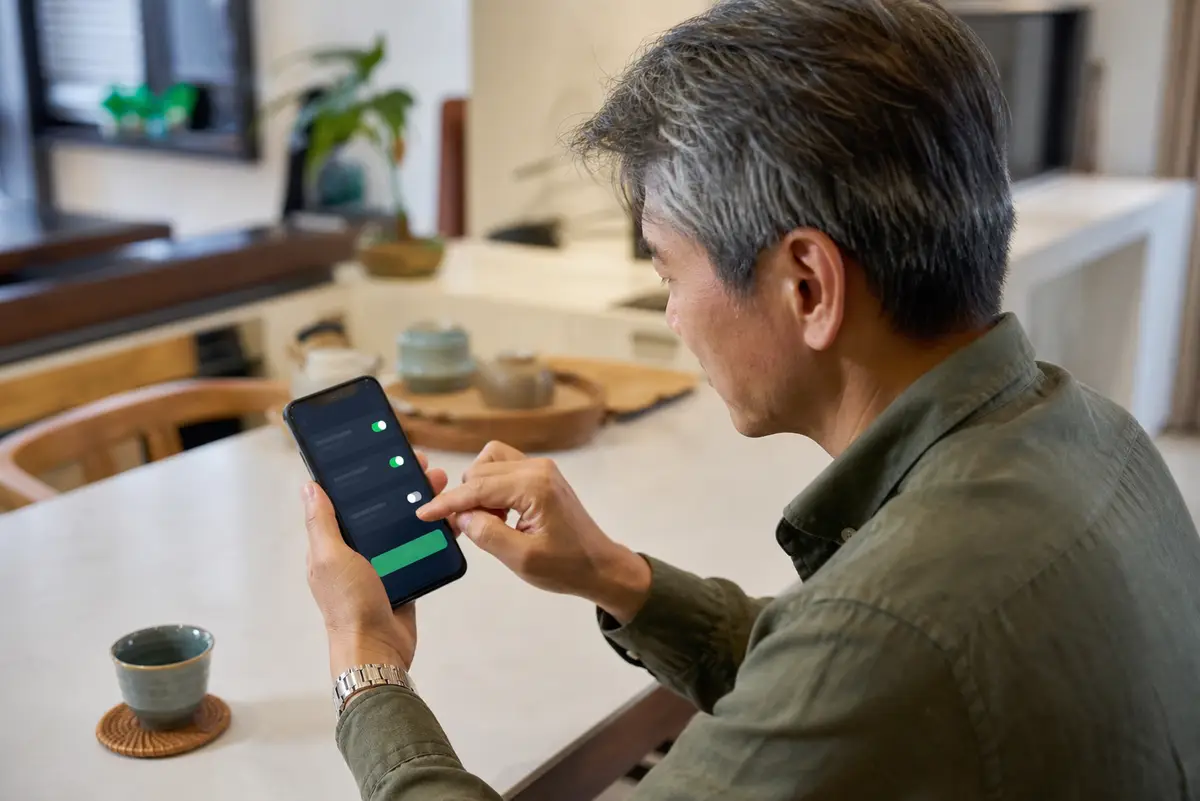
The patient app records blood glucose, meals, symptoms and whether medication was taken. Patients can enter those data manually or through voice and text interactions, and the app can receive glucose readings from a connected meter or continuous glucose monitor.
The conversation service does not have an open mandate to diagnose symptoms or devise treatment. The FDA's 510(k) summary says symptoms outside a predetermined protocol cause the system to lock and direct the patient to seek medical attention, while any treatment-plan instruction is based on a protocol configured by the healthcare provider.
The distinction does not mean the chat layer is unregulated or incidental. It means the cleared device places conversational input around a bounded clinical service whose inputs, outputs and safety behavior were documented for the review.

The 510(k) route relied on an earlier dose calculator
The FDA found UpDoc substantially equivalent to Hygieia's d-Nav System, identified as K181916. Both are prescription software products for insulin management in adults with type 2 diabetes, and both use a clinician-prescribed plan to produce dosing instructions.
The FDA describes a 510(k) as a submission showing that a device is as safe and effective as, and substantially equivalent to, a legally marketed device. That route differs from premarket approval, which the agency describes as its most stringent device marketing application and bases on valid scientific evidence for the proposed use.
UpDoc's differences from d-Nav include voice and chat data entry, symptom reporting and system-lock behavior. The comparison therefore treated the conversation features as additions to an established drug-dose-calculator function, not as a new regulatory category for general-purpose LLMs.
The review did not include clinical testing
The FDA's public 510(k) summary says no clinical testing was performed and lists software, cybersecurity and human-factors testing as the evidence used to demonstrate safety and performance against the predicate. The agency's decision summary says the human-factors participants included adults with type 2 diabetes and healthcare providers responsible for diabetes care and treatment-plan configuration.
The record does not establish that an LLM independently made better clinical decisions than a clinician or another model. It supports a narrower conclusion: the submitted testing and documentation were sufficient for the FDA to clear the complete device through comparison with d-Nav.

Future changes remain inside defined boundaries
The authorized predetermined change control plan covers specified updates that may be made after clearance if they meet predefined verification and validation criteria. Categories include certain default settings and clinical definitions, supported insulin references, dosing-workflow options, interface changes and alternative data-input methods.
The FDA decision summary says modifications must preserve deterministic insulin-dosing logic without altering core clinical decision-making. A change outside the authorized boundaries must go through the company's change-control process to determine whether the United States requires another premarket submission.
This boundary is the main regulatory lesson from K253281. A conversational interface can sit inside cleared clinical software, but the clearance record depends on a defined intended use, a predicate device, documented safety controls and limits on what future software changes may alter.

What the record does not establish
The FDA documents do not use LLM as the device classification and do not verify a global first. APPI News could not independently establish that no earlier patient-facing product using an LLM had received a different type of authorization in the United States or another country.
The clearance also does not establish reimbursement, adoption or availability outside the United States. Those questions require separate payment, procurement and regulatory decisions in each market.

Sources and further reading
- 510(k) Premarket Notification K253281(US Food and Drug Administration)
- 510(k) Substantial Equivalence Determination Decision Summary: K253281(US Food and Drug Administration)
- 510(k) Summary: K253281(US Food and Drug Administration)
- Device Approvals and Clearances(US Food and Drug Administration)
- UpDoc Debuts First FDA-Cleared Clinical AI Platform(UpDoc)