England's National Health Service (NHS) says severe hip pain after a fall, inability to walk or bear weight, and tingling or loss of sensation after an injury require emergency care. Its adult hip-pain page was last reviewed on November 20, 2025.
Hip pain can arise from the joint, nearby soft tissue or pain referred from the back. The first decision therefore turns on the injury, weight-bearing ability and warning signs rather than an assumed diagnosis.
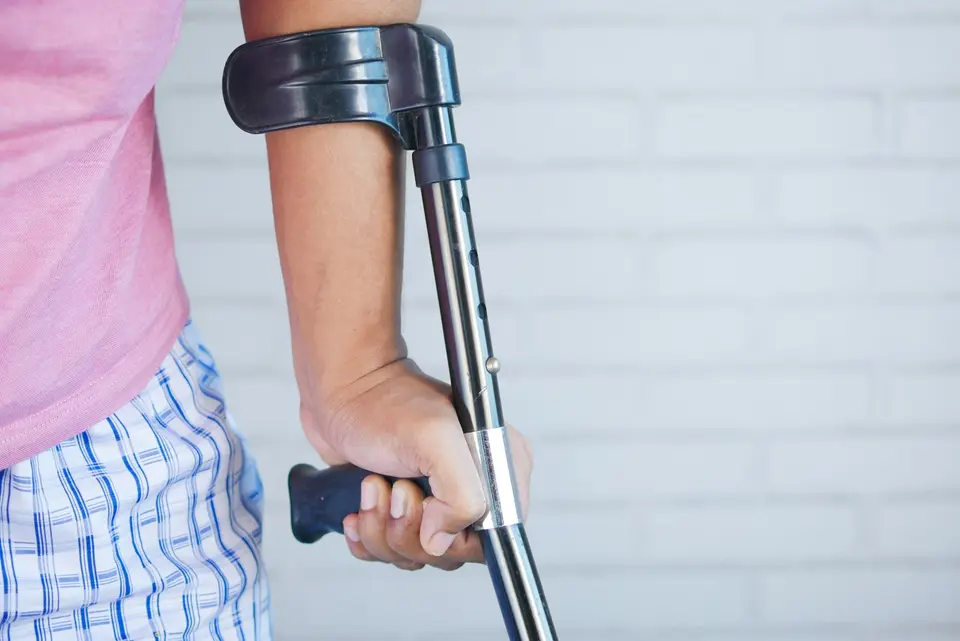
Loss of weight bearing or injury signs require urgent care
Call the local emergency service or seek emergency care for severe hip pain after a fall or other injury, inability to walk or put weight on the leg, or tingling or loss of sensation after an injury. The NHS also advises urgent assessment for severe pain that starts suddenly without an injury, a hot or swollen hip, skin color change, or hip pain accompanied by fever, chills or feeling unwell.
MedlinePlus, a service of the US National Library of Medicine, adds leg deformity, marked bruising or bleeding to its emergency list and calls for emergency help when worsening hip pain occurs with difficulty urinating or passing stool. These signs require assessment; they do not identify the cause by themselves.
Healthdirect Australia uses a broader prompt-review threshold: sudden or intense pain, pain after a fall or injury, inability to move the hip or leg, inability to bear weight, swelling, bleeding or fever. This differs from the NHS and MedlinePlus emergency wording, so mild pain after a fall should not be declared safe for home observation from symptoms alone.
Home measures come after the urgent screen
Home measures are an option only after the urgent signs above have been checked. Because loss of weight bearing appears on the urgent-care lists, an ice pack or sleeping-position change should not delay assessment when walking or bearing weight is unsafe.
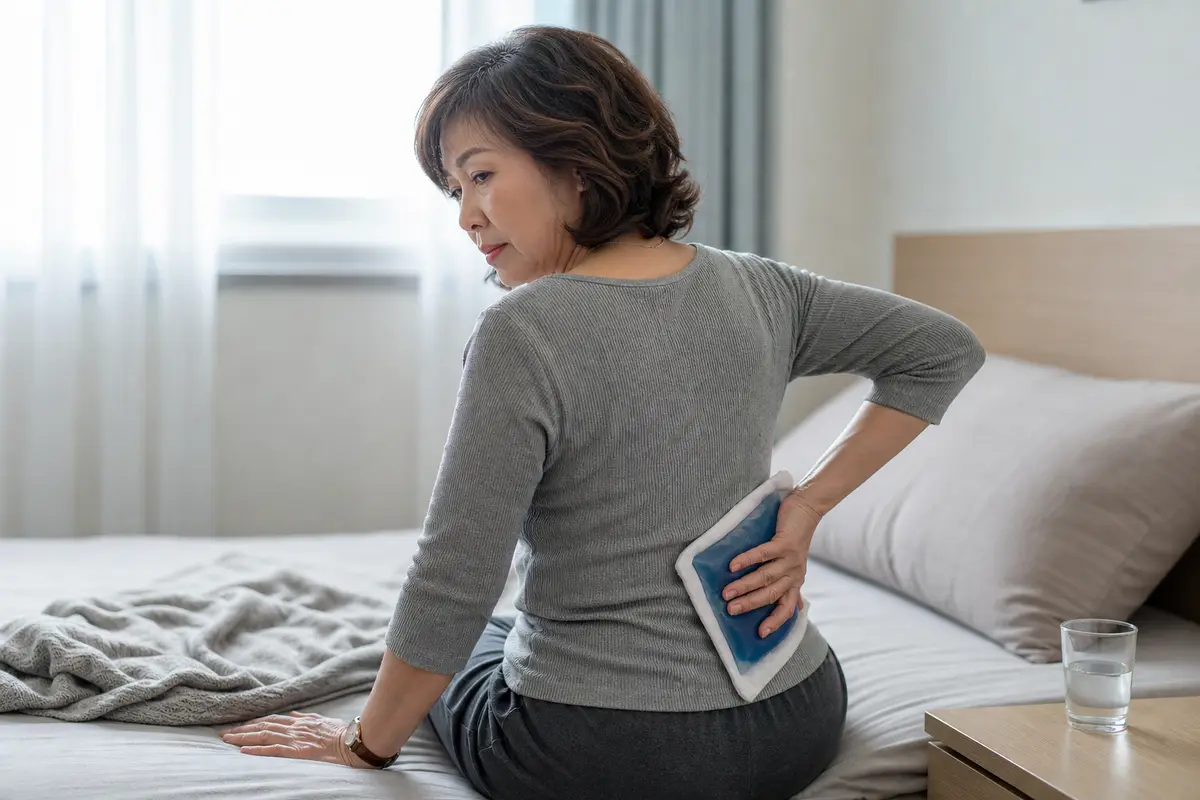
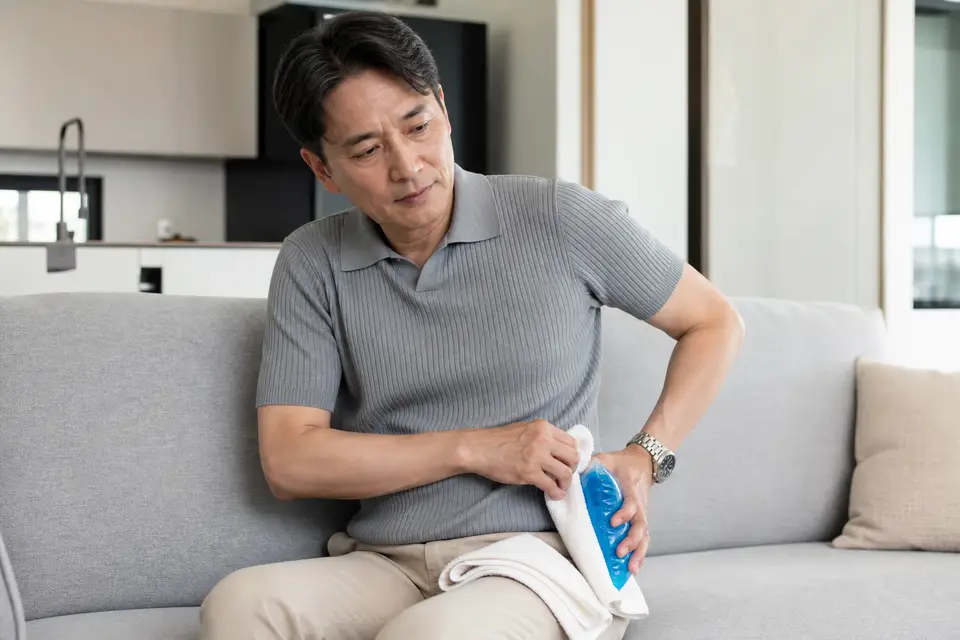
For adults outside its urgent thresholds, the NHS advises avoiding excessive strain while continuing to move if able, without overdoing activity, and avoiding heavy loads. It also advises wrapping an ice pack or bag of frozen vegetables in a towel and applying it to the painful area for no more than 20 minutes every two to three hours.
Healthdirect Australia lists rest, heat or ice and gentle exercise among possible home measures. It does not set an ice duration or say that cold must always come before heat, and its prompt-review advice after a fall still takes priority.
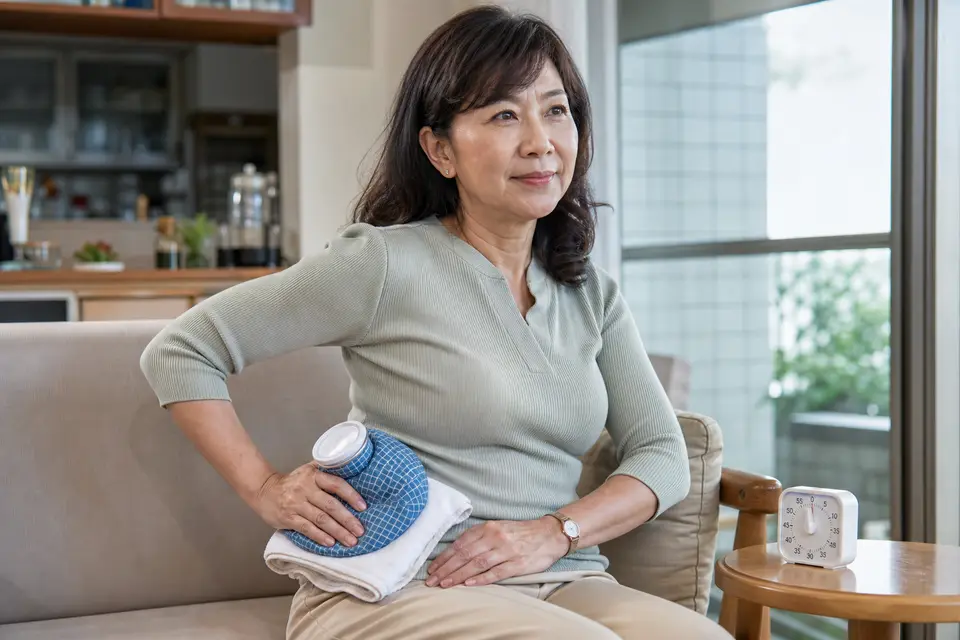
MedlinePlus advises avoiding activities that worsen the pain and sleeping on the painless side with a pillow between the legs. It does not give an ice schedule on its hip-pain page.

The sources do not set one follow-up deadline
MedlinePlus advises contacting a clinician when hip pain remains after one week of home care, or when limping or difficulty with stairs or walking begins. The NHS uses a two-week threshold, but advises earlier review when pain worsens, returns, affects sleep or stops normal activities.
APPI News could not find a single international guideline that sets one follow-up timetable for acute hip pain at the time of writing. Worsening function or a new urgent sign overrides either country-specific waiting period.
Pain location does not establish the cause
Healthdirect Australia says hip pain may be felt inside the hip, groin, outer hip, upper thigh or buttock, and pain from the lower back can be referred to the hip. A location chart cannot replace an examination or determine whether home measures are appropriate.
MedlinePlus says clinicians assess where and when the pain started, what worsens it, walking and weight-bearing ability, other medical conditions and current medicines. A concise history can therefore cover onset, any fall, changes in walking or weight bearing, other conditions and a current medicine list.

Children, pregnancy and long-term steroids need separate decisions
Children
England's NHS says hip pain in a child should always be checked and calls for urgent assessment when a child develops sudden pain in the hip, thigh or knee, limps or cannot bear weight on one leg. Adult ice and activity advice should not be substituted for that assessment.
The same NHS page describes rest and reduced high-strain activity only after a child has been assessed as having irritable hip. It advises another clinical review if pain worsens or fails to improve, fever or chills develop, pain lasts two weeks, or the pain returns.
Pregnancy
England's NHS says a pregnant person should check with a pharmacist, midwife or doctor before taking any medicine, including a painkiller, and should not stop a prescribed medicine without first speaking to the prescriber. That page addresses medicine safety rather than the cause or treatment of hip pain.
Chronic conditions and regular medicines
MedlinePlus advises contacting a clinician when sudden hip pain occurs during long-term steroid use. The five cited pages do not provide a single hip-pain medication rule for every chronic condition or regular medicine, so people in these groups should discuss nonprescription pain medicine with a clinician or pharmacist.
Frequently asked questions
Does sudden hip pain mean ice should come first?
No single first treatment applies to every cause. Injury, weight-bearing ability, fever, swelling, skin changes and sensory symptoms come before home measures; the NHS ice schedule applies only after urgent care is not indicated.
Is walking after a fall proof that the injury is minor?
No. Healthdirect Australia advises prompt medical review for hip pain after a fall or injury, while the NHS and MedlinePlus use emergency wording for severe pain, loss of weight bearing or other serious signs.
How long can hip pain be watched at home?
The sources give different limits: one week in MedlinePlus and two weeks in the NHS adult guidance. Pain that worsens, returns, changes walking, affects sleep or normal activity, or develops an urgent sign needs earlier assessment.
Can heat be used instead of ice?
Healthdirect Australia lists both heat and ice as possible home options, while the NHS gives a timed, towel-wrapped ice method. These pages do not establish that one must always come first for every episode of sudden hip pain.
Sources and further reading
- Hip pain in adults(National Health Service in England)
- Hip pain(Healthdirect Australia)
- Hip pain: MedlinePlus Medical Encyclopedia(MedlinePlus, US National Library of Medicine)
- Hip pain in children (irritable hip)(National Health Service in England)
- Medicines in pregnancy(National Health Service in England)