Delayed-onset muscle soreness usually begins 12 to 24 hours after unfamiliar or harder-than-usual exercise and is often worst within 24 to 72 hours. Severe pain, weakness or dark urine needs immediate medical assessment because symptoms alone cannot rule out rhabdomyolysis.
Soreness is not a reliable measure of training quality. A person with mild symptoms may be able to stay lightly active, but severe soreness, loss of function or pain during an exercise is a reason to stop rather than repeat the same high-intensity session.
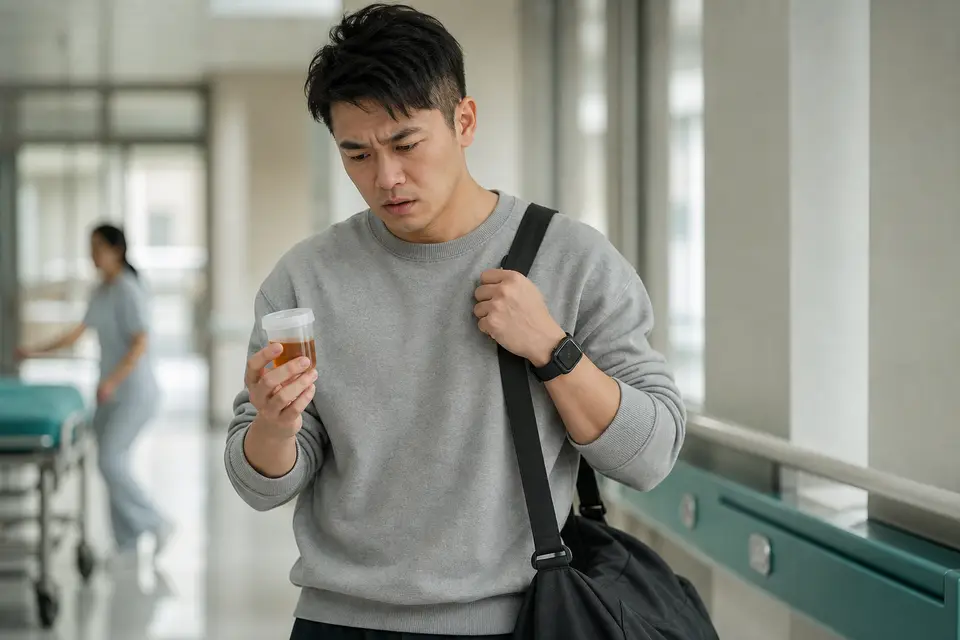
Severe pain, weakness or dark urine needs immediate care
Stop exercising and seek immediate medical care for muscle pain that is much worse than expected, tea- or cola-colored urine, or unusual weakness or fatigue. The US Centers for Disease Control and Prevention (CDC) identifies those as the main warning signs of rhabdomyolysis and says any one of them warrants prompt assessment.
Heavy swelling, an inability to use the affected limb normally or a marked drop in exercise capacity also falls outside a routine self-care decision. Symptoms can begin hours or days after the muscle injury, so a normal urine color immediately after a workout does not exclude a developing problem.
Rhabdomyolysis cannot be confirmed from a checklist. The CDC says dehydration and heat cramps can look similar and that serial blood tests for creatine kinase are needed for diagnosis; urine dipsticks are not accurate enough to rule it in or out.
DOMS develops after the workout, not during it
The American College of Sports Medicine (ACSM) says delayed-onset muscle soreness typically starts 12 to 24 hours after exercise, reaches its greatest intensity within 24 to 72 hours and usually lasts three to five days. Unaccustomed loading, particularly movements that lengthen a working muscle, can provoke it.
DOMS is associated with microscopic muscle damage and the repair response. ACSM says lactic acid accumulation is not part of this process, correcting a common explanation that can encourage people to dismiss more serious pain as something they should push through.
Pain that starts during the exercise is not DOMS. It can reflect excessive load, poor technique or an acute injury, and the activity should stop if it causes sharp or escalating pain.
Light activity may be reasonable, but hard training can wait
ACSM says light activity should not impair recovery, though evidence that it speeds recovery is limited. When soreness makes an activity difficult or too painful, its guidance advises avoiding that activity for a few days and returning as symptoms subside.
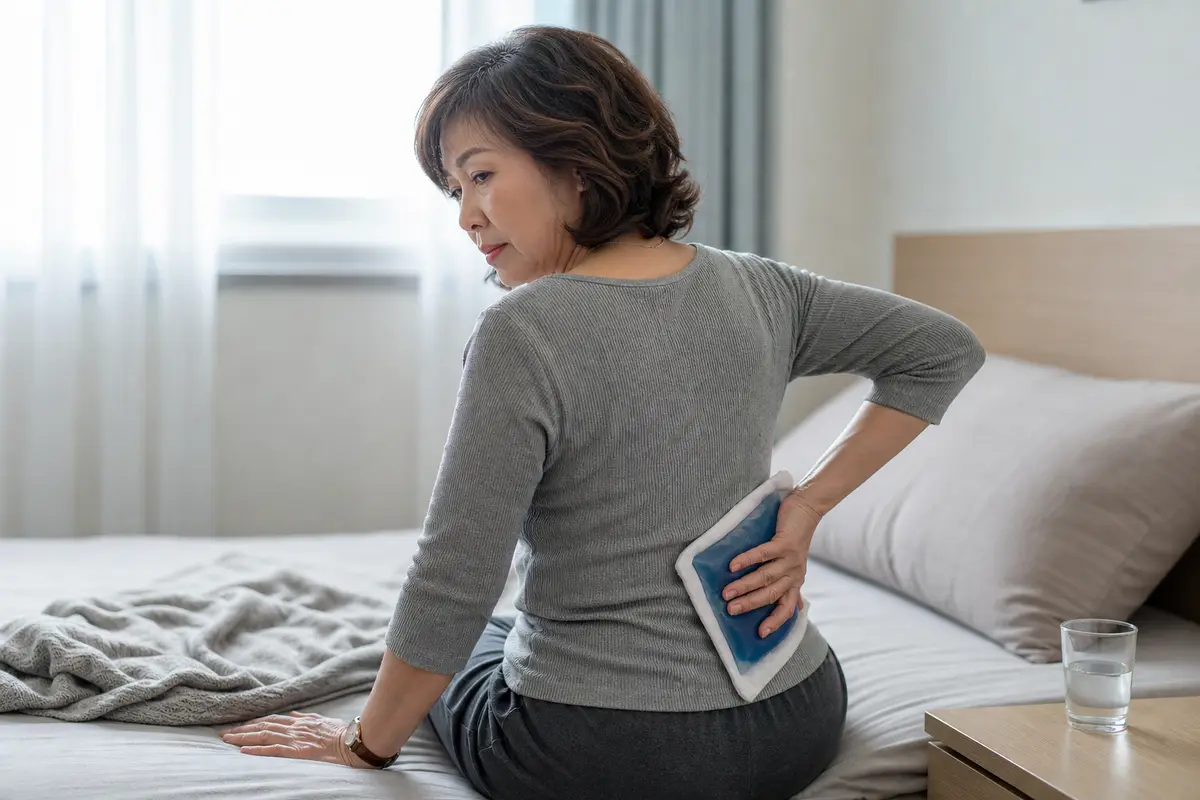
That distinction leaves room for a walk, easy cycling or training an unaffected area when movement is comfortable. It does not support another high-intensity session for the same painful muscles, and temporary pain relief during movement does not prove that strength and function have recovered.
Stretching and recovery treatments have limits
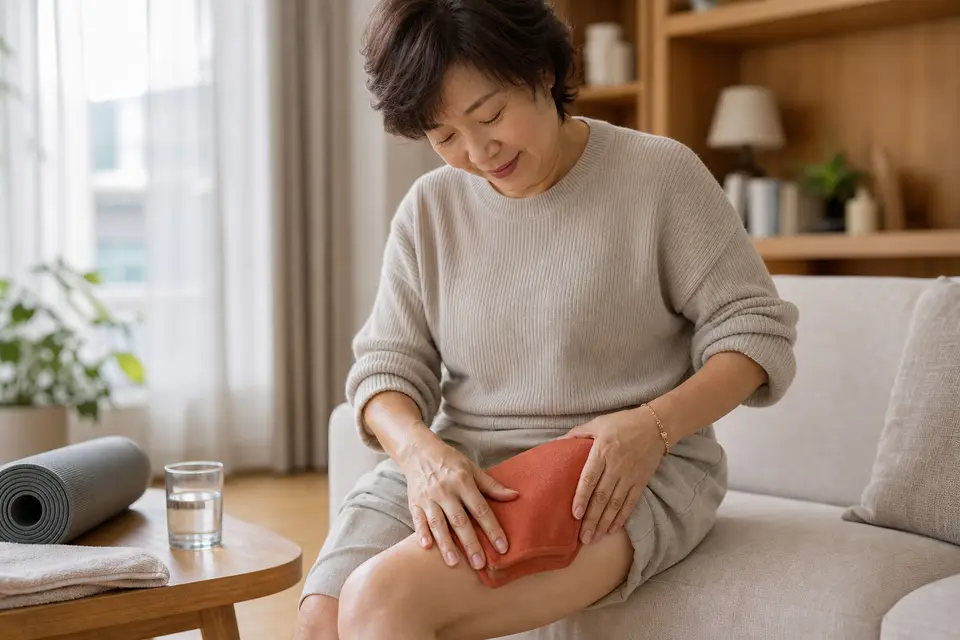
Gentle stretching can feel comfortable, but it should not be presented as a reliable way to prevent or shorten DOMS. A 2022 Cochrane review of 12 randomized or quasi-randomized studies found that stretching before, after, or around exercise produced no clinically important reduction in soreness among healthy adults.
Heat, cold, massage and other recovery methods may change how sore a muscle feels without showing that normal strength has returned. ACSM cautions that symptom relief does not equal tissue recovery, and APPI News could not find a high-certainty international guideline that ranks one of these options as the best home treatment.
Avoid forceful massage or aggressive stretching when pain is severe, swelling is pronounced or rhabdomyolysis is a concern. Those warning signs call for assessment, not an attempt to work the pain out at home.
Build workload gradually and take heat seriously
A sudden jump in workload increases the chance of severe soreness. The CDC advises gradually increasing physical conditioning over weeks or months, preventing overheating and staying hydrated to reduce exertional rhabdomyolysis risk.
Rest breaks and cooler conditions matter during strenuous activity in hot environments. If warning signs develop, the CDC directs people to stop the activity, cool down, begin drinking fluids and obtain medical assessment; drinking fluids is an immediate step, not a substitute for care.
Children, pregnancy and regular medicines need separate decisions
Children
APPI News could not find a current international professional guideline establishing a child-specific home treatment for DOMS. A child with severe muscle pain, weakness, trouble walking or a sudden loss of usual function needs prompt pediatric assessment rather than an adult recovery routine.
Pregnancy
Routine post-exercise soreness does not cancel pregnancy-specific warning signs. Australian government guidance advises stopping activity and obtaining professional advice for chest pain, persistent breathlessness, severe headache, persistent dizziness or faintness, regular painful contractions, vaginal bleeding, or persistent fluid loss from the vagina.
Pregnant people starting exercise should increase activity gradually and discuss the plan with their maternity clinician. Severe muscle symptoms still require medical assessment rather than being attributed to pregnancy or DOMS.
Chronic conditions and regular medicines
The CDC lists infections, uncontrolled diabetes, sickle cell disease and thyroid disorders among conditions that can raise rhabdomyolysis risk, and it identifies statins and several other medicine classes as possible risk factors. This does not mean that post-workout soreness in someone with one of these factors is rhabdomyolysis, but it lowers the value of assuming exercise is the only explanation.
England's National Health Service advises people taking statins to speak with their doctor about otherwise unexplained muscle pain, tenderness or weakness. A prescriber should decide whether testing or a medicine change is needed; treatment should not be stopped or adjusted from a symptom guide.

Frequently asked questions
Can training continue with delayed-onset muscle soreness?
Light activity may be reasonable when movement is comfortable, but severe symptoms can worsen with exercise. Avoid the painful activity for a few days if soreness makes it difficult, then return as symptoms subside.
Does stretching prevent post-workout soreness?
Not to a clinically important degree in the healthy adults studied by Cochrane. Gentle stretching may feel comfortable, but it should not be used to judge whether a muscle has recovered.
Is DOMS caused by lactic acid?
No. ACSM describes DOMS as part of the response to microscopic muscle damage and says lactic acid accumulation is not part of the process.
Which symptoms need immediate medical care?
Unexpectedly severe muscle pain, tea- or cola-colored urine, unusual weakness or fatigue, heavy swelling, or a marked loss of function requires prompt assessment. Rhabdomyolysis cannot be diagnosed or excluded from symptoms alone.
Should a child follow the same recovery plan as an adult?
No child-specific home protocol was verified for this guide. Severe pain, weakness, trouble walking or a sudden loss of usual function needs pediatric assessment.
Sources and further reading
- Delayed Onset Muscle Soreness (DOMS)(American College of Sports Medicine)
- Signs and Symptoms of Rhabdomyolysis(US National Institute for Occupational Safety and Health)
- Reducing Risk for Rhabdomyolysis(US National Institute for Occupational Safety and Health)
- Risk Factors for Rhabdomyolysis(US National Institute for Occupational Safety and Health)
- Stretching to prevent or reduce muscle soreness after exercise(Cochrane)
- Guidelines for physical activity during pregnancy(Australian Government Department of Health, Disability and Ageing)
- Statins: side effects(National Health Service in England)