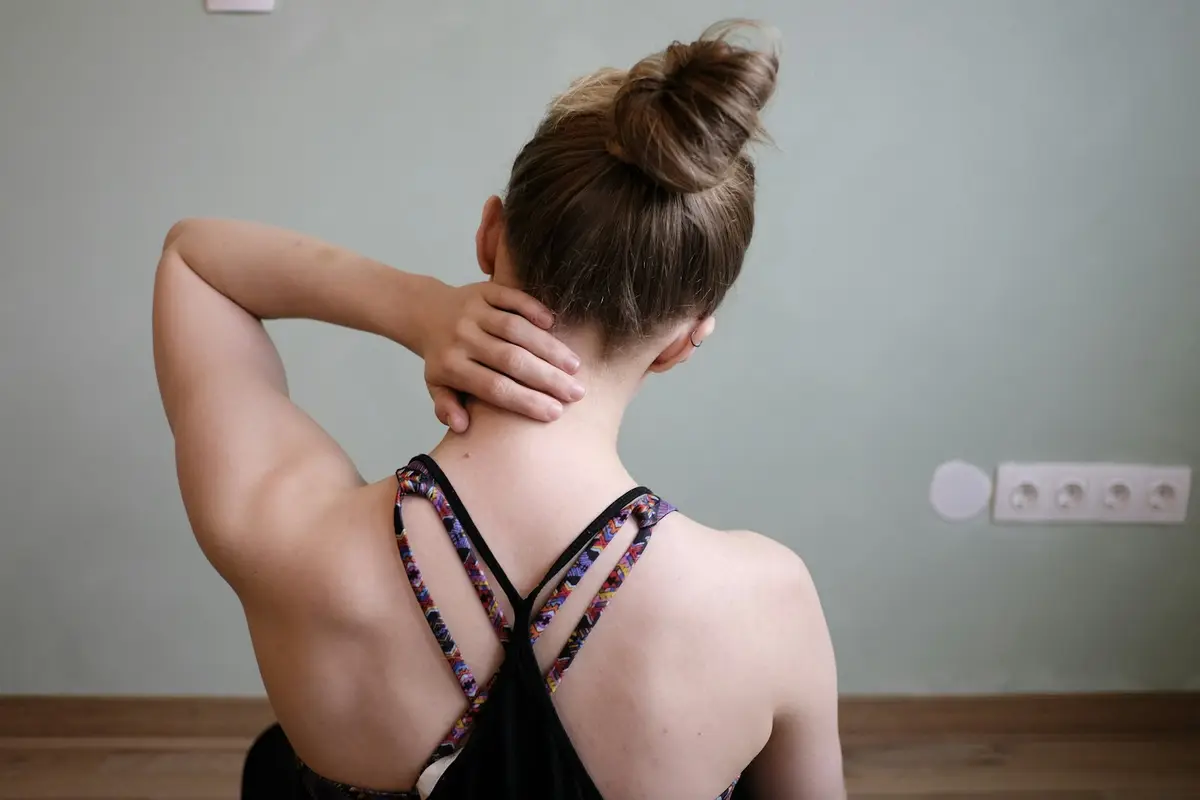
Medical guidance does not support one ice-first rule for every stiff neck. US orthopedic guidance applies ice after an injury, while Australian guidance favors gentle heat for acute torticollis, a painful muscle spasm that can follow an awkward sleeping position.
The distinction matters because a stiff neck is a symptom, not a diagnosis. Australia's government-funded healthdirect says acquired torticollis can follow trauma, a medicine reaction or something as ordinary as sleeping in a different position.
Fever, neurological changes and breathing problems need urgent care
Immediate medical assessment is needed when neck stiffness occurs with a severe or worsening headache, fever, confusion, marked drowsiness, vomiting, sensitivity to bright light, a first seizure or a rash that does not fade under pressure. England's National Health Service (NHS) lists these among meningitis warning signs and says a person may not have every symptom.
Difficulty breathing or swallowing, increased drooling, vision changes, or a new change in feeling or movement in an arm or leg also requires urgent care. Healthdirect identifies those features as possible signs of a more serious cause of torticollis.
Neck pain after a fall, collision or other trauma needs a different assessment from pain noticed after sleep. Persistent severe pain, pain shooting into an arm or leg, or headache with new numbness, tingling or weakness warrants prompt evaluation. The American Academy of Orthopaedic Surgeons (AAOS) identifies those patterns as warning signs after a neck sprain or strain.

Ice-first advice applies most clearly to an injury
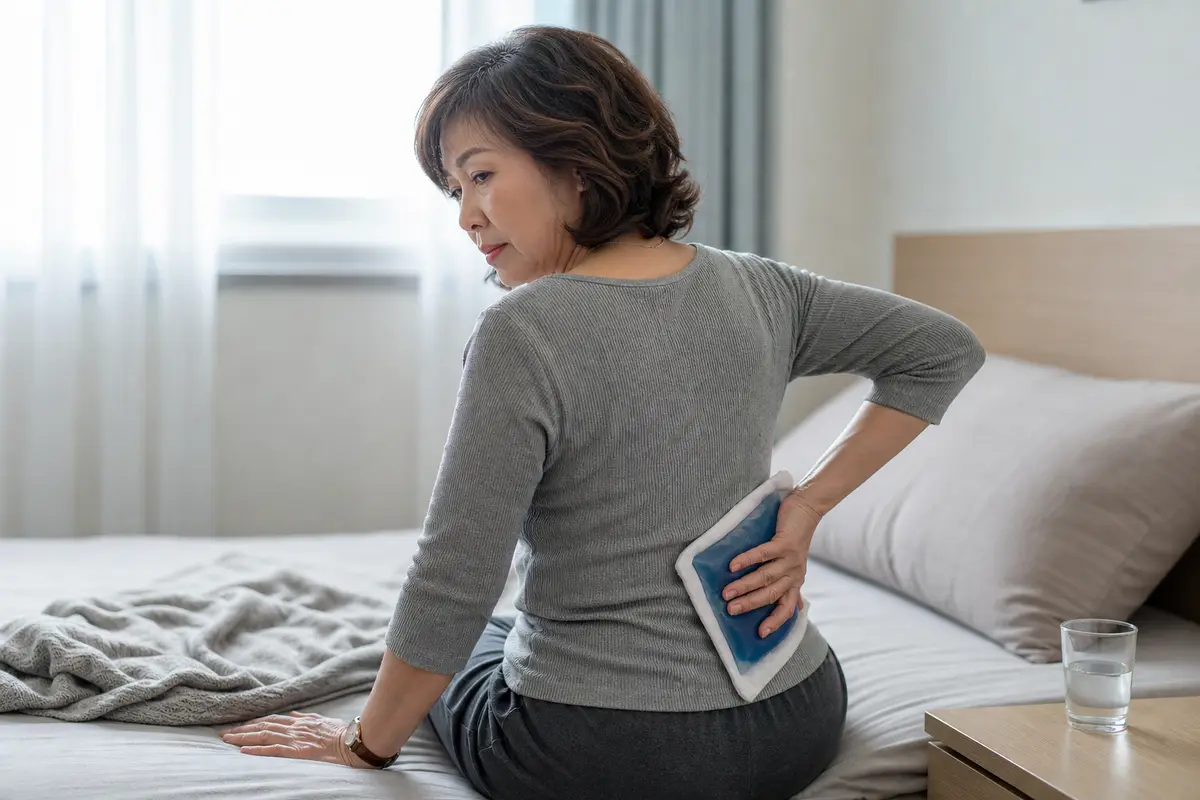
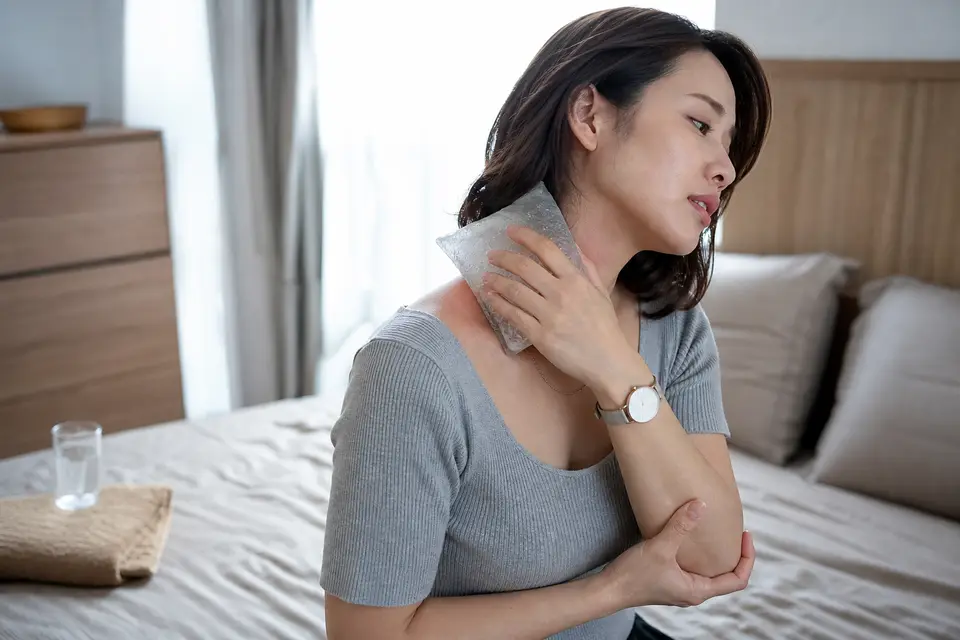
AAOS advises applying a wrapped ice pack for 15 to 30 minutes at a time, several times a day during the first two or three days after a neck sprain or strain. The guidance says ice should not touch bare skin. It also permits moist heat for cramped muscles but limits each application to 20 minutes.
That guidance concerns an injury in which the neck was bent or rotated abnormally. It does not establish that pain first noticed on waking is a sprain, nor does it prove that every new stiff neck must follow the same cold-then-heat schedule.
Muscle-spasm guidance often allows heat
Healthdirect recommends a heat pack and gentle massage for uncomplicated torticollis and says symptoms usually resolve within seven to 10 days, depending on the cause. Its advice differs from the AAOS injury protocol because the two pages are not describing an identical condition.
US guidance is not entirely consistent even within general neck self-care. MedlinePlus advises ice for the first 48 to 72 hours and heat afterward for people already diagnosed with neck pain or spasm. The same page says neither a heating pad nor an ice bag should be left in place during sleep because either can injure the skin.
APPI News could not verify a high-certainty international guideline that requires ice before heat for every stiff neck. A wrapped hot or cold pack may change pain, but it cannot establish the cause or make warning signs safe to observe at home.
Normal movement is favored over prolonged immobilization
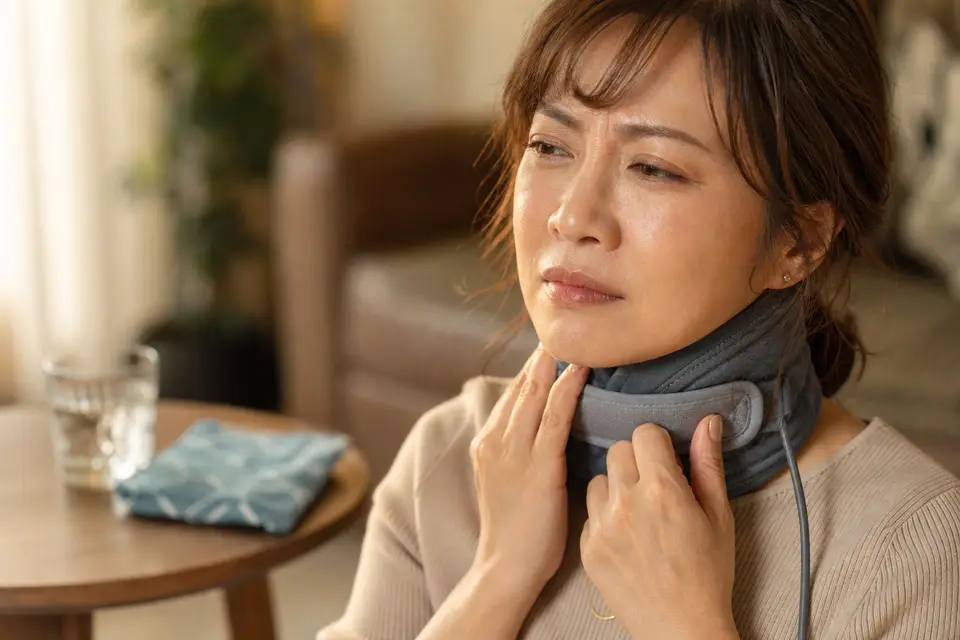
Healthdirect advises staying active and moving the head and neck as normally as possible to keep stiffness from worsening. The page supports natural movement but does not prescribe a forceful stretching routine.
MedlinePlus also discourages bed rest, recommends remaining active without worsening pain and advises avoiding driving when the head cannot turn easily. A collar should not be improvised as a way to keep the neck still; that page says a clinician should decide whether one is appropriate.
Children, pregnancy and regular medicines require separate decisions
Children
A child with neck stiffness and fever, increased drooling, sore throat, trouble swallowing, headache, abnormal eye alignment, double vision, light sensitivity or balance problems needs clinical assessment. The Royal Children's Hospital Melbourne treats infection and neurological features as red flags and says uncomplicated acute torticollis should resolve within seven to 10 days.
The hospital guideline lists heat and gentle massage as appropriate for most children. It calls for pediatric consultation when trauma is involved, the cause is unknown, symptoms persist or a deep-neck infection is suspected.
Pregnancy
APPI News could not verify pregnancy-specific guidance that ranks heat over ice, or ice over heat, for a new stiff neck. The NHS advises checking every pain medicine, including nonprescription products, with a pharmacist, midwife or doctor during pregnancy and warns against stopping a prescribed medicine without medical advice.
Chronic conditions and regular medicines
APPI News could not verify a single international home-treatment protocol for people with chronic conditions or regular medicines. A clinician or pharmacist should account for the condition and medicine list before pain medicine is added or a prescribed treatment is changed.

Frequently asked questions
Should every stiff neck be iced on the first day?
No universal rule was verified. AAOS recommends ice during the first two or three days after a neck sprain or strain, while healthdirect recommends gentle heat for uncomplicated torticollis.
Can a hot or cold pack touch bare skin?
No. A cloth barrier reduces the risk of skin injury, and neither type of pack should be left in place during sleep.
Should the neck be kept completely still?
Not for an uncomplicated muscle spasm. Healthdirect recommends normal movement and activity as tolerated, but trauma, neurological changes or sharply worsening pain requires assessment first.
When should persistent stiffness be assessed?
Healthdirect advises medical review if symptoms worsen or do not improve within seven to 10 days. Severe pain, trauma or any urgent warning sign calls for earlier care.
Does the same advice apply to children and pregnancy?
No. Children need separate assessment when infection or neurological features are present, and medicine choices during pregnancy should be checked with a pharmacist, midwife or doctor.
Sources and further reading
- Neck Sprains and Strains(American Academy of Orthopaedic Surgeons (OrthoInfo))
- Torticollis (wry neck)(Healthdirect Australia)
- Neck pain or spasms - self care(MedlinePlus, US National Library of Medicine)
- Meningitis(National Health Service in England)
- Acquired torticollis(Royal Children's Hospital Melbourne)
- Medicines in pregnancy(National Health Service in England)