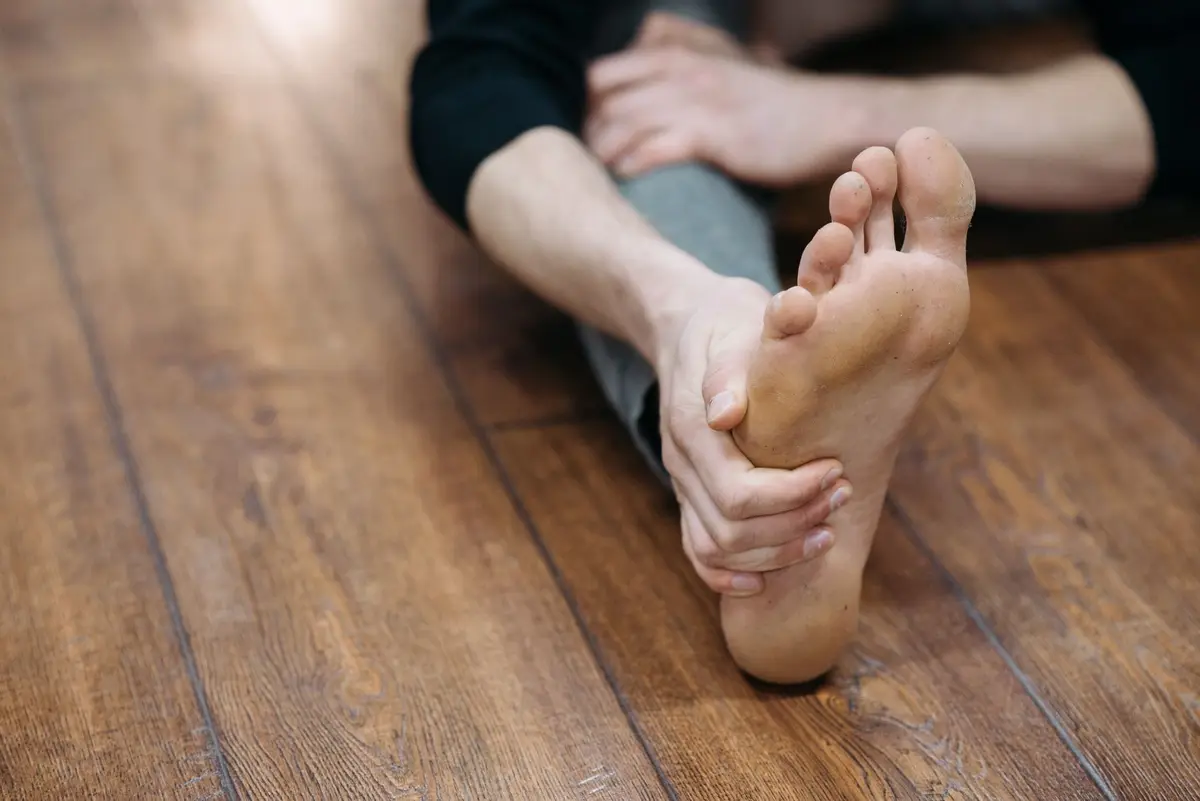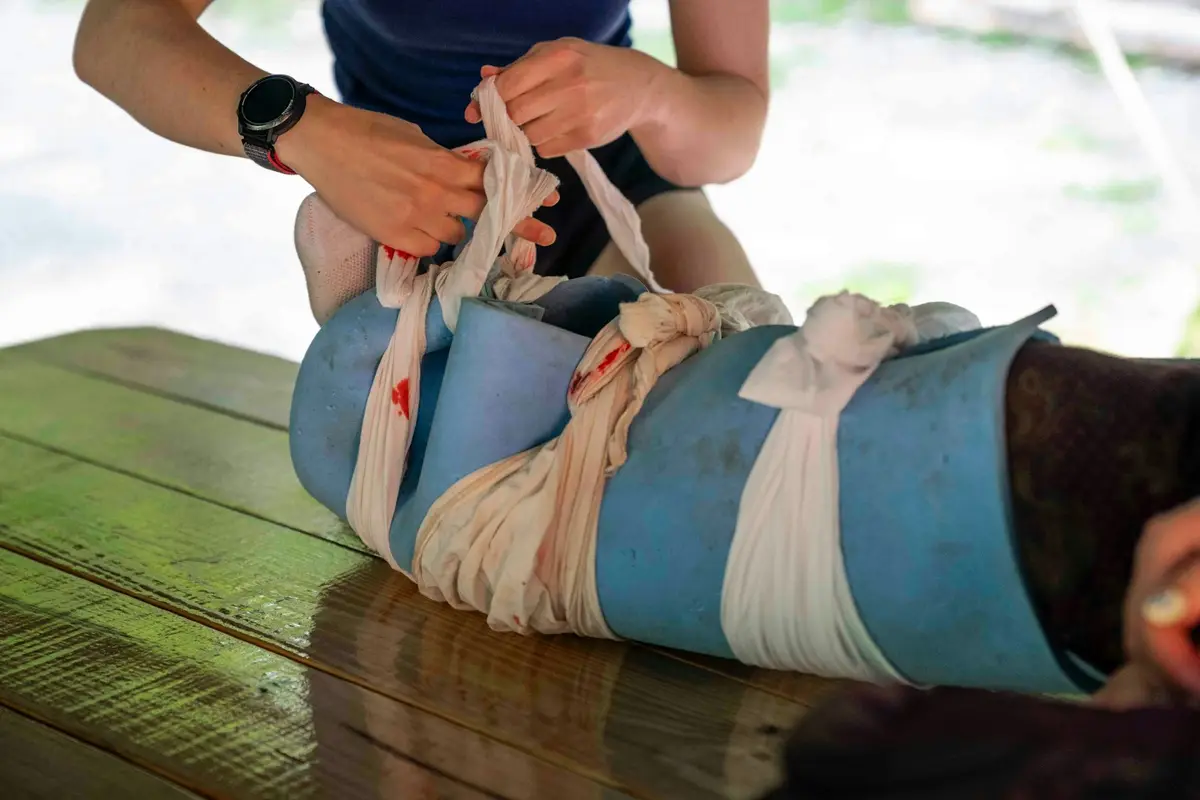
A 2022 review of seven clinical guidelines found support for functional bracing, early walking, rehabilitation and short-term cold therapy after an ankle sprain. The PEACE & LOVE framework favors early loading but is a 2020 editorial proposal, not proof that ice or RICE has become obsolete.
Protecting the ankle for the first few days can reduce further injury, but prolonged complete rest is not the usual goal. The amount of weight a person can safely place on the ankle depends on pain, stability and whether a fracture or more severe ligament injury has been excluded.
Deformity, loss of sensation or a cold foot needs immediate care
Seek emergency care after an ankle injury if there was a crack, the ankle or foot looks deformed, or the area becomes numb, tingling, blue, gray or cold. England's National Health Service (NHS) lists these signs as reasons for emergency assessment because a broken bone may require an X-ray.
Arrange urgent assessment if pain is severe or worsening, swelling or bruising is extensive or increasing, or the injured person cannot bear weight or walk more than a few steps. Bone tenderness, marked instability and symptoms that do not improve with home care also warrant clinical review. A severe sprain and a fracture can look similar, so bruising alone cannot establish which injury occurred.
Protect the ankle first, then restore movement gradually
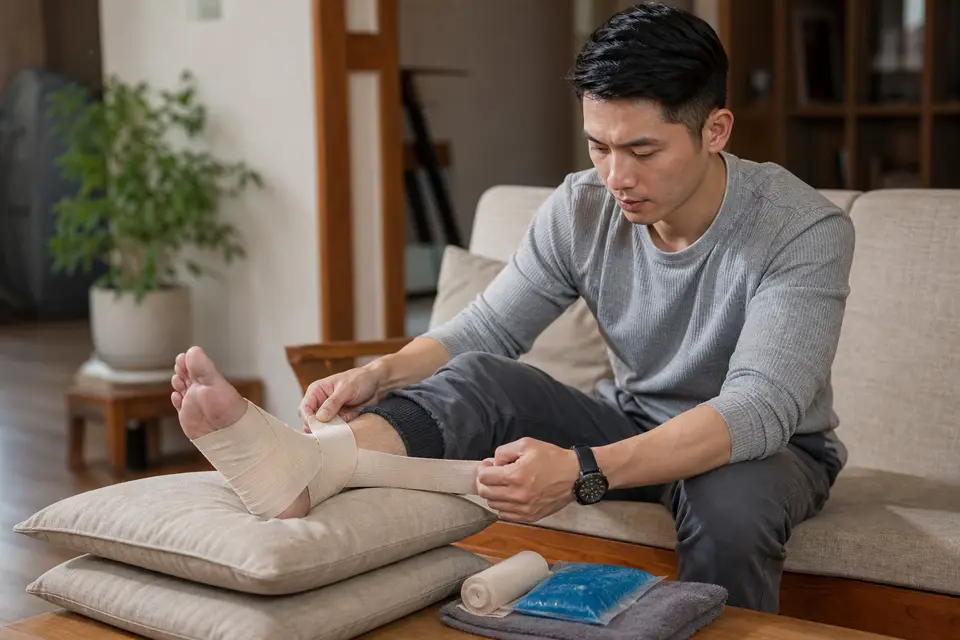
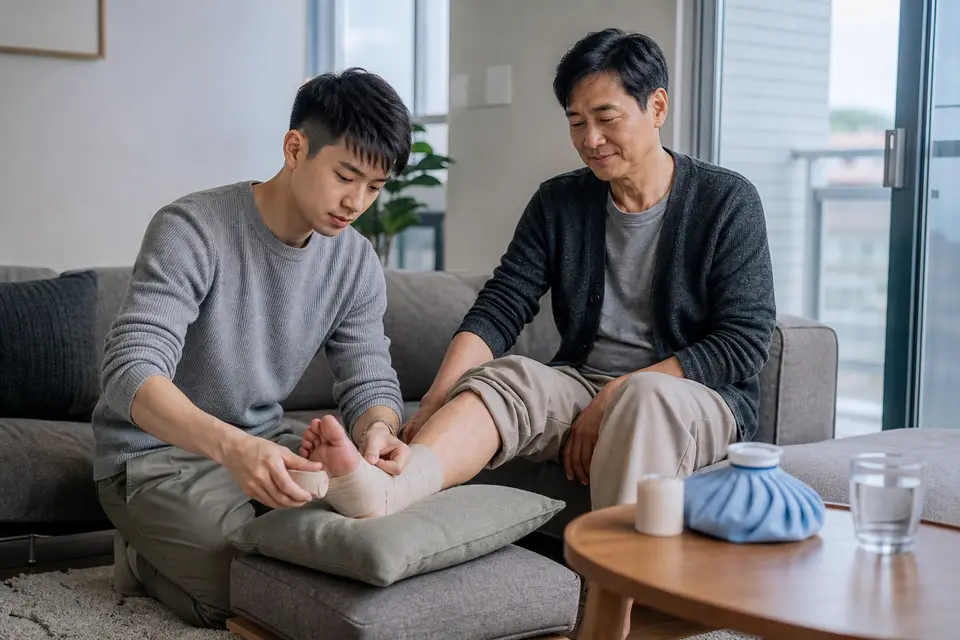
For the first two to three days, stop sport and other movements that sharply increase pain. A supportive shoe, brace or other external support may protect the joint, while elevation on a pillow can help control swelling. The NHS includes daytime compression among its first steps, but numb, discolored or cold toes are warning signs that need urgent assessment.
Cold therapy is an option for short-term pain relief, not a requirement and not a test of healing. The NHS advises placing a wrapped cold pack on the injury for up to 20 minutes every two to three hours during the first two to three days. Ice should not touch bare skin, and anyone with impaired sensation or circulation should obtain clinical advice before using it.
Movement can resume when pain no longer stops it. The American Academy of Orthopaedic Surgeons (AAOS) says early weight-bearing as tolerated is typical, followed by range-of-motion work, strengthening and balance retraining. More severe injuries may need a short period of immobilization and a clinician-directed plan, so inability to walk should prompt assessment rather than forced loading.
PEACE & LOVE is a framework, not a declaration that RICE is obsolete
Blaise Dubois and Jean-François Esculier introduced PEACE & LOVE in a British Journal of Sports Medicine editorial published online in 2019 and in the journal's January 2020 issue. PEACE stands for protection, elevation, avoiding anti-inflammatory modalities, compression and education. LOVE stands for load, optimism, vascularization and exercise.
The framework's durable message is to avoid unnecessary prolonged rest and to restore loading and exercise as the injury allows. Its position on ice is less settled. A 2022 systematic review found that several ankle-sprain guidelines supported acute cold therapy, functional support, early walking and rehabilitation, although the authors also found differences between guidelines and said cold therapy had limited value later in recovery.
That evidence does not support icing an ankle continuously or delaying movement until every trace of pain has gone. It also does not support a blanket claim that brief, wrapped cold therapy disrupts healing in people. The practical distinction is between optional short-term symptom relief and the active rehabilitation needed to restore function.
Rehabilitation continues after swelling begins to settle
Rehabilitation usually progresses from comfortable ankle movement to strength, balance and sport- or work-specific tasks. The AAOS says its three-phase program may take about two weeks for a minor sprain and six to 12 weeks for a more severe injury. Those ranges are not a deadline for an individual injury, and returning to cutting, jumping or running before strength and balance recover can increase reinjury risk.
Persistent pain or instability needs reassessment. The AAOS says symptoms continuing beyond four to six weeks may indicate a chronic sprain, while imaging may be considered when symptoms persist for six to eight weeks despite conservative treatment. A clinician may also look for tendon, cartilage or high-ankle injuries that a simple home-care label would miss.
Children, pregnancy, diabetes and regular medicines need separate decisions
Children
The AAOS says childhood ankle sprains and fractures can both begin with pain and swelling, while children's growth plates are vulnerable to fracture. A child who cannot stand or walk, has marked tenderness or bruising, or has a deformed ankle needs medical assessment. Loading and return to sport should follow the diagnosis rather than an adult timetable copied from a general guide.
Pregnancy
APPI News could not find a dedicated international guideline for ankle-sprain self-care during pregnancy. Protection and elevation do not remove the need to consider balance, fall risk, circulation and other pregnancy-related symptoms. A maternity clinician or other treating professional should advise on pain medicines, braces and progression of weight-bearing.
Diabetes, altered sensation and regular medicines
The US National Library of Medicine says diabetic neuropathy can reduce feeling in the feet and advises protecting them from heat and cold. A person with diabetes, poor circulation or reduced sensation should not rely on skin discomfort to decide whether a cold pack is safe. New discoloration, a wound or persistent warmth and redness needs prompt clinical review.
The NHS advises asking a pharmacist about pain treatment for a sprain or strain. People who are pregnant, have chronic conditions or use regular medicines need an individual decision from a clinician or pharmacist; this guide does not specify a drug or dose.
Frequently asked questions
Should an ankle sprain be iced?
Brief, wrapped cold therapy can be used for short-term pain relief during the first two to three days. It should not touch bare skin, continue for long periods or delay gradual movement as pain allows.
When should weight-bearing restart?
Current guidance favors early weight-bearing as tolerated rather than prolonged complete rest. Severe pain, inability to walk, deformity, bone tenderness or altered sensation needs assessment before loading is increased.
Did PEACE & LOVE replace RICE?
No professional consensus establishing a universal replacement was verified for this guide. PEACE & LOVE is a 2020 editorial framework, while current clinical guidance still includes short-term cold therapy and shares its emphasis on protection followed by rehabilitation.
How long does recovery take?
The AAOS gives a broad range of about two weeks for minor sprains and six to 12 weeks for more severe injuries. Persistent pain, instability or failure to improve needs reassessment rather than a fixed home schedule.
Can a child follow the same plan?
A fracture can resemble a sprain in a child, and growth plates are vulnerable. A child who cannot stand or walk, has marked tenderness or bruising, or has a deformed ankle needs medical assessment before an adult rehabilitation plan is used.
Sources and further reading
- Management and treatment of ankle sprain according to clinical practice guidelines: A PRISMA systematic review(PubMed Central)
- Soft-tissue injuries simply need PEACE and LOVE(British Journal of Sports Medicine via PubMed)
- Sprains and strains(National Health Service in England)
- Sprained Ankle(American Academy of Orthopaedic Surgeons)
- Ankle Fractures In Children(American Academy of Orthopaedic Surgeons)
- Diabetic Foot(US National Library of Medicine)