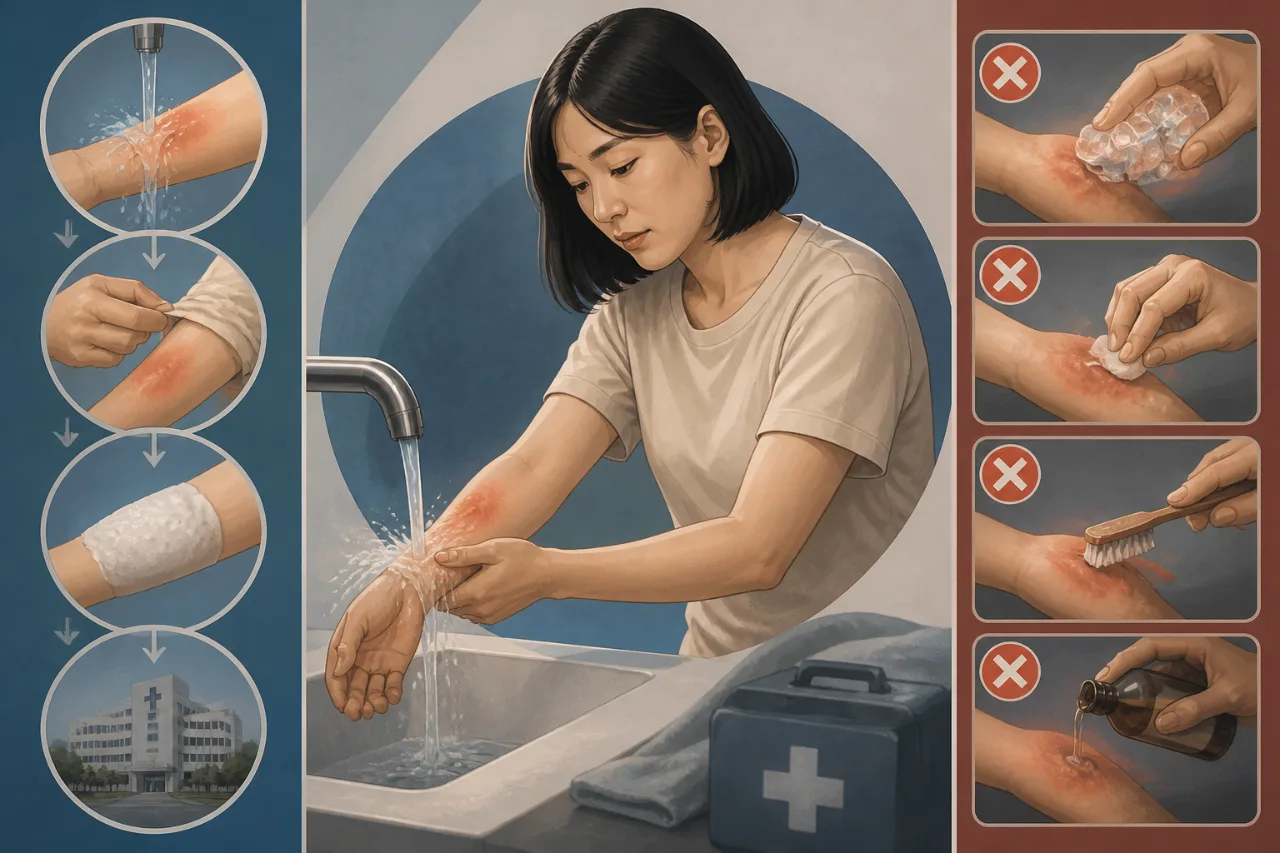
England's National Health Service (NHS) advises stretching and massaging a cramped calf, or standing on the affected leg when it is safe to do so. One-sided swelling or pain, chest pain, breathing difficulty or fainting require medical attention rather than further home treatment.
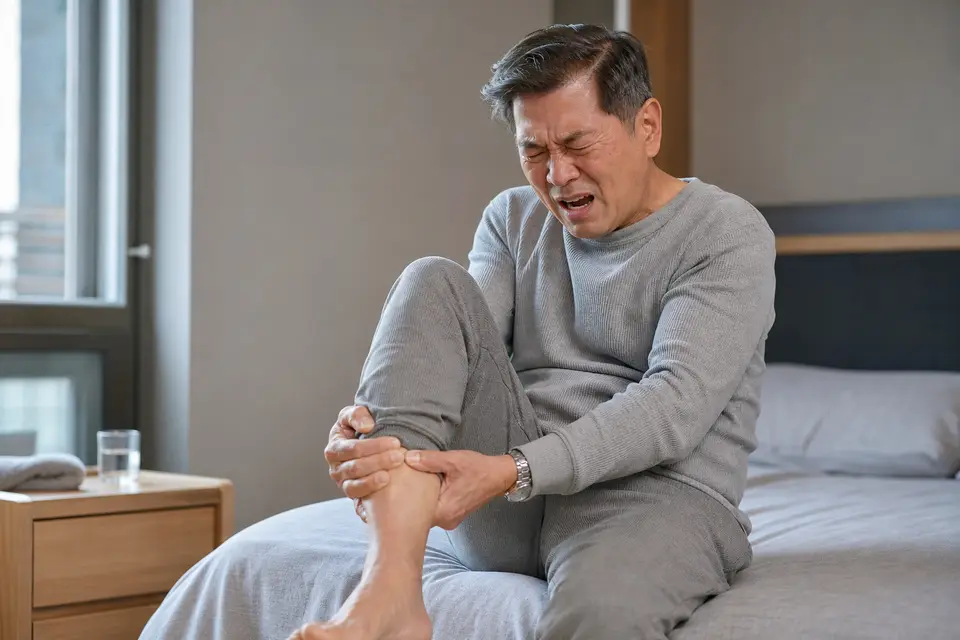
Night leg cramps are sudden, painful muscle contractions that commonly affect the calf. The NHS says they usually last from a few seconds to 10 minutes, and soreness can remain for up to 24 hours afterward.
Breathing difficulty or fainting needs emergency care
Seek emergency medical help for difficulty breathing, chest pain or discomfort, coughing up blood, lightheadedness or fainting. The US Centers for Disease Control and Prevention (CDC) identifies these as possible signs of pulmonary embolism, which requires immediate medical attention.
Swelling, pain or tenderness, warmth, redness or discoloration in one leg or arm can occur with deep vein thrombosis. The CDC advises prompt medical attention for these signs because diagnosis requires clinical testing; a symptom list cannot determine whether a clot is present.
Arrange a clinical assessment when a cramp lasts longer than 10 minutes, repeatedly disrupts sleep, or occurs with numbness or swelling. Those thresholds come from NHS guidance and do not mean that shorter cramps are always harmless when other warning signs are present.
Stretch the calf while the cramp is active
NHS Dorset in England directs a person with a calf cramp to straighten the leg and bend the foot upward at the ankle so the toes point toward the shin. Hold the position while the contraction eases.
Massage the cramped muscle gently. If standing is safe, place the foot flat on the floor and gradually put weight through the affected leg; anyone at risk of falling should remain supported or use the seated stretch instead.
NHS guidance supports stretching, massage and weight-bearing during a cramp but notes that most episodes also end without intervention. It does not rank these methods or promise immediate relief, so persistent or atypical pain should not be treated as proof of a routine cramp.

Prevention evidence is limited to small older groups
Regular stretching is often suggested for people with recurrent night cramps, but the trial evidence is narrow. A 2021 Cochrane review found three trials with 201 participants, all aged 50 or older, and rated the evidence low or very low certainty.
One trial found that six weeks of combined calf and hamstring stretching may reduce cramp severity in people over 55, but its effect on frequency remained uncertain. A separate trial found that calf stretching alone may make little or no difference to cramp frequency in people aged 60 or older.
The review did not test non-drug treatment in younger adults, people with neurological disease or cramps occurring during exercise. APPI News could not find high-certainty trial evidence showing which home technique stops an active night cramp fastest.
Pregnancy, childhood and dialysis require separate judgment
Pregnancy
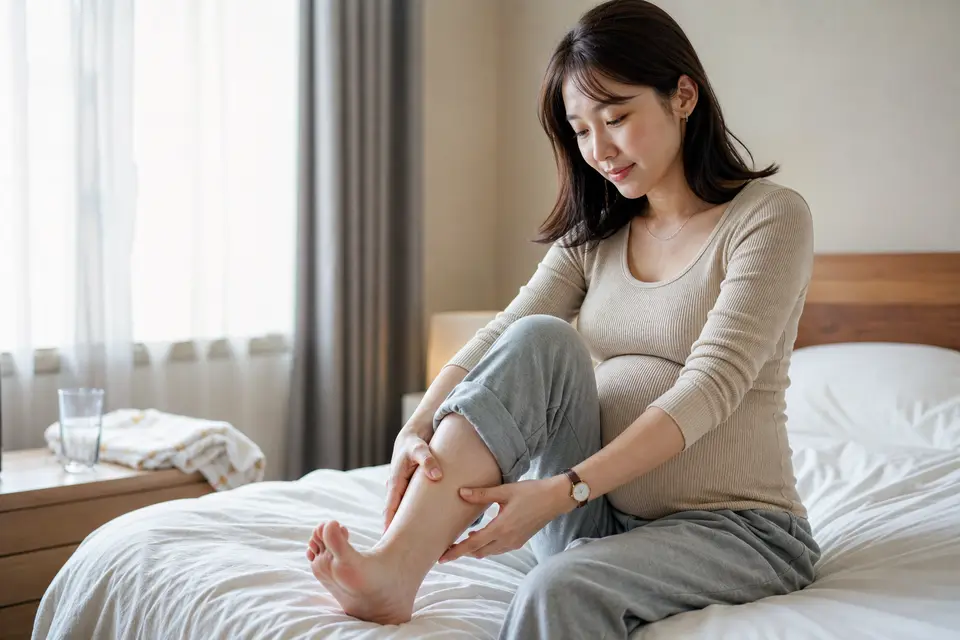
Leg cramps are common during pregnancy, particularly in the third trimester, but that does not establish a calcium or magnesium deficiency. A 2020 Cochrane review of eight small trials involving 576 pregnant women found low- or very low-certainty evidence and could not establish that oral magnesium, calcium, vitamins or their combinations were effective and safe treatments.
None of those trials assessed stretching, massage, relaxation or heat, so the review does not establish a pregnancy-specific home technique. Persistent or severe pain, one-sided swelling, breathing difficulty or chest pain needs assessment by a maternity clinician or emergency service, depending on the warning signs.
Children
Repeated nighttime leg pain in a child should not automatically be labeled cramp or attributed to growth. The NHS describes so-called growing pains as aching or throbbing in both legs during the evening or night that resolves by morning.
Assessment is advised when pain affects one leg, occurs in the morning or during activity, causes a limp, centers on one joint, or accompanies swelling, a rash, fever, unusual tiredness or weight loss. These features do not identify a diagnosis, but they fall outside the NHS description of typical growing pains.
Hemodialysis and regular medicines
Cramps during or after hemodialysis should be reported to the dialysis team rather than managed by changing fluid intake or treatment settings without guidance. The US National Kidney Foundation says removing fluid too quickly can cause cramps and that the care team may need to review fluid removal, treatment time, medicines or other parts of the dialysis prescription.
The NHS also lists diuretics and statins among medicines that can sometimes be associated with leg cramps. A person taking regular medicine should ask the prescriber to assess recurrent cramps and should not stop or alter treatment on the basis of a symptom guide.
Frequently asked questions
What can help during a night calf cramp?
Straighten the knee as comfort allows, move the toes toward the shin and hold the calf stretch while the contraction eases. Gentle massage or supported weight-bearing may also help, although most cramps end on their own.
When does a cramp need emergency care?
Difficulty breathing, chest pain, coughing up blood, lightheadedness or fainting requires emergency medical help. One-sided swelling, pain, warmth or discoloration also needs prompt clinical assessment.
Do night cramps prove a calcium deficiency?
No single symptom establishes a nutrient deficiency. Pregnancy trials of calcium, magnesium and vitamins have produced low- or very low-certainty evidence, so supplements should not be treated as a confirmed remedy.
Does stretching prevent future cramps?
It may reduce severity for some older adults, but evidence about frequency is uncertain. The relevant Cochrane review included only three small trials and did not study younger adults.
Should a child with nighttime leg pain be assumed to have growing pains?
No. Pain in one leg, morning or activity-related pain, limping, joint pain, swelling, fever or other systemic symptoms warrants clinical assessment.
Sources and further reading
- Leg cramps(National Health Service in England)
- Patient information leaflet for the treatment of leg cramps(NHS Dorset in England)
- About Venous Thromboembolism (Blood Clots)(US Centers for Disease Control and Prevention)
- Non-drug treatments for leg and foot cramps(Cochrane)
- Interventions for leg cramps during pregnancy(Cochrane)
- Growing pains(National Health Service in England)
- Hemodialysis(US National Kidney Foundation)