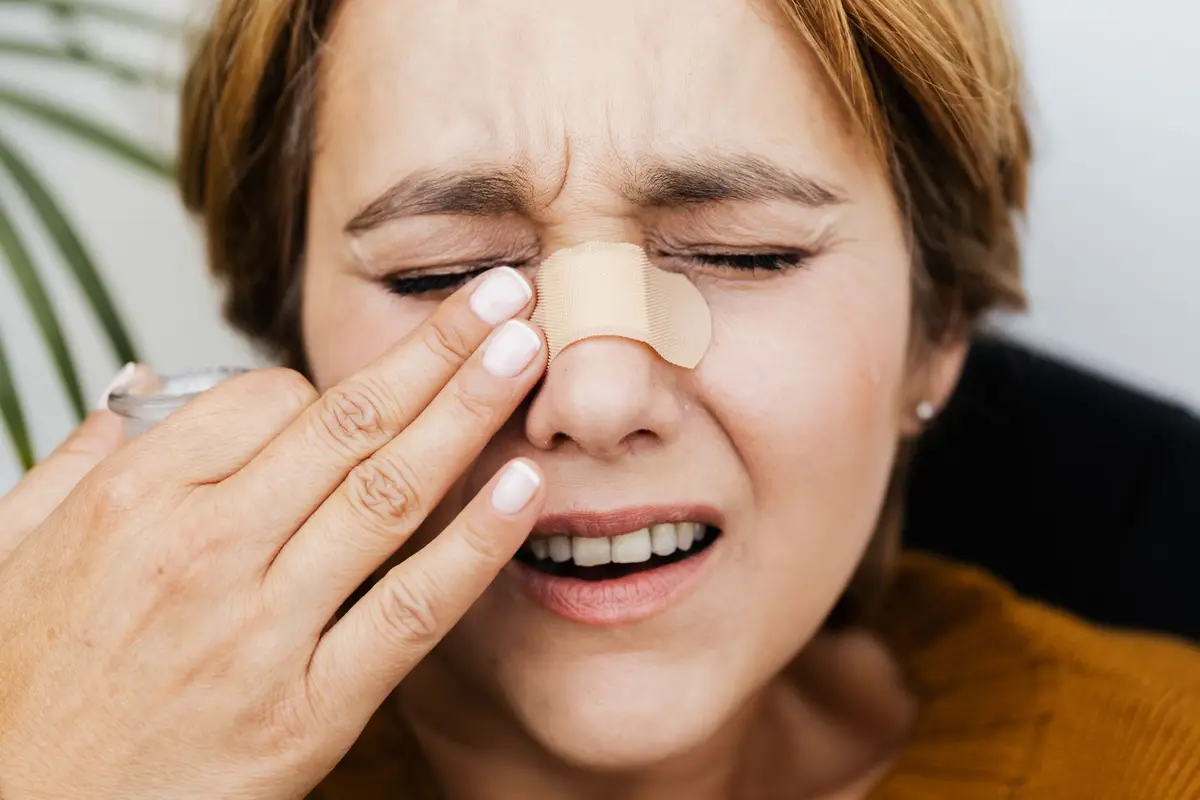
The International Federation of Red Cross and Red Crescent Societies (IFRC) advised a person with a nosebleed to sit down, lean the head slightly forward and pinch the soft part of the nose continuously for 10 to 15 minutes in its 2025 guidelines. A backward tilt is not part of the recommended position because blood can run toward the throat instead of out through the nose.
Most nosebleeds need only direct pressure. The person should breathe through the mouth and spit out blood rather than swallow it while the nostrils remain pinched.
Heavy bleeding or breathing difficulty needs urgent care
Seek medical attention if bleeding continues after 15 minutes of uninterrupted pressure or the person becomes lightheaded. The IFRC also directs people to emergency medical services after a traumatic nosebleed accompanied by altered mental status, loss of consciousness, repeated vomiting, vision changes, difficulty moving or walking, severe headache, an obvious nasal deformity or signs of a facial fracture.
Excessive bleeding, difficulty breathing, weakness or dizziness also requires urgent assessment. England's National Health Service (NHS) says emergency assessment is needed when a nosebleed follows a blow to the head or when the person swallows enough blood to vomit. Do not drive if weakness, dizziness or heavy bleeding makes travel unsafe; use the local emergency service or have someone else provide transport.
Contact a clinician promptly if two rounds of 10 to 15 minutes of pressure do not stop the bleeding. Frequent nosebleeds, a known clotting disorder or a nosebleed while taking medicine that reduces blood clotting also needs clinical review.
Pinch the soft part of the nose without checking early
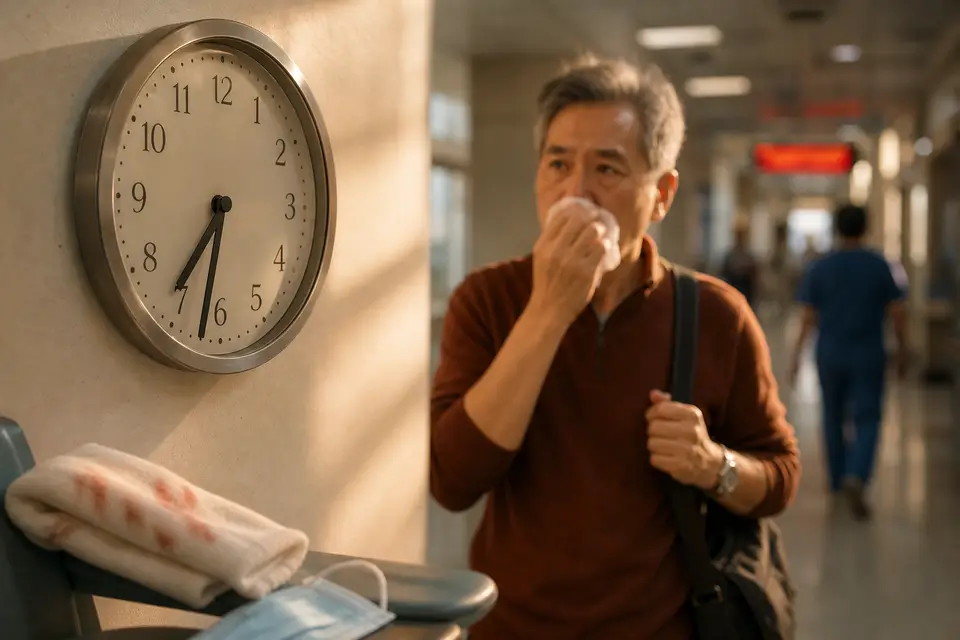
Sit upright and lean slightly forward. Use the thumb and index finger to compress the soft lower third of the nose, just above the nostrils, rather than the hard bridge. Keep the pressure steady for 10 to 15 minutes and use a clock so the grip is not released early to check the bleeding.
Breathe through the mouth and spit out any blood that reaches it. If bleeding continues after the first timed attempt, check that pressure is on the soft part and repeat it once. Seek medical care if the second attempt fails or if any warning sign develops.
The IFRC found no research establishing the ideal compression time, although 15 minutes was used in the only clinical trial it identified. The 10-to-15-minute interval is therefore a practical guideline, not a precisely proven cutoff for every person.

Tilting backward sends blood toward the throat
Do not tilt the head backward. The IFRC says a forward lean may reduce the amount of blood reaching the airway and stomach, where it can contribute to breathing difficulty or vomiting. Pressure belongs on the soft tissue near the nostrils; squeezing the hard bridge does not compress the usual front-of-nose bleeding area.
Ice should not replace pressure. The IFRC's 2025 review found no studies of ice treatment in people with nosebleeds and concluded that available research does not support cryotherapy for acute nosebleeds. It recommends pressure on the soft part of the nose as the only first-aid intervention needed in most cases.

Avoid disturbing the clot for 24 hours
After bleeding stops, avoid blowing or picking the nose, removing scabs, heavy lifting and strenuous exercise for 24 hours. The NHS also advises avoiding hot drinks, alcohol and lying flat during that period because these actions may be followed by renewed bleeding.
Another episode can be managed with the same forward position and timed pressure if no warning sign is present. Repeated episodes still need assessment even when each one stops, because a first-aid guide cannot determine the underlying cause.
Children, pregnancy and clotting medicines need separate judgment
Infants and children
An adult should help a child sit forward, pinch the soft part of the nose and breathe through the mouth. Reassure the child and keep the pressure continuous for the full timed interval. The IFRC advises arranging a medical appointment after a nosebleed in a child younger than two rather than assuming general home guidance is sufficient.
A child needs urgent help for the same warning signs as an adult, including ongoing or heavy bleeding, lightheadedness, breathing difficulty or signs of head or facial injury. Recurrent bleeding also requires clinical assessment.
Pregnancy
The NHS lists pregnancy among factors associated with a greater likelihood of nosebleeds, but neither cited source gives a different first-aid sequence for pregnancy. APPI News could not verify a pregnancy-specific compression method from these sources. A pregnant person can use the same forward position and direct pressure, while persistent, heavy or recurrent bleeding should be discussed with a maternity clinician.
Clotting disorders, chronic illness and regular medicines
A person taking an anticoagulant or antiplatelet medicine, or living with a disorder that impairs clotting, should use the same immediate pressure but seek professional help if the bleeding does not stop. Medicine should not be stopped, reduced or replaced during first aid unless the prescribing clinician directs the change.
High blood pressure can coincide with nosebleeds, but a nosebleed alone does not show its cause or whether treatment needs adjustment. People with chronic illness or regular medicines should ask a clinician to assess repeated episodes rather than changing treatment on their own.

Frequently asked questions
Should the head go forward or backward during a nosebleed?
Forward. Sit upright, lean the head slightly forward and pinch the soft part of the nose. Tilting backward allows blood to run toward the throat.
Where should pressure be applied?
Pinch the soft lower third of the nose just above the nostrils. Pressure on the hard bridge does not compress the usual front-of-nose bleeding area.
How long should the nose stay pinched?
Keep steady pressure for 10 to 15 minutes without releasing it to check early. If one correctly placed attempt fails, repeat it once and seek medical care if bleeding continues.
Does an ice pack stop a nosebleed?
The IFRC does not recommend ice as first aid. Its review found no trials in people with active nosebleeds and no adequate evidence that cryotherapy stops the bleeding.
When does a child need medical care?
Urgent help is needed for heavy or persistent bleeding, breathing difficulty, lightheadedness or signs of head or facial injury. The IFRC advises a medical appointment after any nosebleed in a child younger than two.
Sources and further reading
- International first aid, resuscitation and education guidelines 2025(International Federation of Red Cross and Red Crescent Societies)
- Nosebleed(National Health Service in England)