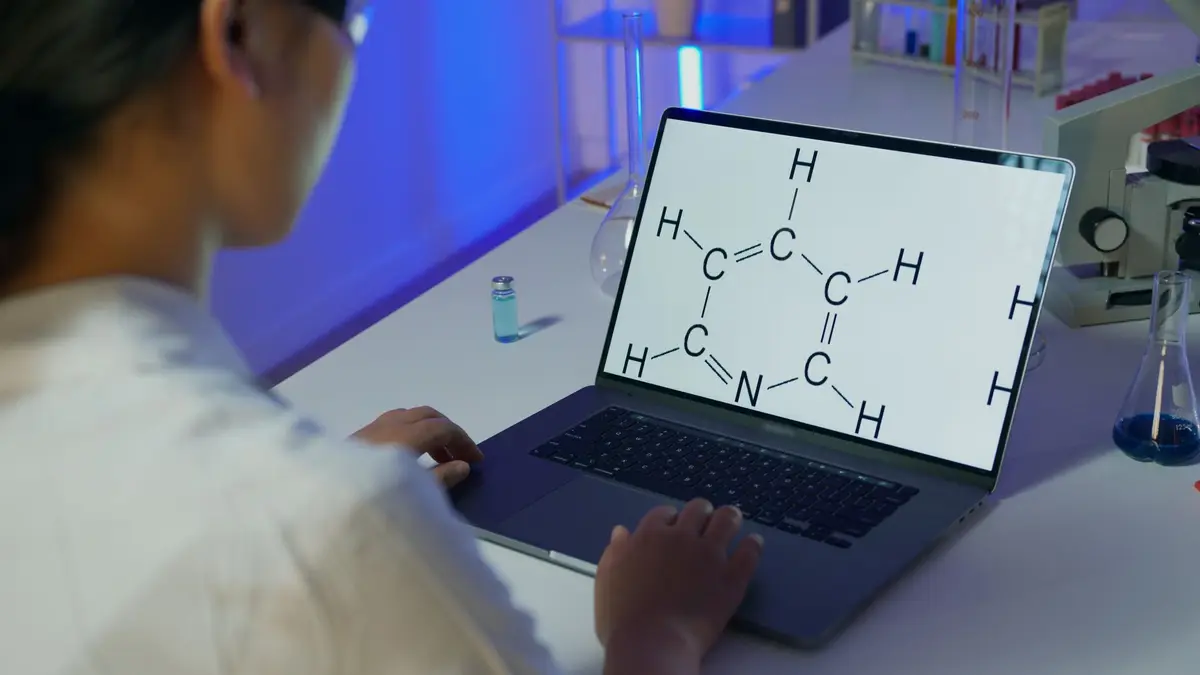
AI-designed drug candidates have moved into mid- and late-stage trials, but APPI News found no publicly identified US approval for a novel drug originating from an AI-led discovery program as of August 4, 2026. A June 2026 industry commentary estimated that roughly US$60 billion had entered the field since 2019 and about 175 AI-originated programs had reached human trials, with none approved by the US Food and Drug Administration. The estimate is not an official FDA classification, and the agency's public approval lists do not identify how a drug was discovered.
The distinction matters because AI can affect several different steps: selecting a biological target, designing a molecule, predicting its properties or organizing a trial. Faster work before human testing does not remove the need for clinical evidence. Current results suggest that AI may improve the odds of producing a viable early candidate, but they do not yet show a higher approval rate.
Investment claims run ahead of approval evidence
A BCC Research release published July 14, 2026 said recent AI drug-discovery investment exceeded US$2 billion and claimed that discovery timelines could fall from four or five years to 12 to 18 months. It also projected research and development cost reductions of 30 to 40 percent. Those figures come from a commercial market report and describe the discovery phase, not the full route through human trials and regulatory review.
The reported US$60 billion cumulative total and 175-program count cover a wider period and use another publisher's definition of an AI-originated program. The two sets of figures should therefore not be combined into a single performance measure. Funding can expand the number of targets and molecules tested, but an approval requires evidence that a particular product meets the regulator's standards for its intended use.
Early trials show an advantage on limited evidence
A 2024 analysis in Drug Discovery Today reported Phase 1 success rates of 80 to 90 percent for molecules discovered by AI-native biotechnology companies, compared with historical industry ranges of 40 to 65 percent. Phase 1 trials mainly examine safety, tolerability and how a drug moves through the body. A higher rate at that stage is consistent with better selection of molecules that have usable drug properties, but it does not establish that they treat disease effectively.
The same analysis found a Phase 2 success rate of about 40 percent, comparable with historical industry results. That estimate came from only 10 Phase 2 trials, making broad conclusions premature. The paper's definition also included several ways AI could contribute to discovery, a boundary that is not standardized across companies or databases.
Rentosertib supplies a mid-stage test
Rentosertib, an experimental treatment for idiopathic pulmonary fibrosis, is among the most advanced examples. Its developers used generative AI to identify the TNIK target and design the molecule. A peer-reviewed Phase 2a trial published in Nature Medicine enrolled 71 people for 12 weeks and reported a mean forced-vital-capacity increase of 98.4 milliliters in the highest-dose group, compared with a 20.3-milliliter decline in the placebo group.
Lung function was a secondary endpoint, and each treatment group included only 17 or 18 participants. Treatment-emergent adverse events occurred at similar frequencies across the groups, while liver toxicity or diarrhea accounted for the most common events leading participants to stop treatment. The authors said the findings supported further investigation in larger, longer trials rather than a conclusion that the medicine works.

A failed ALS program shows where prediction stops
Other candidates have not carried an early scientific rationale into patient benefit. Verge Genomics used AI to identify VRG50635, which targeted the enzyme PIKfyve for amyotrophic lateral sclerosis. BioPharma Dive reported in May 2026 that the company ended the program after an early-stage trial failed to produce the intended benefit and a nerve-damage biomarker moved in the wrong direction.
The failure does not show that AI drug discovery as a whole is ineffective. It shows that a model's target selection and molecule design remain hypotheses until experiments and human trials test them. Biological response, toxicity, dosing, endpoints and patient selection can defeat a candidate after computational screening has finished.
The approval gap is real but hard to count
The FDA's public lists identify approved products and uses, not whether AI contributed to target selection or molecular design. APPI News could not independently recreate the 175-program pipeline or the zero-approval figure from agency records alone. The MedCity News estimate remains the clearest current public count located for this report, but its result depends on what qualifies as AI-originated.
That uncertainty does not erase the broader evidence gap. Published results support faster nomination of candidates and a possible Phase 1 advantage, while Phase 2 evidence remains sparse and mixed. Mid- and late-stage readouts will show whether more AI-originated candidates survive the parts of development that test clinical benefit rather than molecular promise.
Frequently asked questions
Has the FDA approved an AI-discovered drug?
APPI News found no publicly identified FDA approval for a novel drug originating from an AI-led discovery program as of August 4, 2026. The FDA does not categorize approvals by discovery method, so the answer relies on published pipeline tracking rather than an agency field that can be searched directly.
What has AI changed in drug development?
Its clearest demonstrated role is before and around early clinical testing: prioritizing targets, designing or selecting molecules and supporting trial planning. Evidence that it shortens the entire clinical and regulatory process has not been established.
Do higher Phase 1 success rates predict approval?
Not yet. The published comparison covered a small early cohort, and its Phase 2 results were similar to historical industry rates. Approval also requires later evidence of efficacy, safety and manufacturing quality.
Sources and further reading
- AI Drug Discovery Investment Surges to $2+ Billion(GlobeNewswire / BCC Research)
- The AI Drug Discovery Race Is Heating Up, Not In the Way You Think(MedCity News)
- How successful are AI-discovered drugs in clinical trials?(Drug Discovery Today / PubMed)
- A generative AI-discovered TNIK inhibitor for idiopathic pulmonary fibrosis(Nature Medicine)
- Verge, following trial failure, rebrands its AI drug discovery ambitions(BioPharma Dive)