A 2018 Cochrane review found that home bleaching whitened adult teeth over two weeks to six months, but rated the supporting evidence as low to very low certainty. Peroxide products, whitening toothpastes and light-assisted office procedures use different mechanisms, and their risks cannot be treated as interchangeable.
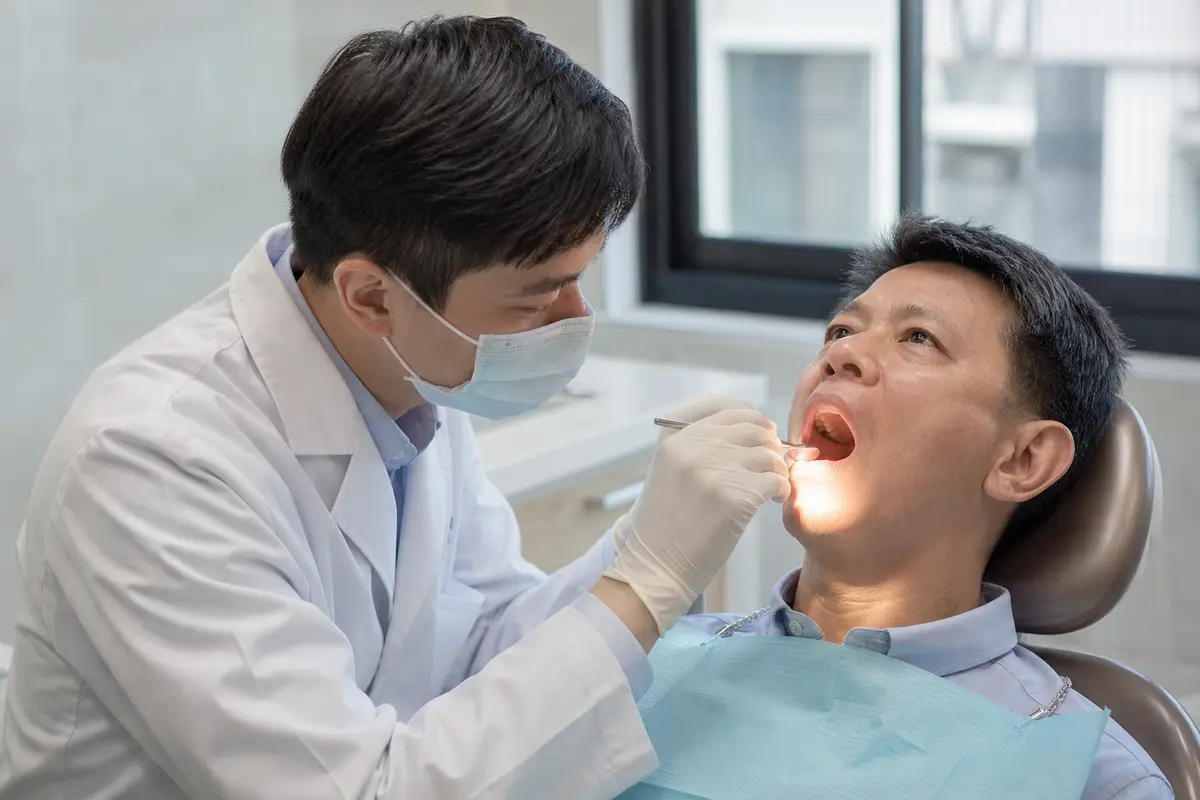
Whitening is cosmetic rather than treatment for decay, gum disease or a damaged tooth. A dental examination can identify the cause of discoloration and detect conditions that should be managed before bleaching begins.
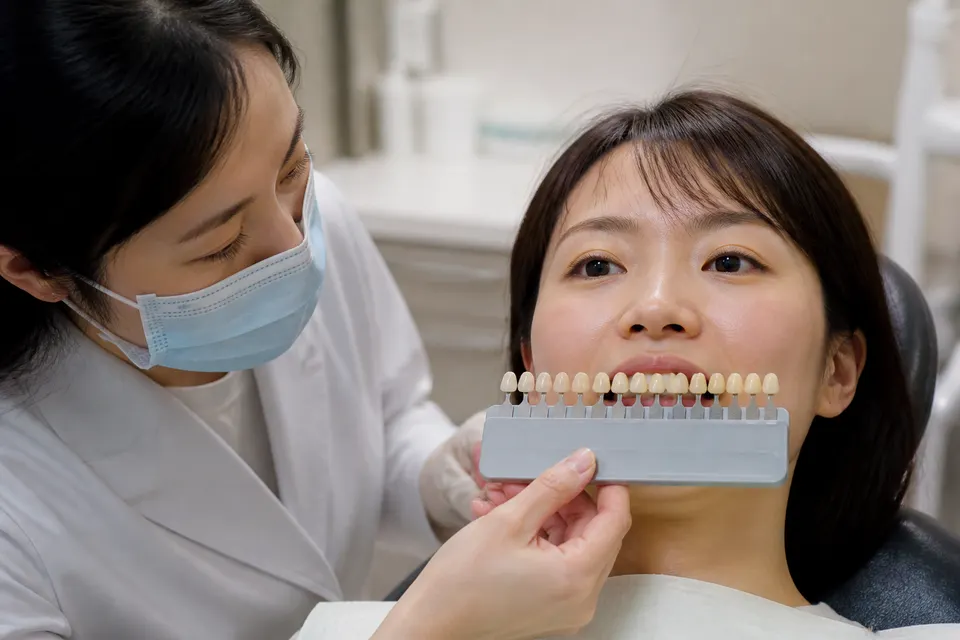
Surface stains and internal discoloration need different approaches
Coffee, tea, tobacco and strongly colored foods can leave extrinsic stains on the enamel surface. Aging, fluorosis, some medicines taken while teeth were developing, decay and changes inside a non-vital tooth can produce intrinsic discoloration within enamel or dentin.
The American Dental Association says whitening toothpastes can reduce many surface stains, while peroxide agents change intrinsic color through oxidation inside enamel and dentin. Carbamide peroxide releases hydrogen peroxide, which reacts with colored compounds in the tooth; that process is different from mechanically removing a surface film.
The diagnosis matters because some discoloration responds poorly to external bleaching. The same US dental association says only natural teeth change color, so crowns, implants, veneers and tooth-colored fillings may no longer match after nearby teeth are whitened.
When to stop and seek care
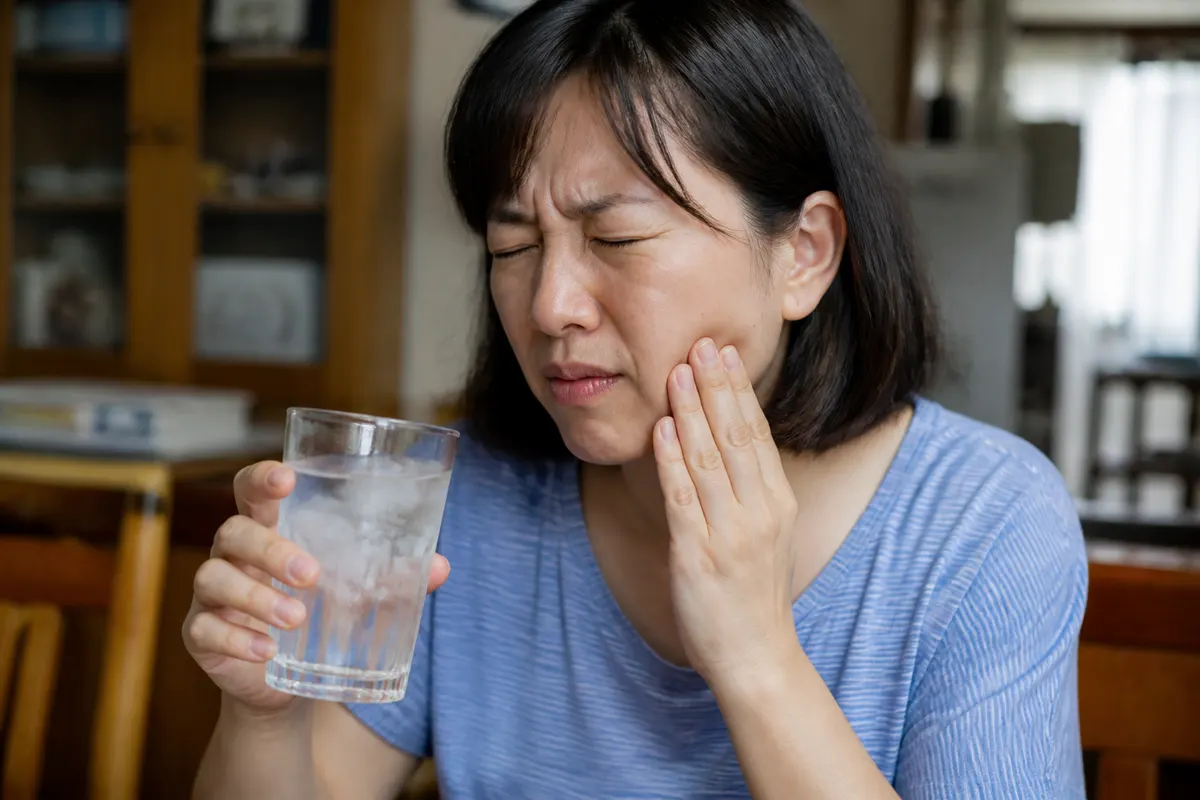
Stop whitening and contact a dentist if it causes burning, visible injury to the gums, severe pain, or sensitivity that continues after the product is discontinued. Pain that begins without a trigger, lasts more than two days, occurs when biting, or comes with fever, a bad taste or cheek or jaw swelling also needs dental assessment because whitening may not be the cause.
The United Kingdom's National Health Service advises emergency care when swelling around the eye or neck, or swelling in the mouth or neck, interferes with breathing, swallowing or speaking. These signs are not expected whitening effects and can indicate a more serious dental problem.
Peroxide does the bleaching, not the blue light
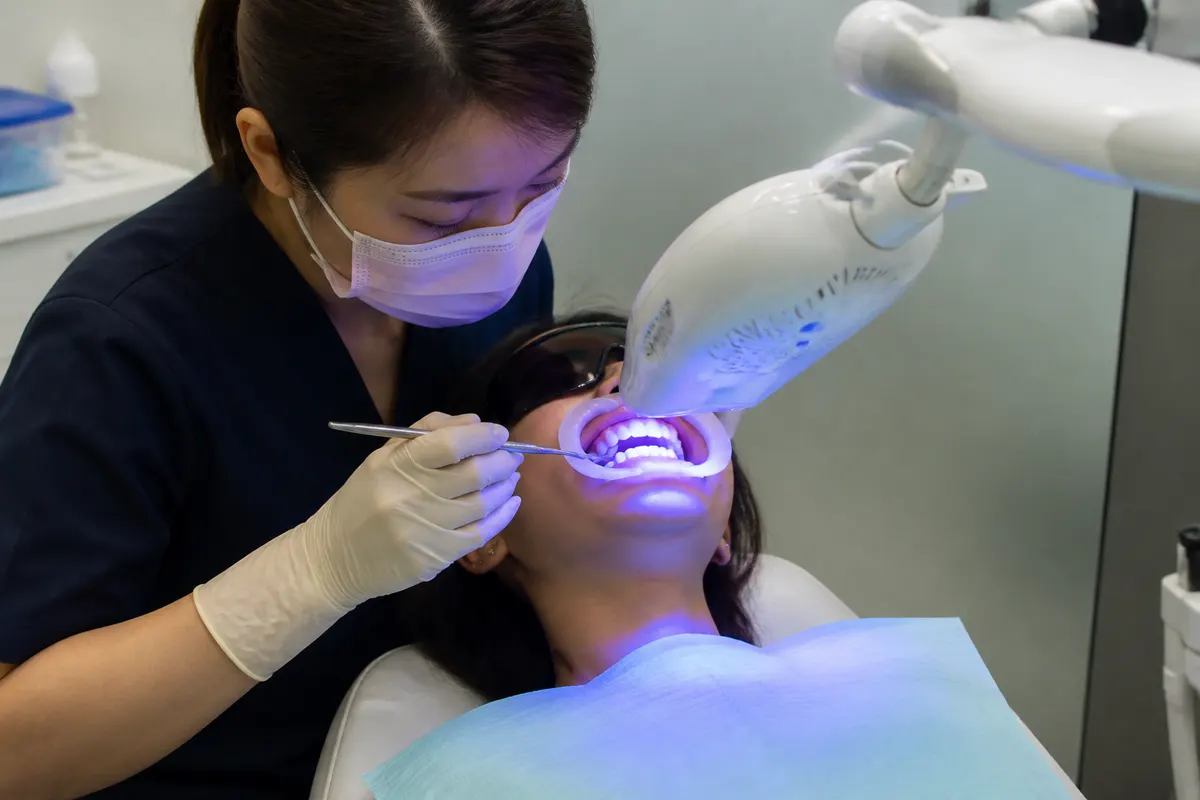
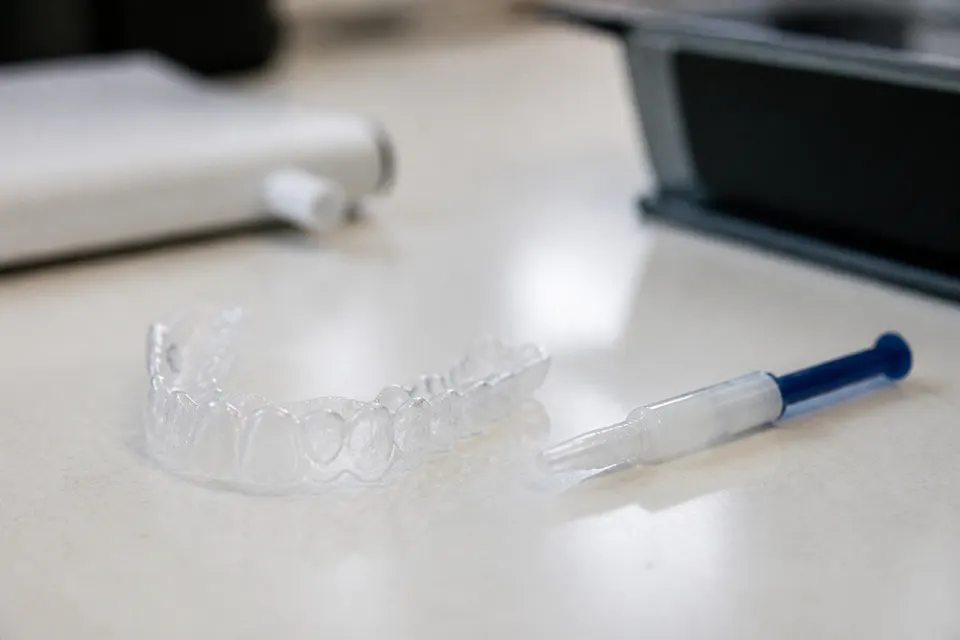
In-office procedures use peroxide gel, sometimes with a lamp marketed as light activation. Custom trays supplied by a dentist also deliver peroxide, usually over repeated home sessions, while many retail strips and gels use lower-concentration peroxide formulations.
A 2019 systematic review and meta-analysis included 23 studies and found no difference in color change or the incidence of sensitivity when the same in-office bleaching gel was used with or without a light source. The authors concluded that light was not required to obtain an esthetic result, so the lamp itself should not be mistaken for the bleaching agent.
Cochrane reviewed 71 trials involving 3,780 adults and found that home chemical bleaching produced more whitening than placebo over two weeks to six months. The products, concentrations and schedules varied widely, however, and the reviewers could not identify one superior composition, concentration, application method or treatment duration.
Sensitivity and oral irritation are the main documented harms
Temporary sensitivity and irritation of the gums or other oral tissues are the most consistently reported adverse effects. The Cochrane review found both were more common at higher active-agent concentrations, although trial reports generally described them as mild and transient.
The US dental association says sensitivity can occur early in bleaching and gum irritation often follows gel contact, a poorly fitting tray or incorrect application. A custom tray is intended to reduce gel contact with the gums, but it does not eliminate sensitivity or make every patient a suitable candidate.
Current evidence does not support a blanket claim that properly used peroxide bleaching strips away a layer of enamel. It also does not support the stronger claim that every product or repeated unsupervised use is harmless: concentration, acidity, exposure time and the condition of the teeth all affect risk.
Whitening toothpaste removes stains rather than changing tooth color
Most whitening toothpastes rely on abrasives to polish away extrinsic stains, though some formulations contain small amounts of peroxide. They may help with new coffee or tea stains but do not reproduce the chemical action of a tray, strip or office bleaching gel.
The American Dental Association says dentifrices at or below a relative dentin abrasivity value of 250 meet its abrasivity limit, and proper lifelong brushing at or below that level produces limited dentin wear and virtually no enamel wear. That threshold belongs to the US association's standard and should not be read as proof that an unidentified product complies with rules in every country.
Charcoal, acids and oil pulling lack the same evidence base
Household acids such as lemon juice can erode mineral from enamel, while scrubbing an acid-softened surface adds mechanical wear. Mixing an acid with baking soda does not create a controlled whitening treatment, and permanent loss of enamel cannot be reversed by later bleaching.
A 2023 systematic review of 11 laboratory studies found charcoal toothpastes had lower whitening performance than alternatives and greater abrasive potential. The studies had medium-to-high risk of bias and were conducted mainly on extracted teeth, so they do not establish the size of long-term harm in people.
The American Dental Association says reliable studies have not shown that oil pulling whitens teeth, reduces cavities or improves oral health. It does not recommend oil pulling as a dental hygiene practice.
Children, pregnancy and existing dental work require separate decisions
Evidence from adult bleaching trials should not be applied directly to children. The American Academy of Pediatric Dentistry says most bleaching research involves adults, discourages full-arch cosmetic bleaching in primary or mixed dentition, and calls for an individualized treatment plan for young patients.
The same policy says research during pregnancy is lacking, fetal effects are unknown and bleaching should be deferred during pregnancy. People who are breastfeeding, have chronic medical conditions, take regular medicines, have active decay or gum disease, or have a history of marked sensitivity should discuss whitening with a dentist or clinician instead of applying an adult trial regimen to themselves.
A root-canal-treated tooth may require internal bleaching by a dentist, while restorations do not bleach at all. Uneven discoloration, a single dark tooth or a planned crown or veneer therefore calls for diagnosis and color planning before cosmetic treatment.
Product rules differ across markets
Countries set different limits on peroxide concentration, who may supply or apply a product, and how whitening claims are regulated. Availability and regulatory status vary by country, and a product sold online may not meet the purchaser's local requirements.
Labels and professional instructions should govern exposure time rather than a schedule copied from another product or jurisdiction. APPI News did not verify the formulation, labeling or legal status of whitening products in every national market at the time of writing.
Frequently asked questions
Does bleaching remove enamel?
Peroxide bleaching changes colored molecules within natural teeth rather than mechanically shaving off enamel. Risk still depends on the formulation, exposure and condition of the mouth, so that mechanism is not a guarantee that any product or pattern of use is safe.
Is light-assisted whitening stronger than peroxide alone?
A meta-analysis comparing the same gels with and without light found no difference in color change. The peroxide gel is the bleaching agent, while the lamp is an optional part of some office systems.
Can whitening toothpaste bleach naturally yellow teeth?
It mainly removes stains attached to the surface and may restore some of the tooth's previous appearance. Intrinsic color, crowns, veneers and fillings do not respond in the same way.
What is the most common side effect?
Temporary tooth sensitivity and irritation of oral tissues are reported most often. Severe, persistent or spontaneous pain should not be assumed to be a routine whitening reaction.
Sources and further reading
- Whitening(American Dental Association)
- Toothpastes(American Dental Association)
- Home-based chemical bleaching of teeth in adults(Cochrane)
- Effectiveness of light sources on in-office dental bleaching(Operative Dentistry via PubMed)
- Effectiveness and abrasiveness of activated charcoal as a whitening agent(Annals of Anatomy via PubMed)
- Policy on the use of dental bleaching for child and adolescent patients(American Academy of Pediatric Dentistry)
- Oil pulling(American Dental Association)
- Toothache(United Kingdom National Health Service)