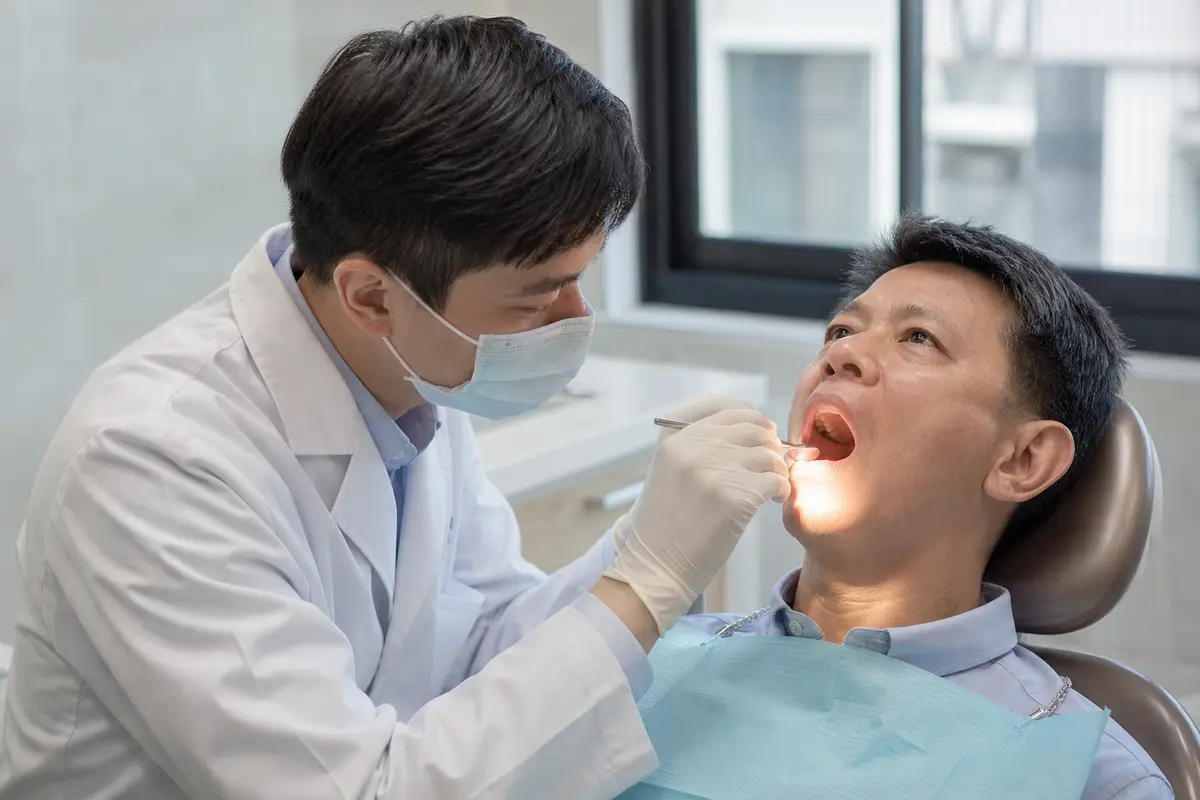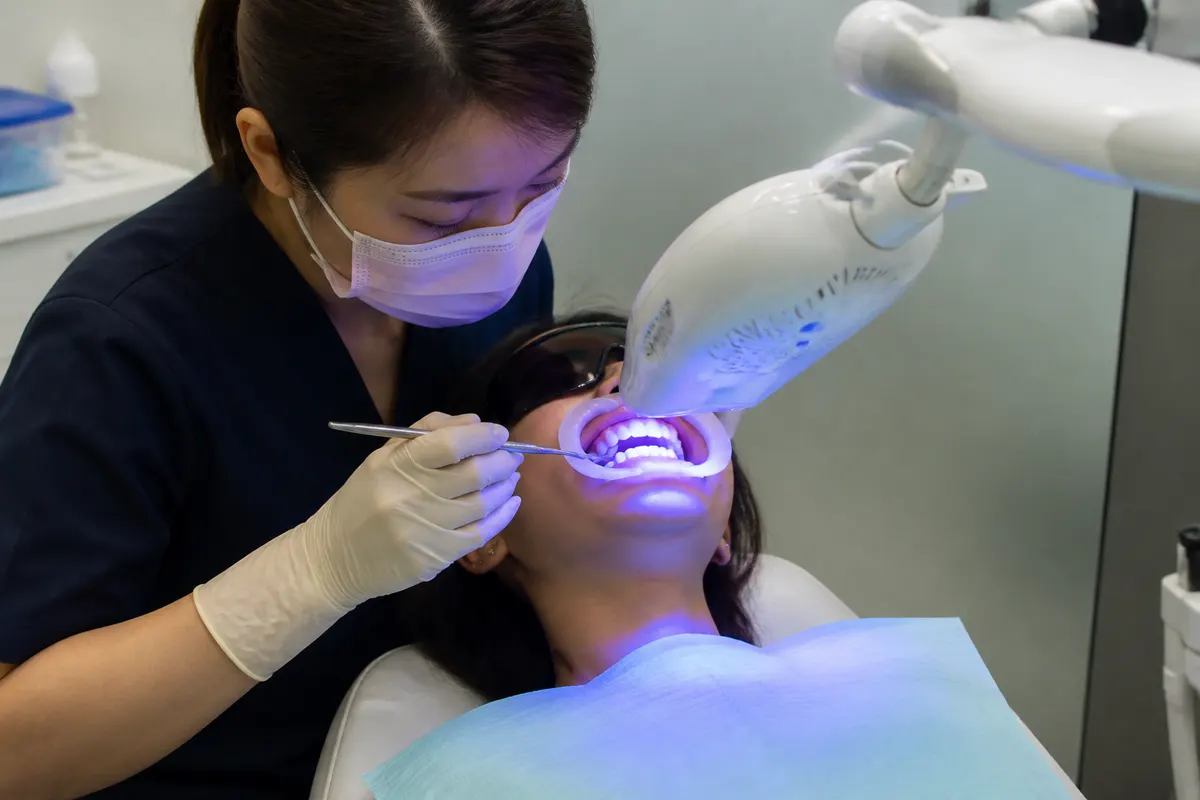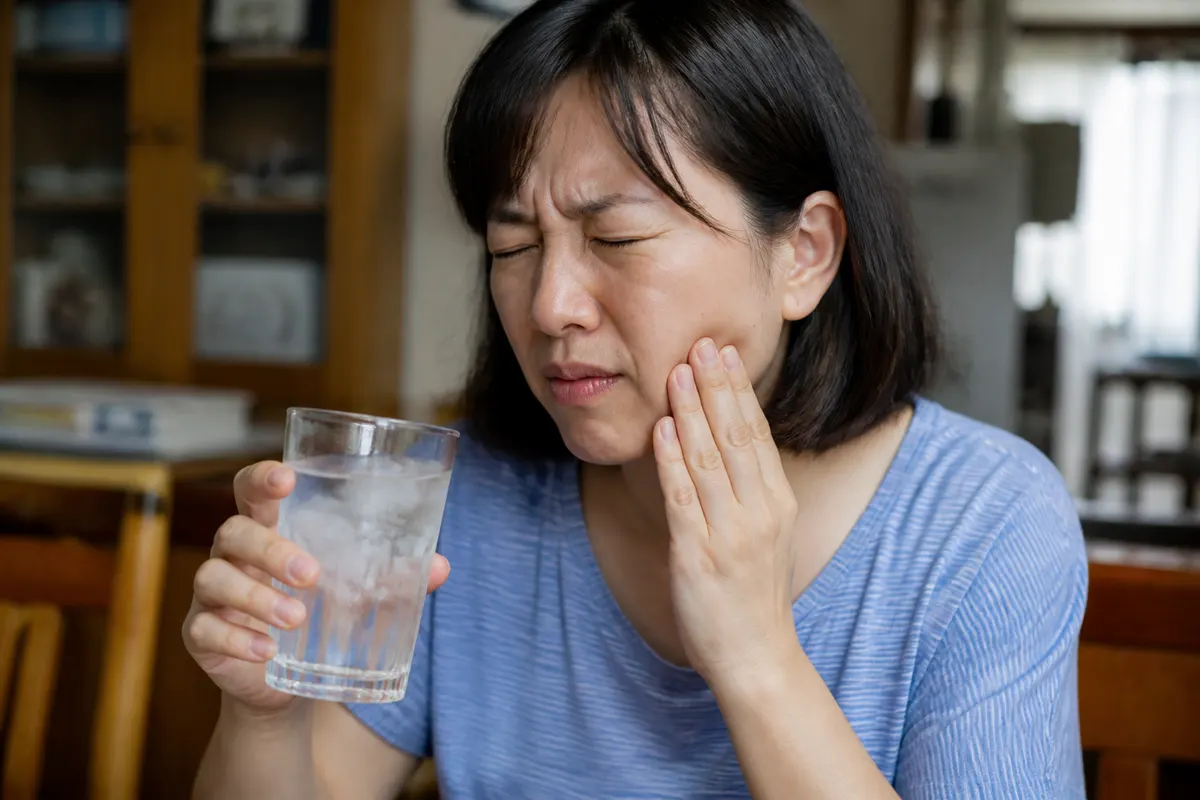
A short, sharp pain after a cold drink may come from exposed dentin, but the symptom alone cannot rule out decay, a cracked tooth or inflammation inside the tooth. Dentin hypersensitivity is diagnosed only after other dental causes have been considered.
The pain commonly follows cold, heat, touch, air or sweet and acidic foods, then fades when the stimulus ends. Pain that continues, starts without a trigger or occurs during biting needs a different level of assessment.
When tooth pain needs prompt care
Dental assessment should not be delayed when pain lingers for minutes after heat or cold is removed, starts spontaneously, wakes someone from sleep or makes it hard to identify the affected tooth. Merck Manual distinguishes pain that stops within one or two seconds after a cold or sweet stimulus from pain that occurs spontaneously or persists for minutes, which can accompany irreversible pulpitis. Sharp pain on biting, a broken tooth or filling, fever, a bad taste, or swelling of the cheek or jaw also calls for dental review.
The United Kingdom's National Health Service advises dental care for toothache lasting more than two days, pain on biting, fever, red gums, a bad taste or swelling of the cheek or jaw. Swelling around the eye or neck, or swelling that interferes with breathing, swallowing or speaking, requires emergency medical care.
Children with dental pain need age-appropriate assessment rather than adult self-care instructions. Pregnant people, those with chronic conditions and anyone taking medicines should tell a dentist or other clinician about those circumstances before treatment or medication decisions are made.
Exposed dentin changes how a tooth responds
Enamel covers the crown of a tooth, while cementum covers its root. Dentin lies beneath those surfaces and contains microscopic tubules that run toward the pulp, the soft inner tissue containing nerves and blood vessels. Gum recession, loss of enamel or wear at the neck of a tooth can expose the tubules to the mouth.
A systematic review describes fluid movement through exposed dentinal tubules as the leading explanation for dentin hypersensitivity and says the diagnosis requires exclusion of other dental and periodontal conditions. Cold, heat, air, touch or changes in concentration can shift that fluid and activate pain near the pulp. Decay, cracked teeth, damaged restorations and pulp disorders can produce overlapping symptoms.
Exposure can follow gum recession, periodontal disease, acidic erosion, tooth wear or an abrasive brushing pattern. These causes are not interchangeable: erosion, gum disease, grinding and a damaged restoration require different clinical decisions. A dental examination can identify the exposed surface and check for another source of pain.
Prevalence estimates depend on how sensitivity is measured
A 2019 systematic review and meta-analysis of 77 studies reported a pooled best estimate of 11.5 percent for dentin hypersensitivity. Individual estimates ranged from 1.3 percent to 92.1 percent.
The authors linked some of that variation to the participants' ages, recruitment methods, study settings and the number of sites involved. Specialty-practice samples produced higher estimates than some broader populations. The pooled figure shows that the complaint is common, but it cannot determine whether a particular episode of pain is dentin hypersensitivity.
Desensitizing toothpastes use two broad approaches
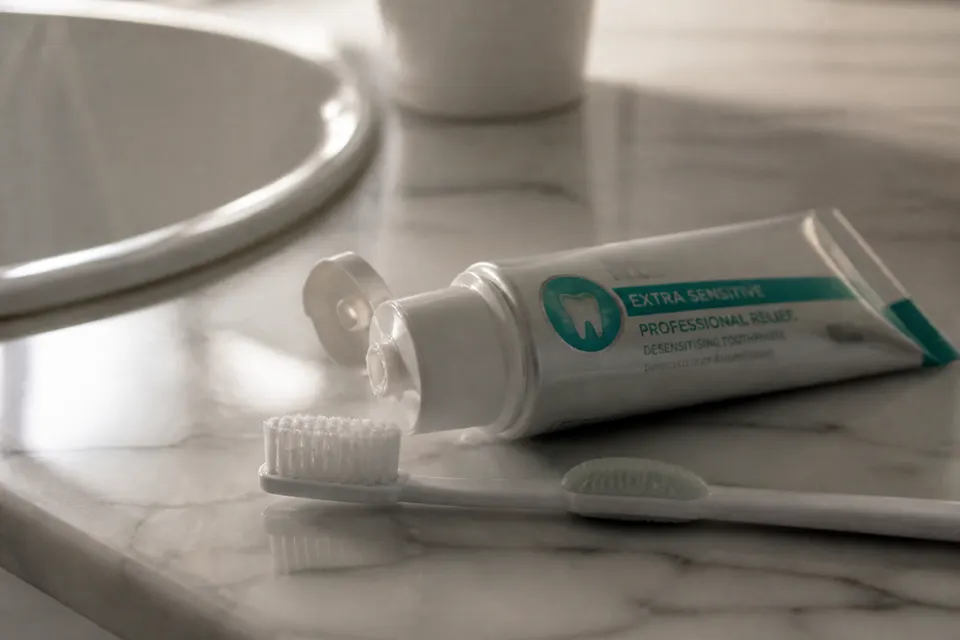
Desensitizing toothpastes generally try to reduce fluid movement by blocking tubules or to reduce nerve excitability. A 2022 scoping review of 138 randomized trials identified arginine, calcium sodium phosphosilicate and stannous fluoride among tubule-occluding ingredients, while potassium compounds act on pulpal nerve excitability. Formulations differ, so the active ingredient on a label carries more information than a general sensitivity claim.
A 2020 network meta-analysis included 125 randomized trials with 12,541 patients and found that results varied by ingredient and whether pain was tested with touch, cold or air. Calcium sodium phosphosilicate showed benefit across all three stimuli with high- to moderate-certainty evidence. Stannous fluoride and some combinations containing potassium performed well for touch and air, while arginine showed benefit for air and potassium or strontium for touch.
Those comparisons do not establish one universal best toothpaste. Trials used different formulations and pain scales, and a group average does not guarantee relief for an individual. Continuing or worsening pain should not be managed by repeatedly changing products without checking the cause.
Daily care should protect exposed surfaces
Brushing should remove plaque without adding avoidable abrasion to exposed roots. The United Kingdom's National Health Service recommends brushing twice daily for about two minutes with fluoride toothpaste and says medium or soft bristles are best for most adults. It also advises spitting out excess toothpaste without rinsing immediately, which leaves more fluoride on the teeth.
A dentist or dental hygienist can check brushing technique when recession or wear is present. Frequent acidic exposure, tooth grinding, recent whitening and reflux symptoms may also matter, but addressing them depends on the actual cause. Professional treatment can range from applying an occluding material to restoring lost tooth structure or treating gum or pulp disease.
Frequently asked questions
Does a brief pain after a cold drink mean there is a cavity?
No single symptom can make that distinction. Brief pain can occur with exposed dentin, while decay, a crack, a damaged restoration and pulp inflammation can produce overlapping symptoms. A dental examination is needed when the cause is uncertain or the pain returns.
Can desensitizing toothpaste reduce the pain?
Systematic reviews report average benefits for several ingredient classes, but the result depends on the formulation and the type of stimulus. Persistent, spontaneous or worsening pain needs assessment instead of an assumption that it is simple sensitivity.
Why does pain duration matter?
Pain from cold or sweets that stops within one or two seconds can occur with reversible pulp irritation. Pain that begins without a trigger or lingers for minutes after the stimulus is removed can occur with irreversible pulpitis and requires dental evaluation.
When is swelling an emergency?
Swelling around the eye or neck, or swelling that affects breathing, swallowing or speaking, requires emergency medical care. Cheek or jaw swelling with toothache needs prompt dental assessment even when breathing is unaffected.
Sources and further reading
- Prevalence of dentin hypersensitivity: Systematic review and meta-analysis(Journal of Dentistry via PubMed)
- Dentin Hypersensitivity and Oxalates: a Systematic Review(Journal of Oral and Maxillofacial Research via PubMed Central)
- Desensitizing Toothpastes for Dentin Hypersensitivity: A Network Meta-analysis(Journal of Dental Research via PubMed)
- Formulations of desensitizing toothpastes for dentin hypersensitivity: a scoping review(Journal of Applied Oral Science via PubMed Central)
- Pulpitis(Merck Manual Professional Edition)
- Toothache(United Kingdom National Health Service)
- How to keep your teeth clean(United Kingdom National Health Service)