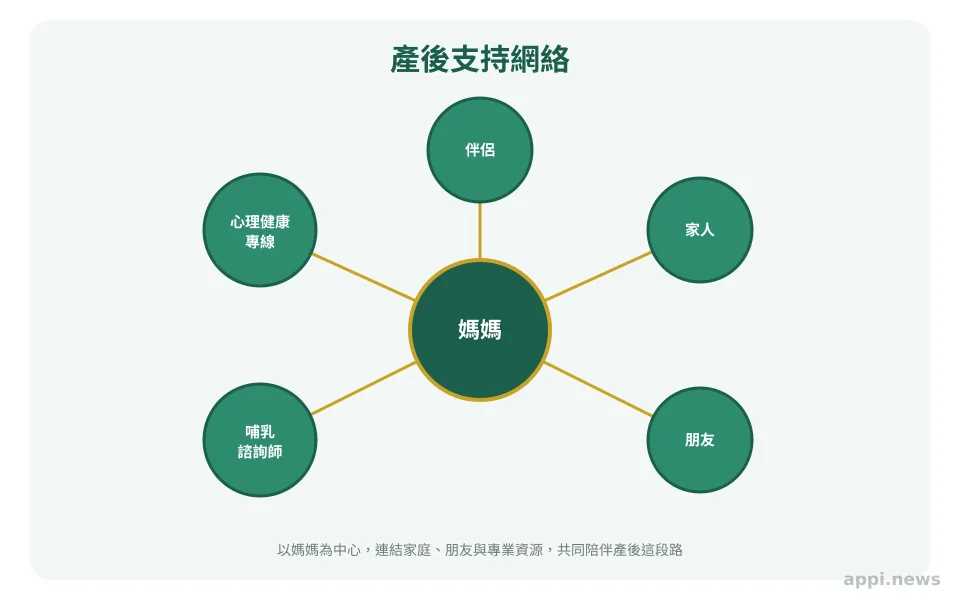
The World Health Organization (WHO) says postnatal care should support the well-being of the parent and newborn, not focus on feeding outcomes alone. Partners and relatives can take responsibility for household and childcare work, while health workers provide practical feeding help and assess physical and mental health concerns.
A 2024 study adds a warning about the way that support is delivered. Pressure to breastfeed was associated with higher anxiety, stress and birth-trauma symptoms four weeks later among postpartum parents in New Zealand. The finding does not establish cause and effect, but it argues against treating milk supply or feeding method as a test of parenting.
Some mental-health signs require urgent action
Thoughts of suicide or of harming the baby require urgent help through local emergency or crisis services. The United Kingdom's National Health Service (NHS) lists these thoughts among symptoms of postnatal depression and says low mood, anxiety or irritability that continues beyond two weeks, worsens or becomes hard to manage should prompt a request for clinical help.
Hallucinations, delusions, severe confusion, unusually elevated or overactive behavior, or rapidly changing moods soon after birth can indicate a different emergency. The NHS says postpartum psychosis often begins suddenly within the first two weeks after birth, can worsen rapidly and needs an urgent same-day assessment. A partner or relative may need to act because the person experiencing it may not recognize that they are unwell.
Emergency numbers and routes into care vary by country. Family members should use the local emergency service if there is an immediate danger, remain with the parent and baby when it is safe to do so, and tell responders about the recent birth and the specific changes they have observed.
Pressure and support are not the same intervention
The 2024 Frontiers in Public Health study followed 225 postpartum mothers and other birthing parents living in New Zealand, using two self-report surveys about four weeks apart. Of the participants, 39.6 percent reported strong pressure to breastfeed, 17.8 percent reported shame about feeding, and 51.6 percent reported feeding-related stress.
Strong pressure at the first survey was associated with higher anxiety, stress and birth-trauma symptom scores at the follow-up. The later associations with depression and suicidal thoughts were not statistically supported. Because participants volunteered for an online survey and the analysis was observational, the results cannot show that pressure caused the symptoms or predict what will happen in other populations.
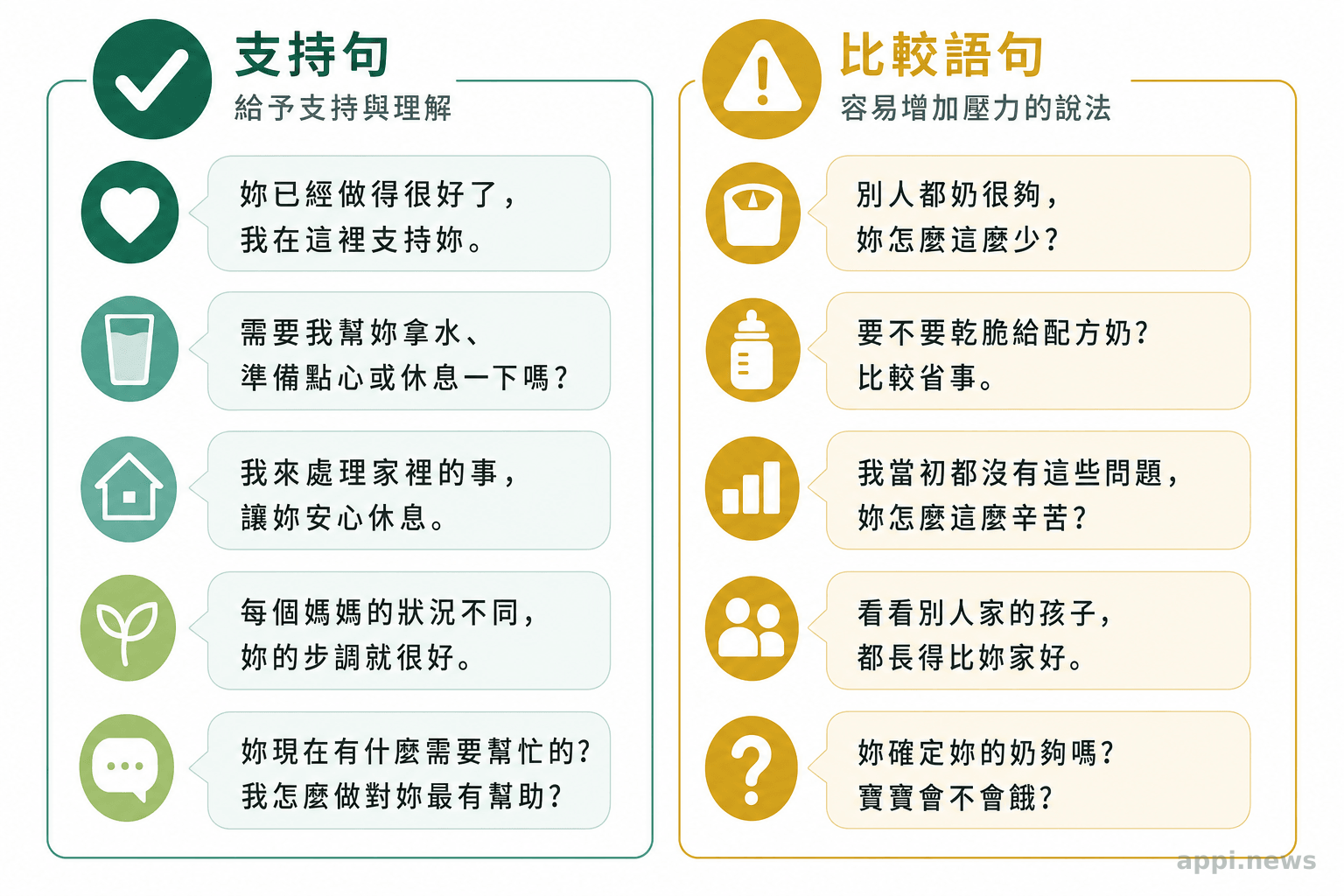
The qualitative responses described pressure from social expectations, health messaging and beliefs that breastfeeding success defined good parenting. Support begins from a different premise: the parent retains control over feeding decisions and can ask for information or practical assistance without being graded on the result.
Partners can take ownership of work around feeding
A 2020 systematic review identified seven studies that examined specific forms of partner support and breastfeeding initiation, duration or exclusivity. Four found that verbal encouragement was associated with longer duration or greater exclusivity. Other helpful actions in the included studies were responding to the breastfeeding parent's needs, helping address feeding difficulties, and taking on household and childcare duties.
The evidence base was small and mixed. Only two of the seven studies were controlled clinical trials; the others included a prospective cohort, three cross-sectional studies and a qualitative study. The review's authors called for stronger population and intervention research, so the findings support a menu of practical actions rather than a guarantee that any one task will extend breastfeeding.
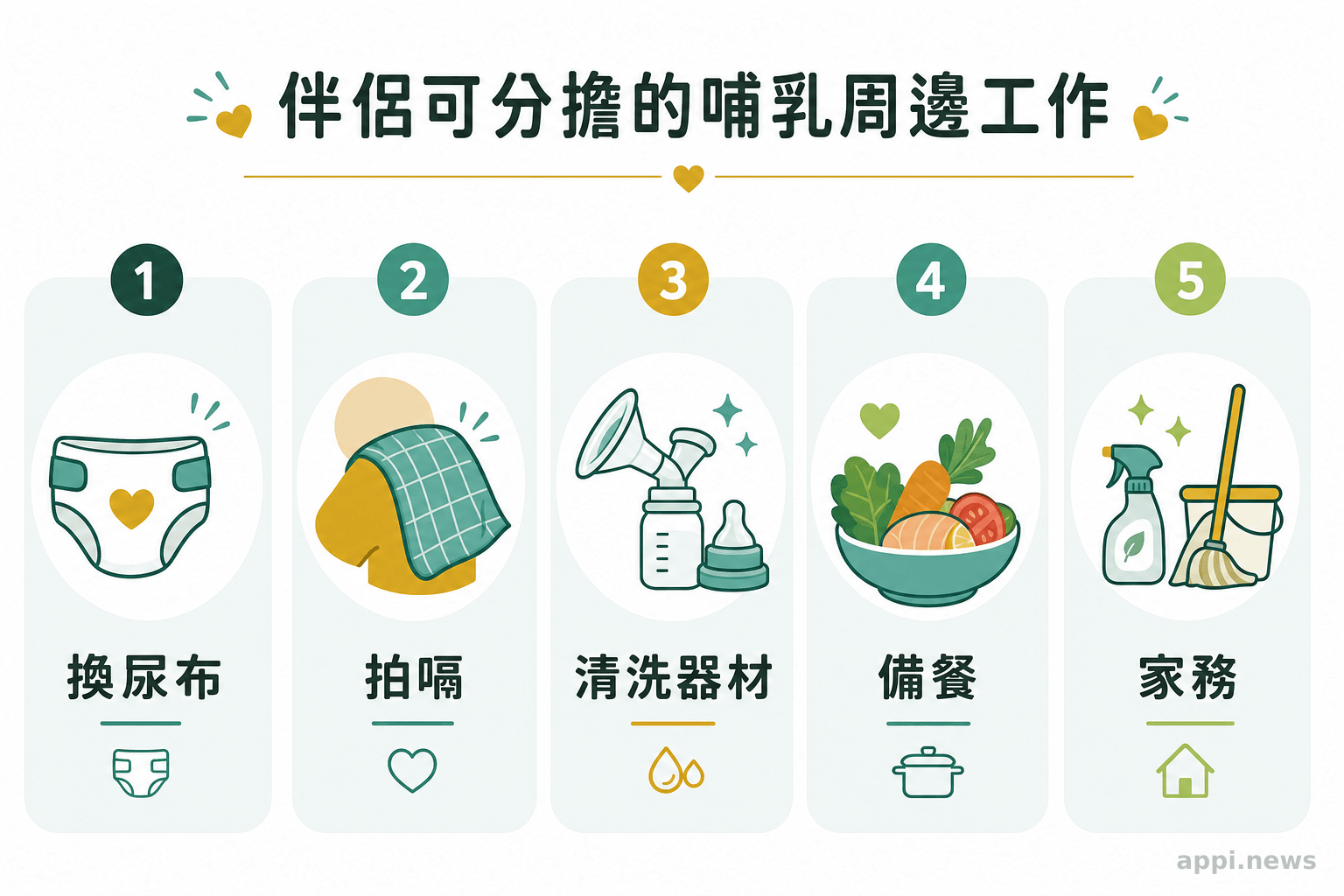
Partners can change diapers, settle and burp the baby, prepare food and water, wash feeding equipment when it is used, manage laundry and visitors, and take responsibility for other children. The useful division depends on how the baby is fed, whether expressed milk or formula is involved, available leave, disability, household structure and the parent's stated needs. Asking what task should be taken over is more informative than repeatedly asking how much milk the baby received.
Health services have a separate role
WHO recommends practical support to help parents initiate and establish breastfeeding, manage common difficulties, express milk during temporary separation and recognize an infant's feeding cues. Pain, concerns about attachment or positioning, or uncertainty about whether an infant is feeding effectively are matters for a trained health worker, not problems relatives should diagnose at home.
WHO's 2022 postnatal guideline defines a positive experience as consistent information, reassurance and support for women, newborns, partners, parents, caregivers and families. Its recommendations include breastfeeding counselling, partner involvement and screening for maternal depression and anxiety with referral and management services where needed.
Preterm or unwell infants may need a feeding plan set by their clinical team. A breastfeeding parent who is pregnant again, has a chronic condition or takes prescription medicine also needs advice matched to that condition and the medicine involved. Family members should help the parent reach an appropriate clinician rather than recommend supplements, change medicines or set a feeding target themselves.
Relatives can lower the social pressure
Questions about milk volume, exclusivity or the baby's weight can sound like an assessment when they are repeated or paired with comparisons. A more useful visit starts with a concrete offer: prepare a meal, refill water, wash dishes, handle laundry or watch the baby while the parent rests. Concerns about growth or intake should be taken to the baby's clinician and assessed with the relevant clinical information.
Families can also protect time for sleep and limit visitors if that is what the parent wants. Support should continue if feeding changes to expressed milk, combination feeding or formula. The practical goal is a fed infant and a parent whose physical recovery, mental health and choices remain part of postnatal care.

Frequently asked questions
Does partner support guarantee longer breastfeeding?
No. The cited systematic review found generally favorable associations, but it included only seven studies with varied designs and only two controlled trials. Feeding outcomes also depend on health, infant needs, access to care, work and personal choice.
What is the difference between encouragement and pressure?
Encouragement respects the parent's decision and responds to a stated need. Pressure ties approval to a feeding outcome, repeats unwanted questions or withholds support when the feeding plan changes.
When should low mood prompt clinical help?
The NHS says mood changes commonly called the “baby blues” usually resolve within two weeks. Low mood, anxiety or irritability that persists, worsens or makes coping difficult should be discussed with a qualified health professional; thoughts of self-harm or harming the baby require urgent help.
Who should assess breastfeeding pain or concern about milk intake?
A trained health worker should assess the parent and baby. Relatives can arrange transport, attend appointments if invited, record questions and take over household work, but they should not diagnose the cause or set a treatment plan.
Sources and further reading
- WHO recommendations on maternal and newborn care for a positive postnatal experience(World Health Organization)
- Support for mothers to initiate and establish breastfeeding after childbirth(World Health Organization)
- Breastfeeding in the Community—How Can Partners/Fathers Help? A Systematic Review(International Journal of Environmental Research and Public Health)
- Perceived pressure to breastfeed negatively impacts postpartum mental health outcomes over time(Frontiers in Public Health)
- Postnatal depression(United Kingdom National Health Service)
- Postpartum psychosis(United Kingdom National Health Service)