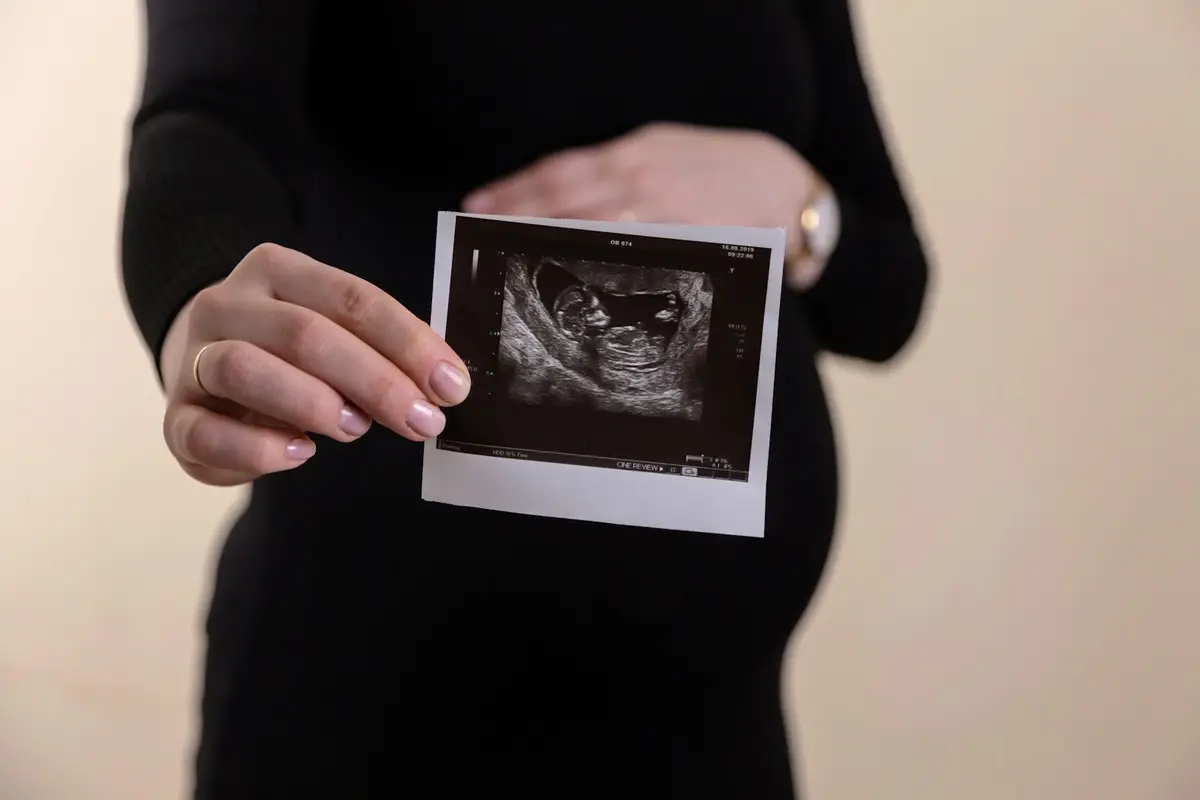
Obstetric teams use ultrasound to identify oligohydramnios, but a low reading does not explain the cause or set the timing of birth. The amniotic fluid index (AFI) and deepest vertical pocket (DVP) are indirect estimates that need to be read alongside gestational age, fetal growth, anatomy, placental blood flow and possible membrane rupture.
The International Society of Ultrasound in Obstetrics and Gynecology (ISUOG) says management depends on the cause and stage of pregnancy. Its guidance calls for a detailed ultrasound assessment of fetal anatomy and growth after low fluid is detected.
Fluid leakage and changed fetal movement need prompt assessment
Continuous or intermittent watery fluid from the vagina can indicate rupture of the membranes, even without contractions. The United Kingdom's Royal College of Obstetricians and Gynaecologists (RCOG) says suspected fluid leakage before labor should be checked in hospital straight away; the cited pathway covers 24 to 37 completed weeks of pregnancy.
For suspected or confirmed early membrane rupture, RCOG lists fever or chills, vaginal bleeding, greenish or foul-smelling fluid, contractions or cramps, abdominal or back pain, and fetal movement that is not normal as reasons to return to hospital immediately. The United Kingdom's National Health Service (NHS) also identifies changed fetal movement, fluid leakage, a temperature of 38°C or higher, pain and vaginal bleeding as symptoms that need medical help. Readers outside the United Kingdom should use their local maternity assessment or emergency service because access routes differ by country.

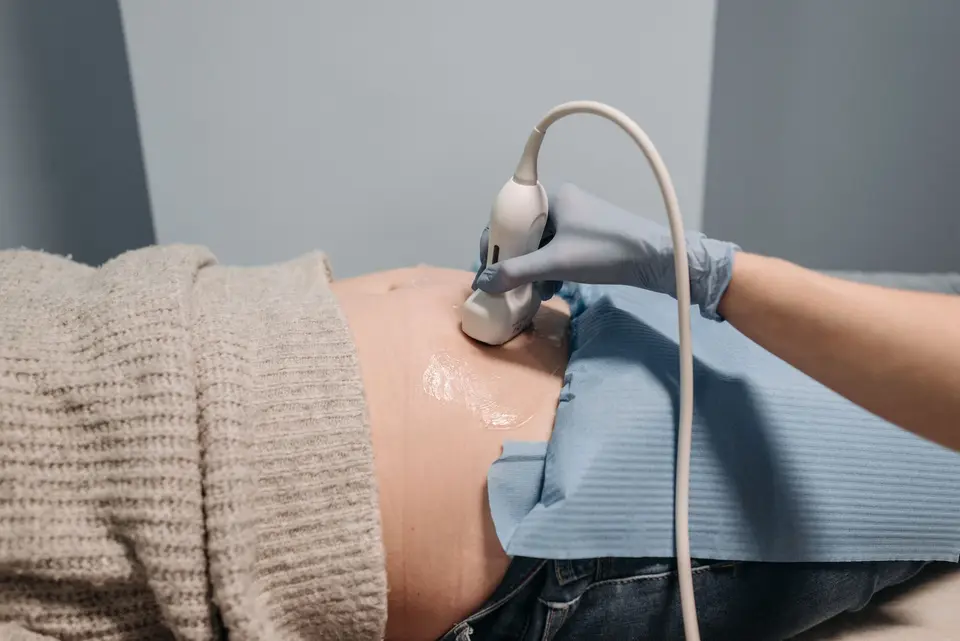
Ultrasound estimates fluid rather than measuring it directly
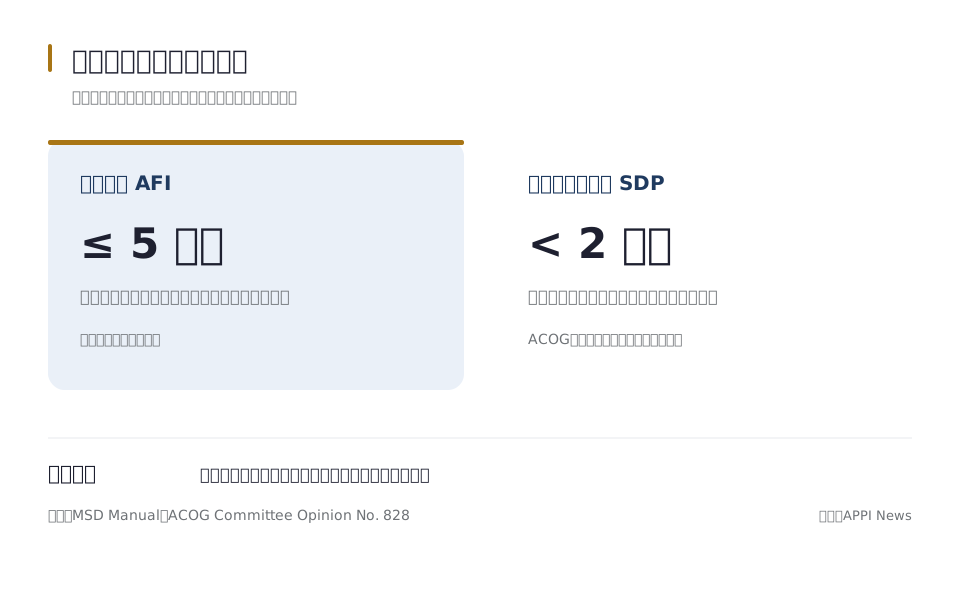
AFI adds the deepest fluid measurement from each of four uterine sections. DVP records the largest vertical pocket that does not contain fetal parts or umbilical cord. ISUOG's guidance, updated in March 2025, describes an AFI below 5–6 cm as low and a DVP below 2 cm as suggestive of oligohydramnios.
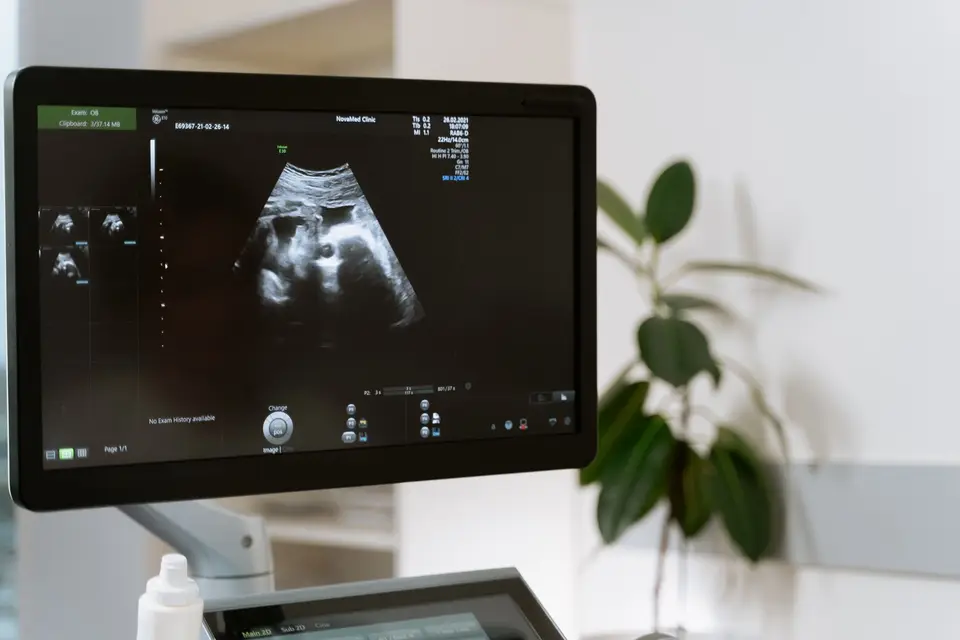
A 2019 systematic review and meta-analysis of six randomized studies involving 4,278 women found that the maximum vertical pocket method produced fewer oligohydramnios diagnoses than AFI, with a pooled relative risk of 0.38. It also found lower rates of induction for oligohydramnios and cesarean delivery for fetal distress, with no detected difference in overall cesarean delivery, meconium, low umbilical artery pH, five-minute Apgar score below seven or neonatal intensive care admission. The findings show that measurement choice can change diagnosis and intervention rates, but they do not determine the outlook for an individual pregnancy.
Cause and gestational age drive the next tests
ISUOG lists membrane rupture, placental problems, fetal kidney or bladder abnormalities, certain medicines taken during pregnancy and pregnancy beyond 41 to 42 weeks among possible causes. The same guidance says a detailed scan should examine the kidneys and urinary tract, assess fetal growth and estimate blood flow with Doppler ultrasound.
Very low fluid early in pregnancy carries different concerns from a mild finding near term. ISUOG links early, severe cases with possible lung or limb development problems, while late and mild cases without another abnormality generally have a better outlook. Membrane status, fetal anatomy, growth and placental findings remain part of that distinction.
Monitoring and birth timing are individualized
The US-based American College of Obstetricians and Gynecologists (ACOG) said in its 2021 outpatient fetal surveillance opinion that not every indication has been shown to improve perinatal outcomes through testing. The opinion describes its timing and frequency guidance as suggestions rather than mandates and advises individual decisions, especially when more than one condition is present.
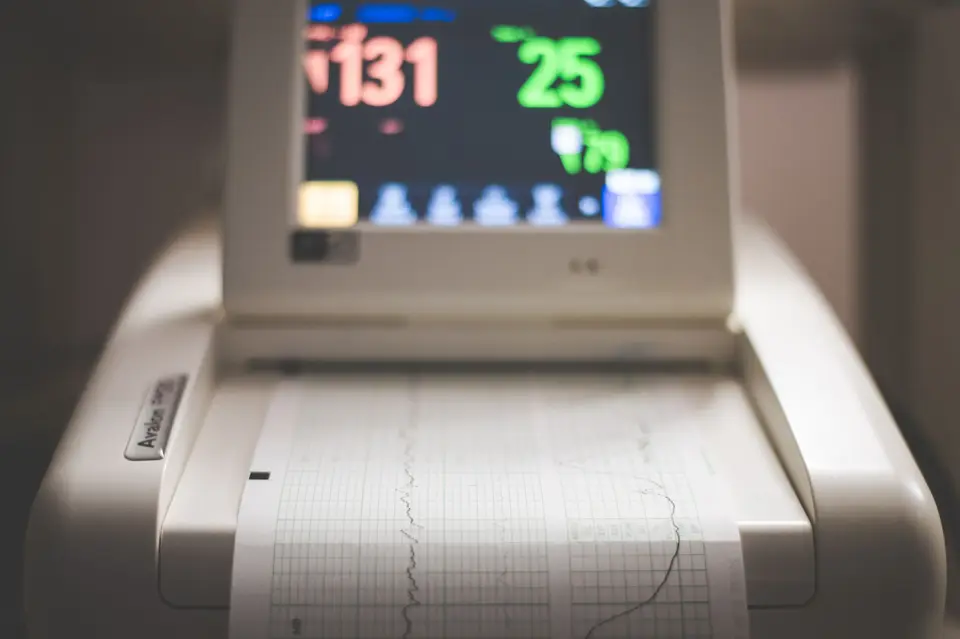
For membrane rupture confirmed between 24 and 37 completed weeks, RCOG describes initial hospital monitoring and, for some patients who later go home, follow-up usually once or twice a week. Those visits can include fetal heart-rate monitoring, maternal temperature, pulse and blood pressure checks, and blood tests for infection. This frequency belongs to the United Kingdom's preterm membrane-rupture pathway and should not be applied to every low-fluid scan.
ISUOG says no specific treatment reliably increases amniotic fluid and that management depends on the cause and gestational age. An obstetric team may choose repeat ultrasound, fetal surveillance, hospital care or birth after considering the full clinical picture. APPI News could not verify one schedule or delivery threshold that applies in every country at the time of writing.

Medicines and other pregnancy conditions change the plan
ISUOG includes certain medicines among the possible causes of low amniotic fluid, while ACOG says concurrent medical conditions can change surveillance decisions. Pregnant patients taking regular medicines or living with a chronic condition should discuss any change with the obstetric and prescribing clinicians. A plan for isolated oligohydramnios cannot be copied to a pregnancy complicated by ruptured membranes, fetal growth restriction, infection signs or a fetal structural problem.
Frequently asked questions
Does an AFI below 5 cm mean birth is needed immediately?
No. It is one commonly used ultrasound threshold, and the next step depends on gestational age, the measurement method, the cause and other maternal and fetal findings. Urgent warning signs still require prompt assessment regardless of the next scheduled scan.
Can a low reading in mid-pregnancy wait until the next routine appointment?
The timing of reassessment has to come from the obstetric team because an early finding requires checks for membrane rupture, fetal anatomy, growth and placental blood flow. Fluid leakage, bleeding, fever, severe or persistent pain, or reduced or changed fetal movement should not wait for a routine visit.
Can drinking more water return amniotic fluid to normal?
ISUOG says no specific treatment reliably increases amniotic fluid. Fluid intake advice and other management need to follow the identified cause and the patient's clinical findings, rather than one ultrasound number.
Does oligohydramnios always require hospital admission?
No single rule applies across causes or countries. Suspected membrane rupture and infection signs need prompt assessment, while the obstetric team decides whether ongoing care can remain outpatient after examination and testing.
Sources and further reading
- Oligohydramnios(International Society of Ultrasound in Obstetrics and Gynecology)
- Diagnostic utility of maximum vertical pocket versus amniotic fluid index(The Journal of Maternal-Fetal & Neonatal Medicine)
- Indications for Outpatient Antenatal Fetal Surveillance: ACOG Committee Opinion, Number 828(American College of Obstetricians and Gynecologists)
- When your waters break prematurely(Royal College of Obstetricians and Gynaecologists)
- Pregnancy symptoms you need to get help for(United Kingdom National Health Service)