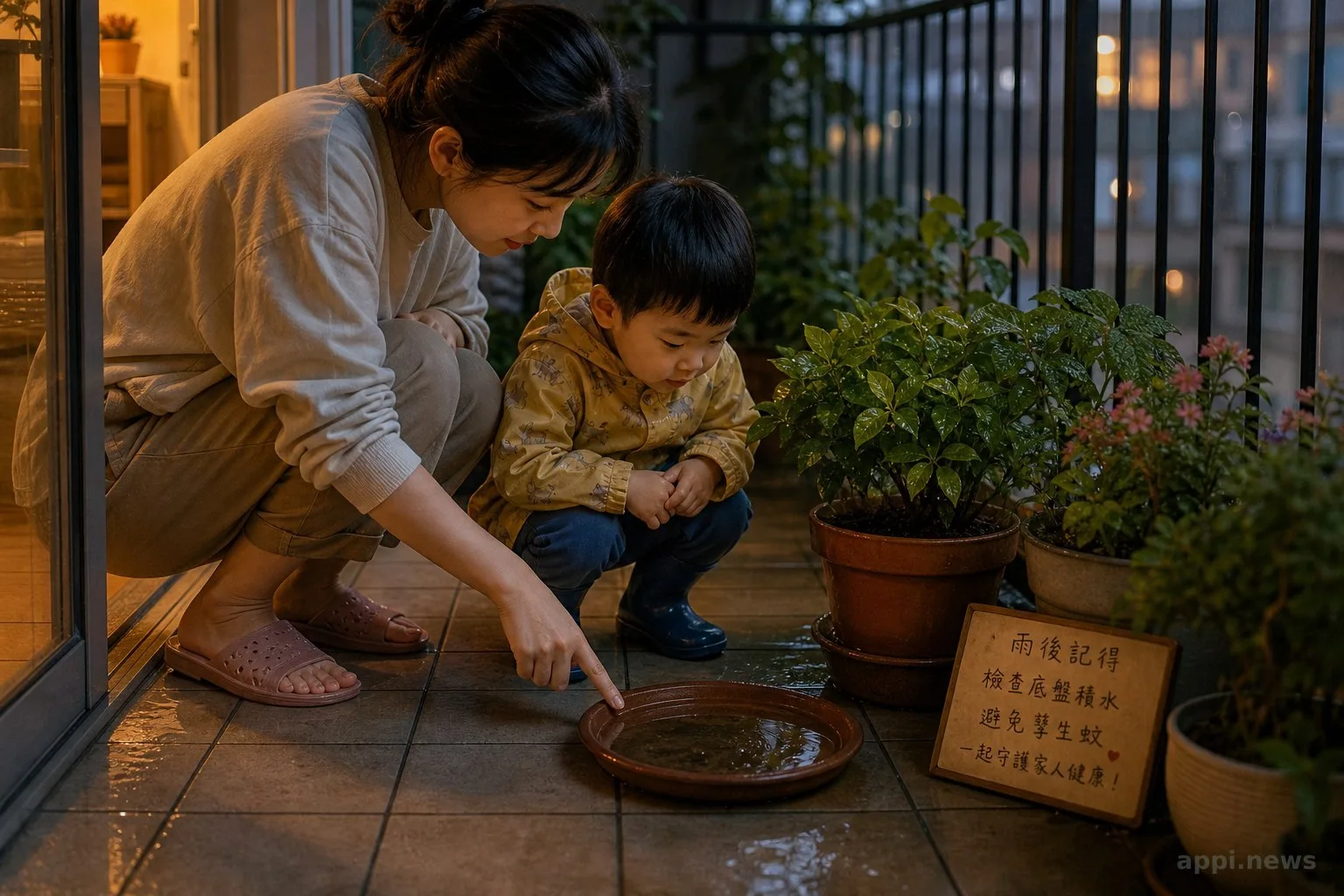
The World Health Organization (WHO) advises households to cover, empty and clean domestic water containers every week to prevent mosquitoes from breeding. The task becomes more urgent after rain because plant saucers, open bins, bottles and discarded equipment can collect fresh water at the same time.
This is source reduction: removing places where mosquitoes lay eggs before adults emerge. It does not depend on estimating the depth of the water or waiting until larvae become visible.
Severe symptoms need immediate medical care
Dengue cannot be diagnosed from a mosquito bite or fever alone. WHO says symptoms, when they occur, usually begin four to 10 days after infection and may include high fever, severe headache, pain behind the eyes, muscle and joint pain, nausea, vomiting and rash.
WHO says severe abdominal pain, persistent vomiting, rapid breathing, bleeding from the gums or nose, blood in vomit or stool, intense thirst, pale and cold skin, marked weakness or restlessness require immediate care. These warning signs can appear after the fever has fallen, so a lower temperature does not by itself show that the illness is resolving.
Children with suspected dengue need assessment through the locally available medical service rather than a diagnosis based on a household checklist. Pregnant people should also seek clinical advice because WHO reports that dengue during pregnancy can be associated with preterm birth, low birthweight and fetal distress. People with chronic illness, weakened immunity or regular medicines should ask a clinician how suspected infection affects their care.
Containers around homes are the main inspection targets
WHO lists flower vases and saucers, water tanks, plastic containers, bottles, discarded cans and tires, rainwater drums and construction sites among places where dengue mosquitoes can breed. The common feature is a container or recess that holds water, not a particular type of home.
A post-rain inspection can start with items exposed to the sky, then move to covered or shaded areas where water is stored. Plant saucers, buckets, recycling, tarpaulin folds, blocked drainage channels and equipment left outdoors all warrant a check when they retain water.
Empty, clean, cover or discard each water holder
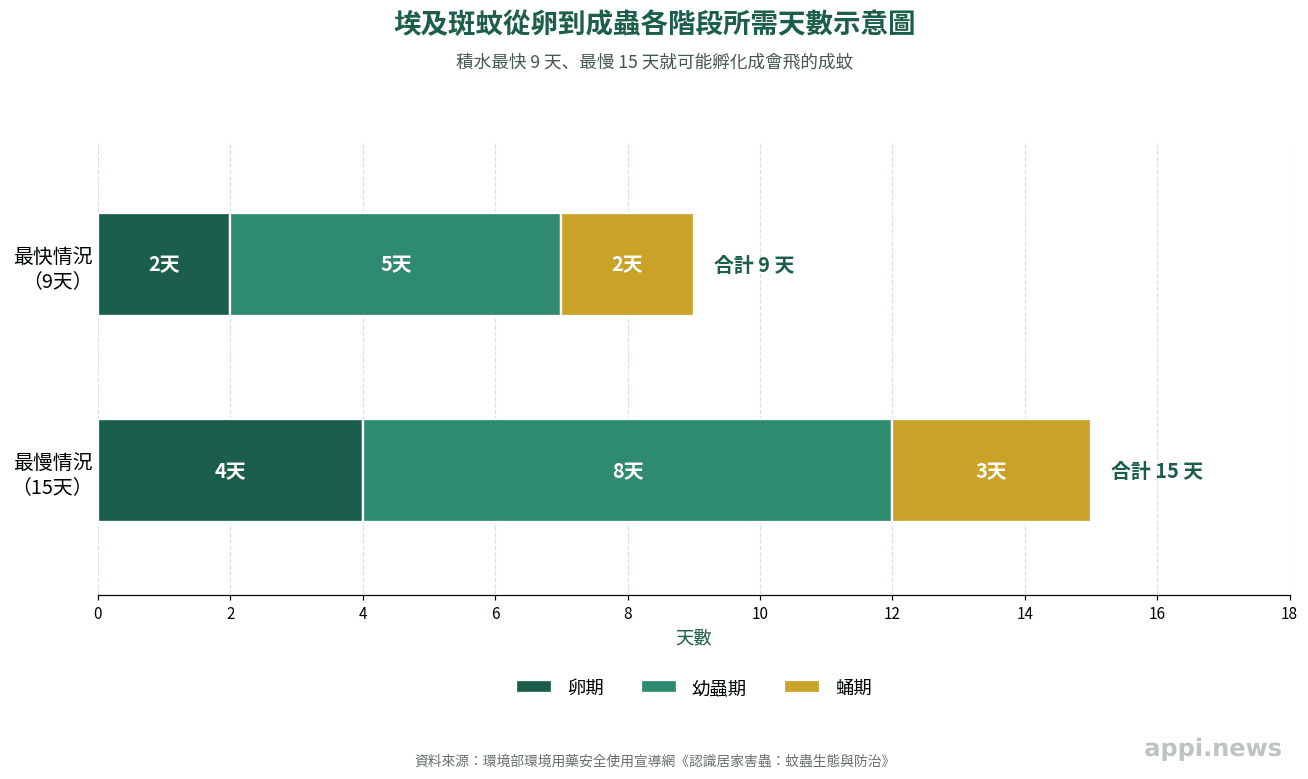
WHO recommends covering or properly discarding items that collect rainwater, then emptying, cleaning and scrubbing containers that remain in use at least once a week. Scrubbing matters because simply pouring out the water may leave eggs attached to the container.
Each item needs a decision. An unused container can be discarded or stored upside down under cover, while a container that must hold water needs a fitted cover and a weekly cleaning routine. Gutters and drainage channels need leaves and other obstructions removed so that water can flow.
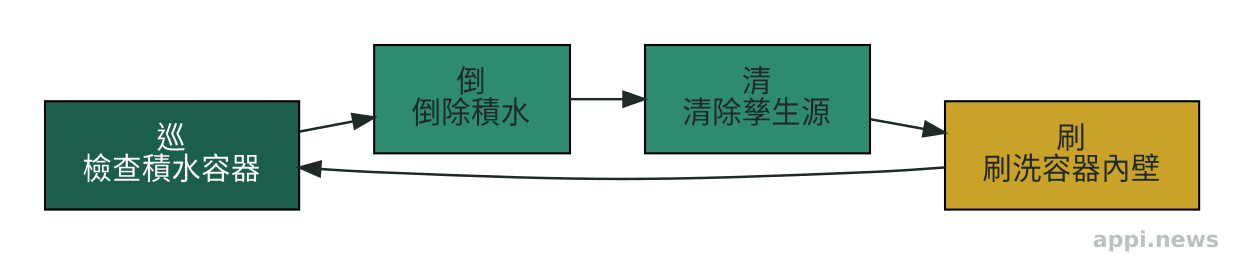
The schedule should restart after new rainfall because previously dry objects can fill again. A weekly check is WHO's baseline for containers that remain in use, while an additional inspection after heavy rain can identify newly collected water sooner.
Household cleanup is one part of dengue control
A household can remove breeding sites on its own property but cannot inspect every shared roof, construction area or drainage system nearby. Building managers, schools, employers and local authorities therefore have separate roles in removing water-holding waste and maintaining shared spaces.
WHO describes routine vector surveillance, control measures and targeted community engagement as parts of dengue resilience alongside household behavior. Source reduction lowers opportunities for breeding, but it does not certify that a property is mosquito-free or eliminate the need for bite protection.
Children can help find water without handling hazards
A family inspection can give children the observation task while an adult handles containers, sharp waste, roof access and cleaning. Children can point out water in visible saucers or buckets, but they should not move heavy items, touch insecticides or enter unsafe areas.
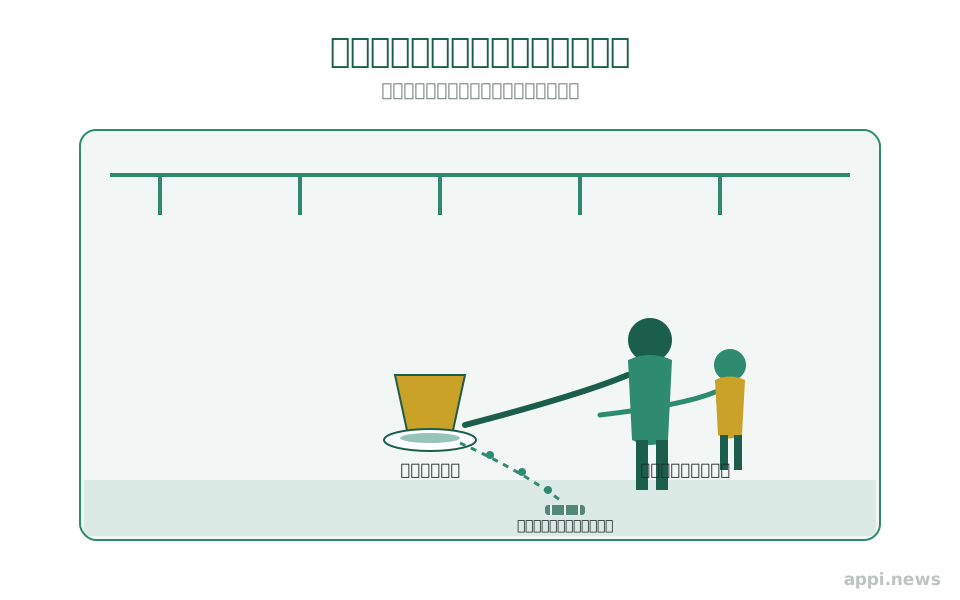
A simple record of where water was found can make the next inspection faster. The useful result is not the number of reminders sent after a storm, but whether water-holding containers were emptied, cleaned, covered or removed.
Sources and further reading
- Dengue(World Health Organization)
- Dengue and severe dengue: Questions and answers(World Health Organization)