A 2025 systematic review found that non-benzodiazepine muscle relaxants improved several short-term outcomes in acute low back pain compared with placebo. Adverse events were more frequent, while a broader review found that evidence for most back-pain treatments remained uncertain.
Low back pain after lifting, bending or another sudden movement does not by itself establish that a muscle is in spasm. The World Health Organization says about 90 percent of low back pain is non-specific, meaning it cannot be confidently attributed to a particular disease, structural problem or tissue injury. That uncertainty limits what can be inferred from the sensation of tightness alone.
New bladder, bowel or neurological symptoms need urgent assessment
Australia's national Low Back Pain Clinical Care Standard calls for urgent clinical review when new symptoms include problems controlling urine or bowel movements, or numbness or weakness in the legs, back or genital area. It calls for emergency assessment or referral when clinicians suspect cauda equina syndrome, spinal infection, a spinal tumor, trauma or fracture, or rapidly worsening nerve or spinal-cord compression.
Back pain accompanied by a recent major injury, fever, a history of cancer or rapidly worsening weakness also needs prompt clinical assessment rather than self-treatment with a muscle relaxant. Any one feature does not identify the cause, but the Australian standard says multiple alerting features raise the likelihood of serious disease.
The strongest finding covers only a short period
The 2025 European Spine Journal review included 50 randomized studies with 7,531 participants, with data from 4,775 people pooled in meta-analyses. It assessed oral non-benzodiazepine muscle relaxants used alone or with pain medicines for acute primary low back pain lasting less than six weeks and chronic primary low back pain lasting more than 12 weeks.
For acute pain, the relative risk of failing to obtain pain relief was 0.53 with a muscle relaxant compared with placebo. The review rated that result as moderate-certainty evidence. It also reported relative risks of 0.49 for failure to achieve global efficacy, 0.62 for persistent muscle spasm and 0.60 for an unfavorable physical outcome.
Those main outcomes were measured five to seven days after treatment. The figures therefore describe relative group differences over a short interval; they do not show how many additional patients would benefit in a typical clinic, establish a long-term effect or prove that every drug in the class performs alike.
A broader review found more uncertainty
A separate 2025 systematic review analyzed 301 placebo-controlled trials, 377 comparisons and 56 non-surgical treatments or treatment combinations for adults with non-specific low back pain. It found moderate-certainty evidence of a small pain benefit for only one treatment in acute low back pain and five treatments in chronic low back pain. Evidence for the remaining treatments, including muscle relaxants, was inconclusive because of small samples, imprecision or low certainty.
The two reviews asked different questions and grouped outcomes differently. The muscle-relaxant review focused on several yes-or-no outcomes at five to seven days, while the broader review compared pain intensity on a 0-to-100 scale at the first post-treatment assessment. Their findings support a narrow conclusion: there may be a short-term benefit, but the size and consistency of the effect remain uncertain across drugs and outcome measures.
Adverse events rose alongside short-term benefit
The muscle-relaxant review found a relative risk of 1.56 for adverse events compared with placebo, based on low-to-moderate certainty evidence. Central nervous system adverse events had a relative risk of 2.40, while the review found no reliable difference in gastrointestinal events.
These are class-level estimates, not a safety profile for a particular medicine. The abstract does not report the absolute event rate or provide a drug-by-drug breakdown, so it cannot show how often an individual patient would experience an adverse effect. Product instructions, interactions and restrictions also differ by medicine and country.
Medication is one part of care, not the whole plan
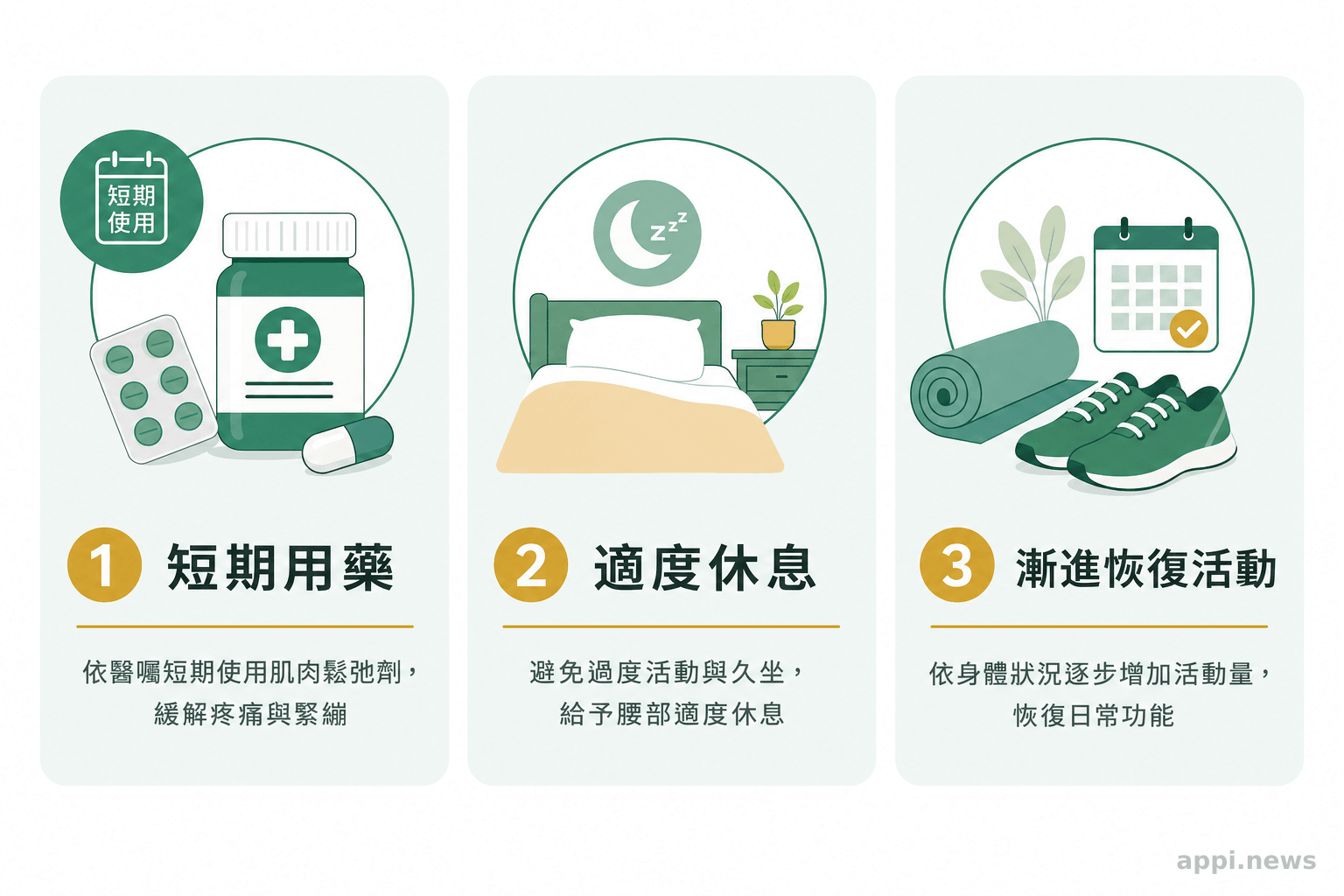
The Australian standard recommends staying active, continuing or returning to usual activity as soon as feasible, and avoiding prolonged bed rest. It says painful activities such as lifting may need to be reduced or modified for several days, followed by a gradual return rather than complete inactivity.
WHO describes medicines as symptom-relief options that should ideally be combined with other care, including rehabilitation and physical activity. The appropriate plan depends on whether the pain is non-specific or linked to a defined cause, and on how symptoms affect movement, work and daily life.

The evidence does not cover every patient equally
The broader 2025 review was limited to adults, and the published abstracts do not provide separate estimates for children or pregnant people. Those groups should not be assumed to have the same benefit-risk balance as the pooled study population. A clinician should assess treatment options for a child, during pregnancy or breastfeeding, or when a person has chronic illness or takes other medicines.
Older adults and people with other medical conditions also need medication choices tailored to their health and existing treatment. WHO specifically advises these groups to speak with a healthcare provider before using medicine for low back pain. Regulatory status and available products vary by country, so no single class-level review can determine which medicine, if any, is appropriate in every market.
Sources and further reading
- Oral non-benzodiazepine muscle-relaxants for people with acute and chronic primary low back pain: a systematic review with meta-analysis(European Spine Journal)
- Analgesic effects of non-surgical and non-interventional treatments for low back pain: a systematic review and meta-analysis of placebo-controlled randomised trials(BMJ Evidence-Based Medicine)
- Low back pain(World Health Organization)
- Low Back Pain Clinical Care Standard(Australian Commission on Safety and Quality in Health Care)