The World Health Organization (WHO) reported on June 4, 2026, that more than 866 million foodborne illnesses and 1.52 million deaths linked to 42 food hazards occurred in 2021. Its global Five Keys to Safer Food cover cleaning, separation, thorough cooking, safe temperatures, and safe water and ingredients.
For takeaway meals, those controls continue after food leaves the seller. Time spent waiting for collection, traveling to a home or workplace, and sitting on a desk all counts once a perishable meal is no longer under controlled cold or hot storage.
Warning signs need prompt medical assessment
The US Centers for Disease Control and Prevention (CDC) advises seeking medical care for bloody diarrhea, diarrhea lasting more than three days, fever above 39°C, vomiting that prevents liquids from staying down, or signs of dehydration. Very little urination, a dry mouth or throat, and dizziness on standing are among the dehydration signs it lists.
The CDC identifies children under five, pregnant people, adults aged 65 and older, and people with weakened immune systems as more likely to become seriously ill from contaminated food. A separate APPI News report explains dehydration, bloody diarrhea and other warning signs after suspected food poisoning.
Children
Children under five should not be managed with general adult instructions when vomiting or diarrhea develops. A child who cannot keep liquids down or urinates much less than usual needs prompt clinical assessment.
Pregnancy
The CDC advises pregnant people to seek medical care if fever occurs with flu-like symptoms because some foodborne infections can affect a pregnancy even when the illness seems mild. Pregnancy-specific advice should take precedence over a general adult checklist.
Older adults, chronic conditions and regular medicines
Adults aged 65 and older and people with weakened immune systems face a higher risk of severe illness. People with chronic conditions or regular medicines should contact a clinician when vomiting, diarrhea or fever develops instead of adapting general advice about fluids or medicines on their own.
The storage clock includes delivery and desk time
WHO advises leaving cooked food at room temperature for no more than two hours, refrigerating cooked and perishable food promptly below 5°C, and holding cooked food above 60°C before serving. The two-hour limit is a control point, not a guarantee that every dish remains safe until the final minute.
FoodSafety.gov, the United States government food-safety portal, shortens the refrigeration deadline to one hour when perishable food is exposed to temperatures above 32°C. That is United States consumer guidance, and APPI News could not confirm the same cutoff for every country.
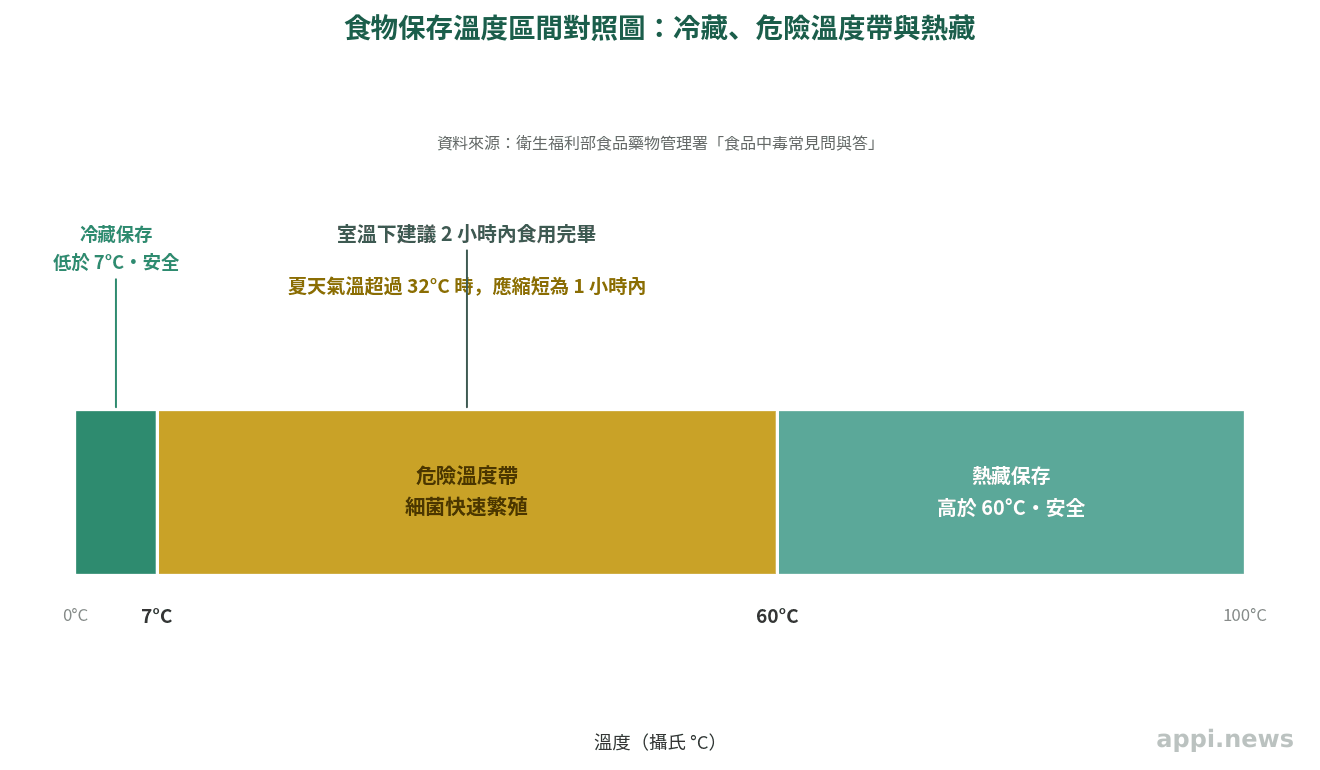
There is no single danger-zone range used by every authority. WHO recommends refrigeration below 5°C and hot holding above 60°C, while the United States portal defines its danger zone as 4°C to 60°C; stricter local or food-specific rules take precedence.
Ice safety starts with water and clean equipment
WHO says water and ice can carry dangerous microorganisms or chemicals and advises using water known to be safe. Ice in a drink is a food ingredient, so later contact with dirty hands, tools or containers can reintroduce contamination.
A scoop reduces direct hand contact only when the scoop and its storage container remain clean. Seeing one at the counter cannot establish the water source, the ice machine’s cleaning record or the temperature at which ice was transported and stored.
Raw and cooked food need separate tools and storage
Color-coded boards can make a separation system easier to see, but the colors do not carry one universal meaning. What matters is whether a tool, glove or container moves from raw food to ready-to-eat food without effective cleaning or replacement.
Reheating does not reset earlier storage time
WHO advises dividing a large batch of cooked food into small portions and shallow containers before prompt refrigeration. It also advises reheating leftovers until steaming hot, but that step does not reset time already spent outside temperature control.
Smell and appearance cannot establish that a mishandled meal is safe, because contaminated food may look, taste and smell normal. The APPI News report on hot weather and the two-hour food safety rule explains why heating is not a reliable correction for every storage failure.
A takeaway plan starts before the order is placed
FoodSafety.gov advises arranging delivery when someone can receive and promptly store perishable food, and says insulated packaging should include a cold source such as frozen gel packs when food must remain chilled in transit. Hot and cold items should be kept apart during delivery.
At a workplace, ordering close to the planned meal and moving food into a refrigerator on arrival reduces uncontrolled time. Without an effective cold source, a carrier does not maintain refrigerated conditions.

A receipt check can cover elapsed time, whether hot food is still being held hot, whether cold food remains chilled, whether packaging has leaked, and whether raw items are separated from ready-to-eat dishes. The related APPI News guide sets out WHO’s five food-safety steps for summer kitchens, including the limits of visual checks.
Sources and further reading
- Food safety(World Health Organization)
- Promoting safe food-handling behaviours(World Health Organization)
- Public health advice on food safety during summer(World Health Organization Regional Office for Europe)
- 4 Steps to Food Safety(FoodSafety.gov)
- Tips for Meal Kit and Food Delivery Safety(FoodSafety.gov)
- Food Poisoning Symptoms(US Centers for Disease Control and Prevention)
- People at Increased Risk for Food Poisoning(US Centers for Disease Control and Prevention)