The World Health Organization (WHO) organizes household food safety around five actions: keep clean, separate raw and cooked food, cook thoroughly, keep food at safe temperatures, and use safe water and raw materials. The framework applies to consumers and food handlers worldwide rather than to one cuisine or health system.
Heat and humidity create better conditions for germs to multiply, while contaminated food may still look, taste and smell normal. A household defense therefore has to control how food is handled and stored from purchase through serving.
Severe symptoms require prompt medical assessment
The US Centers for Disease Control and Prevention (CDC) advises seeking medical help for bloody diarrhea, diarrhea lasting more than three days, fever above 39°C, repeated vomiting that prevents fluid intake, or signs of dehydration. Very little urination, a dry mouth or throat, and dizziness on standing are listed dehydration warnings. Difficulty swallowing, muscle weakness, blurred or double vision, drooping eyelids or slurred speech also require urgent assessment rather than home observation.
Children who cannot drink, urinate much less than usual or become unusually drowsy need prompt clinical assessment. Pregnant people should contact a clinician if fever occurs with flu-like symptoms. People with chronic illness, weakened immunity or regular medicines should ask a clinician how dehydration or infection may affect their condition and treatment.
A separate APPI News report explains dehydration, bloody diarrhea and other warning signs after suspected food poisoning. Symptoms alone cannot identify the food or microorganism responsible.
Clean hands and equipment before contamination spreads
The first WHO step covers hands, cloths, cutting boards, utensils and preparation surfaces. Washing before touching food and during preparation interrupts one route by which microorganisms reach ready-to-eat dishes.
The CDC tells US households to wash hands with soap and water for at least 20 seconds before, during and after food preparation, and to wash utensils, boards and counters with hot, soapy water after each food item. Fresh fruit and vegetables should be rinsed under running water. Gloves do not replace handwashing because contaminated gloves can transfer germs between the same surfaces.
Separate raw food from meals ready to eat
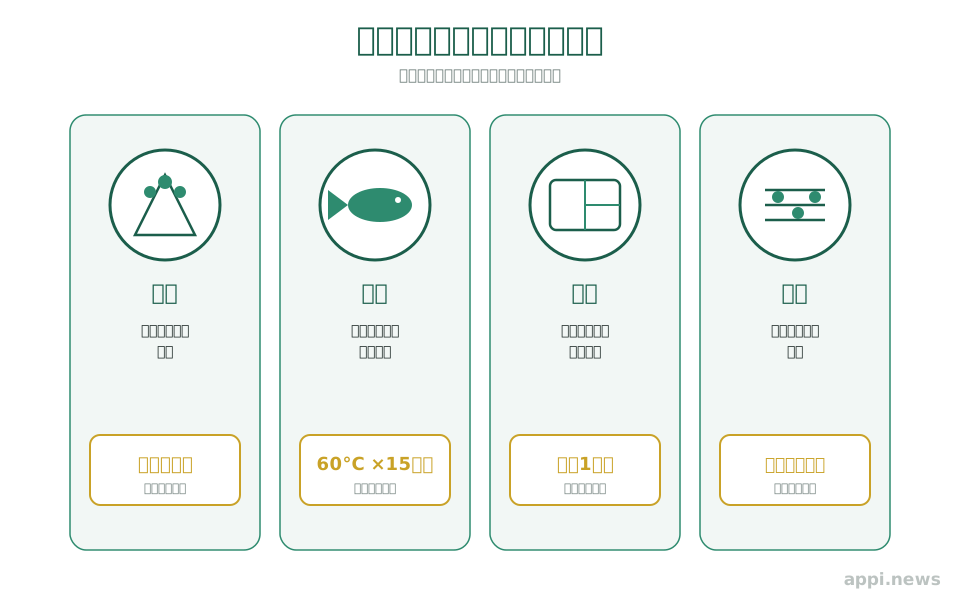
Raw meat, poultry, seafood and eggs can carry microorganisms in their juices. Separation needs to continue in shopping bags, the refrigerator and the preparation area, not begin only when cooking starts.
Sealed containers prevent raw juices from dripping onto produce or cooked food. Separate cutting boards and plates are useful, but equipment can also be washed thoroughly with hot, soapy water before it is used for another task. A plate or pair of tongs that held raw meat should not be reused for cooked food without washing.
Use temperature, not color, to check cooking
WHO’s summer food safety guidance says cooking food to at least 70°C reduces risk and recommends bringing soups and stews to a boil. A clean food thermometer provides more information than surface color or cooking time alone because the coolest point may be inside the thickest part of a dish.
The 70°C figure is a broad WHO benchmark, not a complete table for every food. National authorities may specify different minimum internal temperatures and holding times for poultry, ground meat, seafood or reheated food. Package directions and the applicable national food-safety authority should govern when they set a more specific rule.
Control both storage temperature and elapsed time
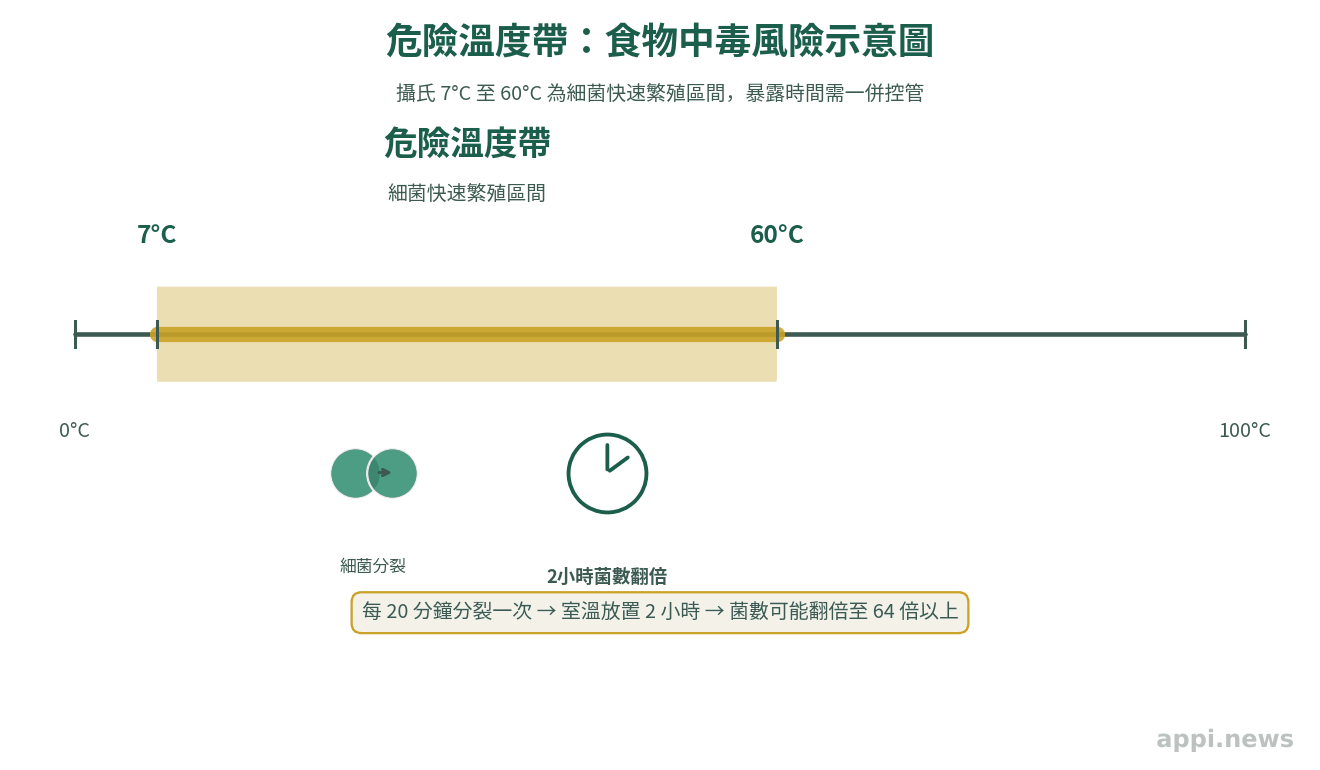
WHO advises leaving cooked food at room temperature for no more than two hours, refrigerating cooked and perishable food promptly below 5°C, and holding cooked food above 60°C before serving. Cold storage slows microbial growth but does not stop it indefinitely.
The clock starts when a perishable dish leaves controlled cold or hot storage. A lunch carried without cooling, food left in a hot vehicle and dishes kept on an outdoor table may warm faster than food in an air-conditioned room. When the storage history is unknown or a perishable dish exceeds the applicable limit, smell and appearance cannot restore confidence in its safety.
Large batches cool more slowly at the center than small portions. Dividing leftovers among clean, shallow containers before prompt refrigeration helps heat escape. Frozen food should thaw in a refrigerator, cold water or a microwave rather than on a counter at room temperature.
Safe water and ingredients complete the five-step defense
Water and ice can carry microorganisms or chemicals, so the final WHO step starts with a supply known to be safe. Produce eaten raw should be washed with safe water, and damaged, moldy or expired ingredients should not be treated as usable simply because they will later be chilled or cooked.
Pasteurization and other validated processing steps reduce hazards in products such as milk. Labels also provide storage and use-by instructions that a household checklist cannot replace. A power outage, broken refrigerator or product recall changes the decision even when the meal was prepared correctly.
Higher-risk groups need stricter food choices
The CDC identifies children under five, pregnant people, adults aged 65 and older, and people with weakened immune systems as more likely to become seriously ill from contaminated food. The agency includes some people with diabetes, liver or kidney disease and those receiving chemotherapy or radiation among those whose immune defenses may be weaker.
Young children should receive age-specific food and hydration advice rather than adult instructions. Pregnant people need pregnancy-specific advice because some infections can harm a pregnancy even when the parent’s illness appears mild. Older adults, people with chronic disease, those with weakened immunity and people taking regular medicines should use guidance from their own national health authority or clinician for food choices and early care.
A five-point check follows the food from purchase to storage
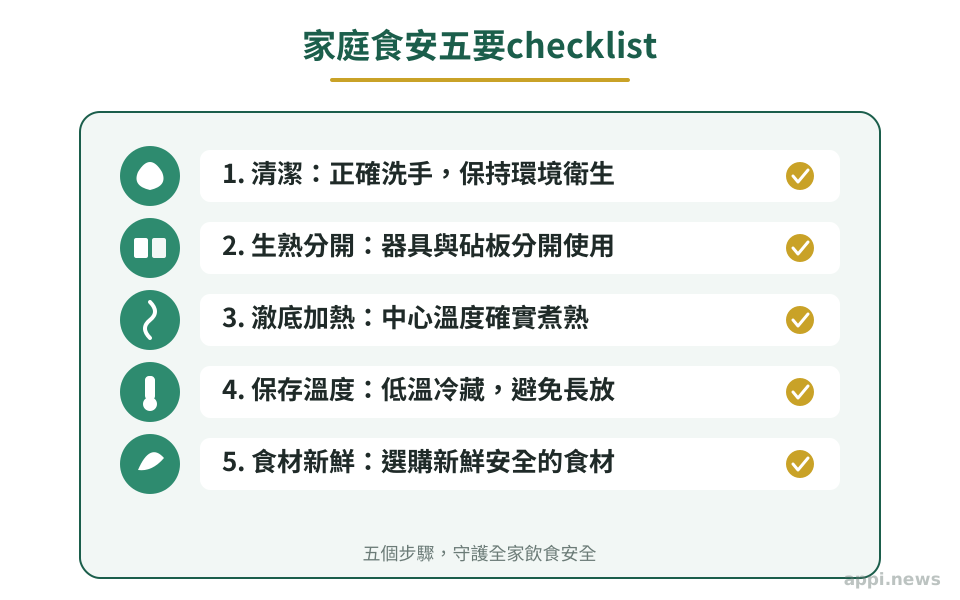
A practical check asks whether hands and equipment are clean, raw food is contained, the center of the food reached the applicable temperature, and perishable food stayed within its time and temperature limit. It also asks whether the water, ice and ingredients came from a safe source and remain within their labeled storage period.
No single step compensates for all failures in the others. Thorough reheating cannot prove that a dish mishandled earlier is safe, and refrigeration cannot undo cross-contamination. The related APPI News report on hot weather and the two-hour food safety rule examines the time-and-temperature layer in more detail.
Sources and further reading
- Five keys to safer food(World Health Organization)
- Public health advice on food safety during summer(World Health Organization Regional Office for Europe)
- Preventing Food Poisoning(US Centers for Disease Control and Prevention)
- People at Increased Risk for Food Poisoning(US Centers for Disease Control and Prevention)
- Food Poisoning Symptoms(US Centers for Disease Control and Prevention)