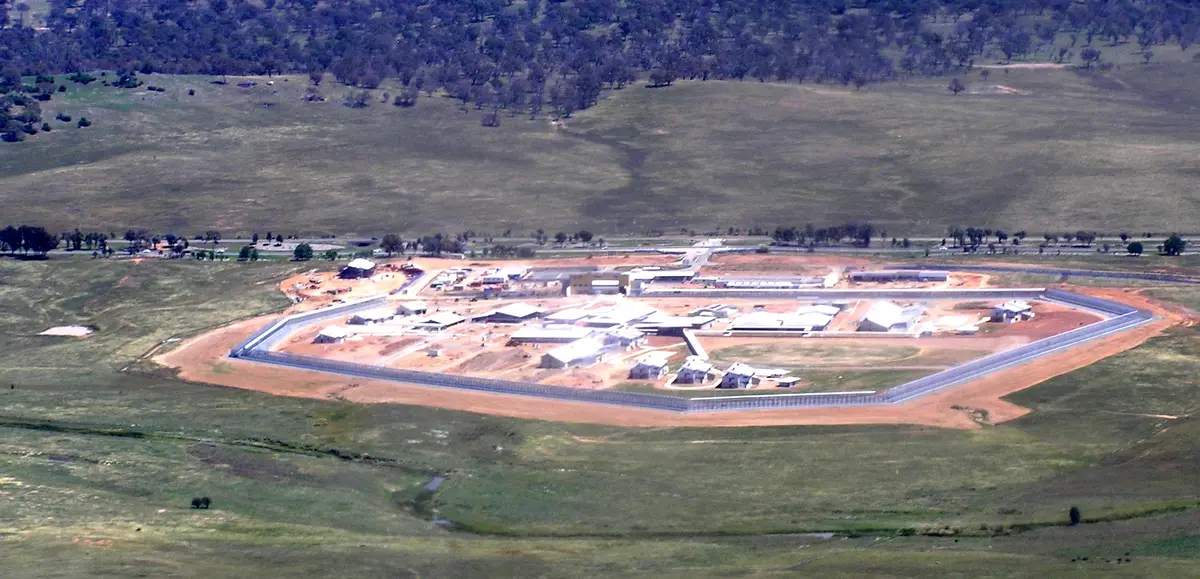
Australian Attorney-General Michelle Rowland granted former Australian Army lawyer David McBride parole on August 13, 2026, allowing him to leave Canberra’s Alexander Maconochie Centre after 27 months in custody. He will serve the balance of his sentence under supervision and conditions in the community. Rowland’s office did not publish his individual parole terms.
McBride said in a statement distributed at his release that he had been diagnosed with treatable lung cancer at an early stage. He said he would undergo surgery to remove part of a lung and would need an extended period of physical recovery.
Parole changed where McBride serves his sentence; it did not disturb his convictions. The Australian Capital Territory Supreme Court sentenced him in May 2024 to five years and eight months for one theft offense and two offenses of unlawfully communicating military information. The court set a 27-month non-parole period ending August 13, 2026, and a sentence end date of January 13, 2030.

What McBride disclosed and what he intended
The appeal record says McBride was an Australian Army major and legal officer with clearance to access material up to TOP SECRET when he began printing Australian Defence Force documents in 2014. He took 235 documents home and stored them there. Police later seized the files, 207 of which carried the SECRET classification.
McBride gave two folders of confidential material to journalists Chris Masters and Andrew Clark in 2015, but neither published it. He then posted documents and articles on a website before Australian Broadcasting Corporation (ABC) journalist Daniel Oakes contacted him in May 2016. McBride supplied Oakes with confidential Australian Defence Force (ADF) documents that informed the ABC’s 2017 series The Afghan Files.
The court record complicates the common description that McBride leaked files in order to expose unlawful killings. His stated concern was what he regarded as illegal and vexatious investigation of Australian soldiers over deaths in Afghanistan. The Afghan Files instead reported allegations that Australian soldiers had killed Afghan civilians unlawfully, an angle McBride told police was different from the story he had sought.
The Australian Capital Territory Court of Appeal treated the purpose of the disclosure and the result of the reporting as separate matters. It accepted that The Afghan Files addressed a matter of public interest, but recorded that the articles were opposite to McBride’s intended account. The court therefore did not treat the public awareness generated by Oakes’s reporting as reducing the seriousness of McBride’s conduct.
The official Afghanistan inquiry had a separate origin
Australia’s Inspector-General of the Australian Defence Force began the Afghanistan Inquiry in May 2016 after military commanders received rumors and allegations of possible breaches of the law of armed conflict. The Inspector-General is a statutory office independent of the ADF chain of command that oversees aspects of Australia’s military justice system.
The 2025 appeal judgment says the ADF initiated that inquiry more than 12 months before it learned of McBride’s unlawful disclosures. The inquiry used his lawfully submitted Inspector-General complaint to identify lines of inquiry, but the judgment says it did not use information from the unlawful disclosures covered by his charges. The record does not support the claim that his media disclosures launched the official inquiry.
The Inspector-General’s inquiry, commonly called the Brereton Inquiry, was an administrative process rather than a criminal investigation. Its public report in 2020 found credible information concerning 23 incidents involving the alleged unlawful killing of 39 people. Those findings led to criminal referrals, but they were not convictions.
Why Australia’s disclosure law did not decide the case
Australia’s Public Interest Disclosure Act 2013 creates a federal framework for current and former public officials to report wrongdoing and grants immunity from civil, criminal and administrative liability when a disclosure qualifies under the law. It also provides remedies and criminal penalties for reprisals connected to protected disclosures.
The current law does not make every disclosure to a journalist protected. An external disclosure generally must follow an internal disclosure and meet conditions concerning the response to that report, the public-interest balance and the amount of information released. The statute excludes intelligence information from external and emergency disclosures and sets a separate test for emergencies involving a substantial and imminent danger.
McBride’s proceedings stopped short of a ruling on whether the Act immunized the disclosures for which he was convicted. The Court of Appeal recorded that he accepted those disclosures were not made under the Act and that he discontinued an earlier statutory immunity claim. It also recorded that an Inspector-General official explained in 2014 how he could have his complaint treated under the Act, but McBride declined and chose the Inspector-General’s separate inquiry process.
The argument McBride carried through appeal concerned his military duty, not statutory whistleblower immunity. He contended that his enlistment oath made acting in the Australian public interest part of his official duty even when a disclosure breached a lawful order. The Court of Appeal rejected that interpretation and dismissed both his conviction and sentence appeals in May 2025.
The High Court of Australia refused special leave to appeal on October 9, 2025, finding insufficient reason to doubt the Court of Appeal’s decision. McBride’s parole did not reopen that ruling or erase the sentence.
Federal reform remains a separate policy question
The Australian Attorney-General’s Department consulted in 2025 on an exposure draft that proposed a Whistleblower Ombudsman, clearer protections and simpler procedures for public-sector disclosures. The department said the proposed measures remained subject to further government consideration.
That reform proposal was not the law applied to McBride’s conduct, and it would not convert his parole into an acquittal. His case shows that the public value of reporting based on leaked records and the legal status of the underlying disclosure are distinct questions under Australian law.
Sources and further reading
- Jailed whistleblower David McBride walks free after becoming eligible for parole(ABC News)
- R v McBride (No 4) [2024] ACTSC 147(Supreme Court of the Australian Capital Territory)
- McBride v The King [2025] ACTCA 16(Court of Appeal of the Australian Capital Territory)
- McBride v The King [2025] HCADisp 232(High Court of Australia)
- Public Interest Disclosure Act 2013(Federal Register of Legislation)
- Afghanistan Inquiry FAQ(Australian Department of Defence)
- Public sector whistleblower reforms(Australian Attorney-General’s Department)