Samsung announced the Galaxy S26 series in February 2026, and the company says it will receive seven generations of operating-system upgrades and seven years of security updates. For an older user, that support clock matters only alongside grip, screen readability and the ability to complete familiar tasks without help.
The newest model is not automatically the strongest choice. A useful comparison starts with the support time left on the exact model, then tests whether the intended user can hold, unlock and operate it with the chosen case and display settings. Local repair terms and the price difference belong in the same decision.
Count remaining update years, not the headline promise
Samsung's Galaxy S25 policy provides seven generations of operating-system upgrades and seven years of security updates from the global launch date. The Galaxy S26 series carries the same seven-generation and seven-year terms, also counted from its initial global launch. Buying either model later does not reset its support clock, so a discounted S25 must be assessed against the support time already used.
Google promised the Pixel 8 and Pixel 8 Pro seven years of Android operating-system upgrades, security updates and feature releases, with security support counted from first availability on the US Google Store. Google said those two phones would remain supported into 2030. That fixed endpoint makes the remaining term visible when either model is sold used or refurbished.
An Apple filing under the United Kingdom's product security rules defines a minimum five-year support period from September 22, 2023, for model A3106, and Apple identifies A3106 as an iPhone 15 Pro Max variant. The filing does not promise five major iOS versions or state a worldwide support policy for every iPhone 15 model. APPI News could not verify a matching Apple document that would support a simple two-year comparison with Samsung and Google.
Support length also differs from rollout timing. Samsung says the timing of Galaxy S25 operating-system and security updates may vary by model, network provider and market. A long policy reduces the risk of an early support cutoff, but it does not mean every carrier releases each update simultaneously.
IP ratings do not predict a dropped phone
Samsung's US page lists the Galaxy S25 and S25+ with Armor Aluminum frames, Gorilla Glass Victus 2 displays and IP68 water and dust resistance. Its US Galaxy S26 page lists Armor Aluminum, Gorilla Glass Victus 2 on the front and back, and IP68 resistance for the S26 and S26+. The baseline specifications are close, but they are manufacturer declarations rather than independent evidence of how either phone survives years of falls.
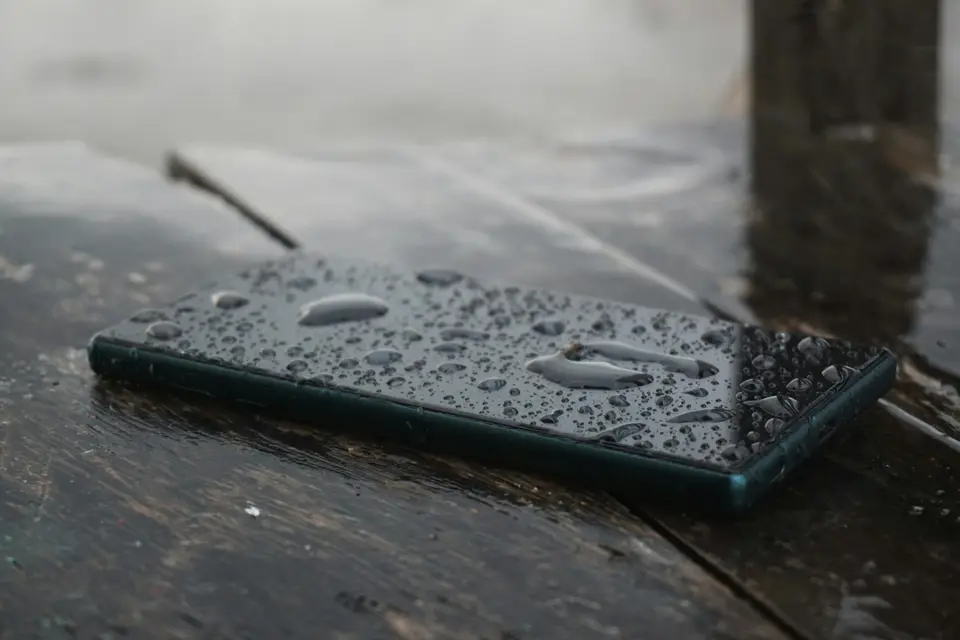
The S26 page says its IP68 test used up to 1.5 meters of freshwater for up to 30 minutes and that resistance can diminish with ordinary wear. Samsung also says chips and cracks can reduce water and dust resistance and advises against salt-water exposure. Because the company defines the IP rating around dust and liquid ingress, it should not be read as a drop certification.
A store test should use the case that will stay on the phone. The intended user can then check whether the combined weight is comfortable, the side buttons remain easy to press and the screen can be reached without shifting to an unstable grip. Local prices for screen replacement and accidental-damage coverage provide information that glass branding alone cannot.
Test the interface after accessibility settings are enabled
Samsung says Easy mode enlarges on-screen items, provides a high-contrast keyboard and helps prevent accidental touches. The setting is under Display on the support page, which also warns that available screens and options vary by carrier, software version and device model. Its presence should be checked on the exact demonstration unit rather than assumed from the Galaxy name.
Apple describes Assistive Access as an iPhone interface for people with cognitive disabilities, with bigger items, more focused features and a choice of large grid or list layouts. Age alone does not establish that a person needs this mode. For users who need only a more readable display, iPhone also provides Larger Text, Bold Text and Display Zoom.
Font size is only one part of usability. The intended user should try unlocking the phone, answering a call, finding a frequent contact, sending a message, opening a familiar news or video app, taking a photo and returning to the home screen. The test should use the preferred font size and icon layout because a default store display does not show whether enlarged content clips or hides controls inside the apps that matter.
Choose the person first, then the model
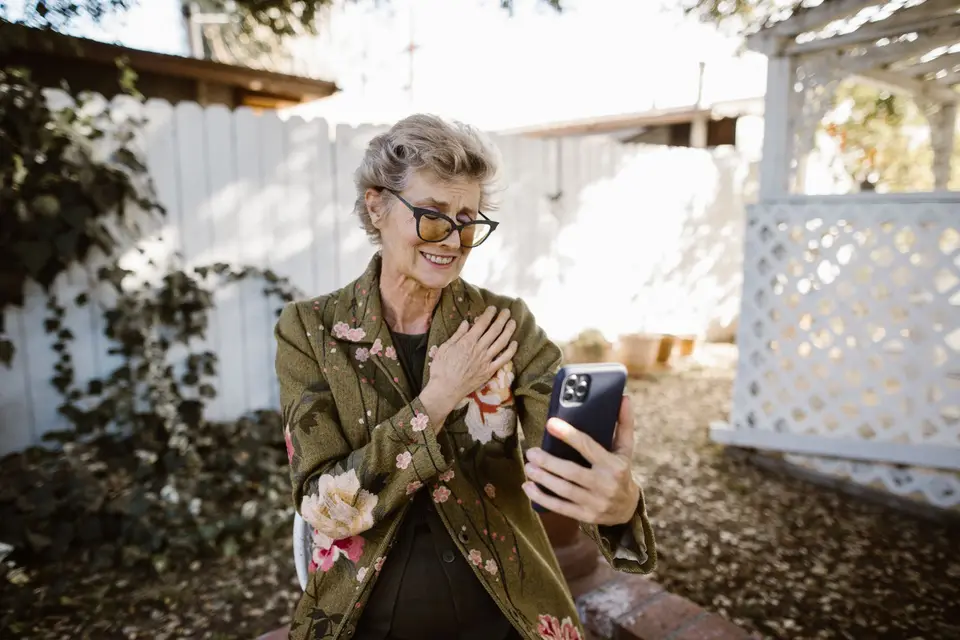
The same short task list should be used on every candidate phone. A larger display may improve reading but can also add width and weight, while a smaller device may be easier to hold but leave less room after text enlargement. The result depends on the person and the case, not age alone.
Account recovery deserves attention before the old phone is erased. The intended user should retain control of the device passcode and primary account, while any agreed recovery contact and backup method are documented. This preserves access to future updates without making a relative's memory or phone number the only route back into the account.
A newer model earns a higher price when its later support endpoint or a tested usability difference matters to the buyer. If the S25 and S26 both pass the same tasks, the older model can still be the better value when its lower local price offsets the earlier support endpoint. A midrange phone may also qualify, but its update policy, water-resistance rating and simplified interface must be verified for that model rather than inferred from a flagship series.
Frequently asked questions
Does an older phone user need the latest Galaxy S26?
No. Samsung gives the S25 and S26 series the same headline update term, and its US pages list similar basic materials and IP68 resistance for the base and plus models. The S26 has a later support endpoint, but price, grip, screen size and local repair terms may outweigh that difference.
Do Samsung, Google and Apple promise the same type of support?
No. Samsung states numbers of operating-system generations and security years for the S25 and S26, while Google's Pixel 8 commitment covers Android upgrades, security updates and feature releases. Apple's five-year figure cited here comes from a UK product security filing for one iPhone 15 Pro Max model and is not a verified promise of five major iOS upgrades worldwide.
Can an IP68 phone be treated as waterproof?
No. Samsung's cited S26 test used controlled freshwater immersion at up to 1.5 meters for up to 30 minutes, and the company says resistance can weaken with wear or physical damage. IP68 does not establish drop survival or protection in every liquid.
Which simplified interface works best for an older adult?
There is no single answer based on age. Samsung Easy mode changes item size, keyboard contrast and touch behavior, while Apple designed Assistive Access for people with cognitive disabilities and provides separate display controls for larger text. The appropriate choice is the one that lets the intended user complete familiar tasks on the exact model without unwanted restrictions.