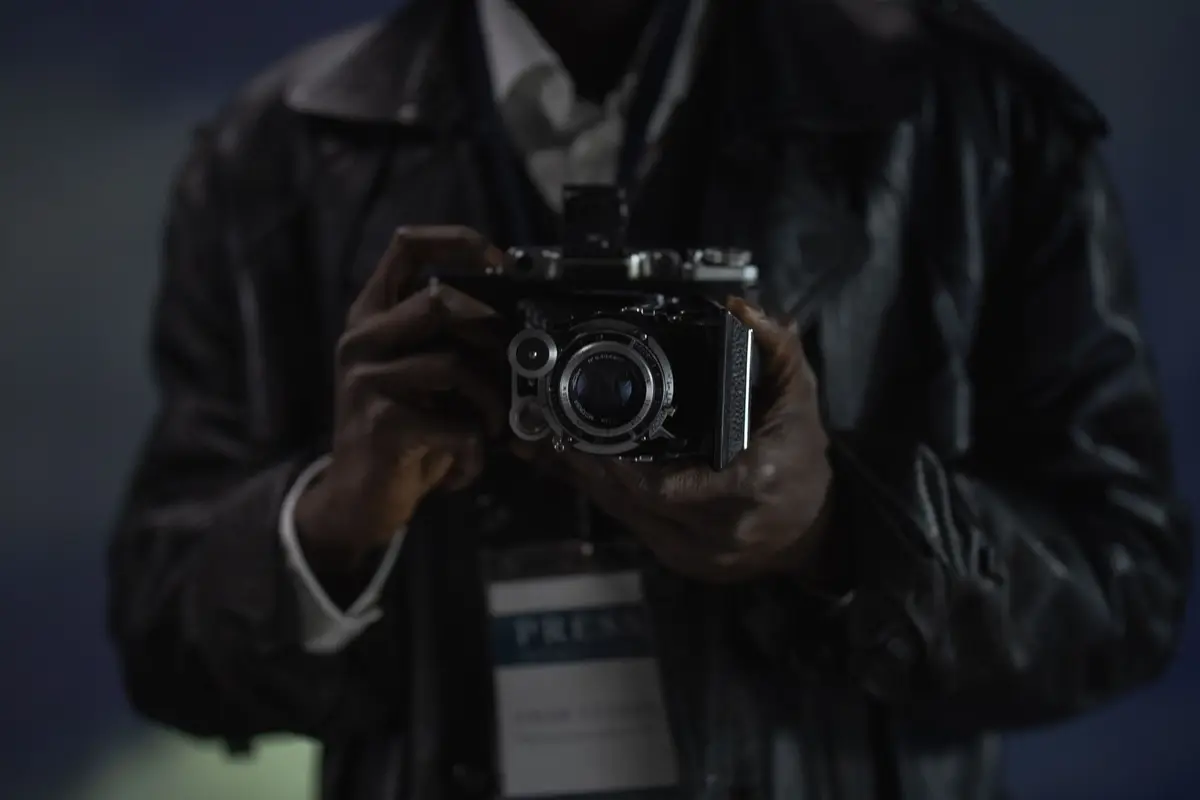
A Revolutionary Court in Tehran sentenced photojournalist Yalda Moaiery in absentia to 15 years in prison on August 9, 2026. The International Federation of Journalists (IFJ) said the court also ordered the confiscation of her cameras and mobile phone and barred her from cultural and media work, public office and social media.
Le Monde described the ruling as a first-instance judgment and reported that Moaiery plans to appeal. APPI News could not find a published judgment or charging document, leaving the evidence and the court's full legal reasoning unavailable for independent review.
The case centers on photographs and foreign-media interviews
Moaiery told Le Monde that she had not been allowed to inspect her case file but saw her photographs and interviews with foreign media among the material. She said a hearing took place in Tehran in June 2026 without her after officials tried to summon her through a mobile line whose SIM card authorities had blocked.
The IFJ said Iran's Ministry of Intelligence opened a case in July 2026 concerning her media activities and material she had published online. The federation also said security forces raided her Tehran home in February 2026 and seized electronic equipment, and it described those proceedings as apparently connected to the current case.
Iran widened its espionage law in 2025
A November 2025 communication from United Nations human rights experts said Iran's expanded espionage law took effect on October 1, 2025, and extended the covered conduct to information dissemination and media work. The experts identified contact with foreign and diaspora media outlets as one activity that could fall within the law's scope.
Iran International reported that the law treats espionage or intelligence cooperation with Israel or the United States as “corruption on earth,” a charge that can carry the death penalty under Iran's penal code. It said provisions covering information, media content or assistance to groups Iran designates as hostile carry prison terms of two to 15 years, depending on the offense.
The Guardian Council, Iran's 12-member body that reviews legislation for compatibility with the constitution and Islamic law, cleared the measure on October 1, 2025. Iran International reported that the council had returned an earlier version to parliament in July because of ambiguities before accepting a revised text.
A prior detention followed coverage of the 2022 protests
The Committee to Protect Journalists said police arrested Moaiery on September 19, 2022, while she was photographing protests in Tehran after Mahsa Jina Amini died in the custody of Iran's morality police. CPJ said she was released on bail on December 20, 2022.
The International Women's Media Foundation gave Moaiery its 2023 Wallis Annenberg Justice for Women Journalists Award. The foundation said the award recognizes a journalist who has been unjustly jailed, detained or imprisoned.
The ruling remains open to appeal
Moaiery told Le Monde she would seek a new trial because the first hearing proceeded in her absence. The outlet described the judgment as being at first instance, and APPI News could not find a published appellate outcome at the time of writing.
The IFJ rejected the charges and called on Iran's judiciary to drop them. APPI News could not find a public response from the judiciary to Moaiery's account or a published decision setting out the evidence at the time of writing.
Sources and further reading
- Iran: Photojournalist Yalda Moaiery sentenced to 15 years in prison(International Federation of Journalists)
- Iran's increasing repression of civil society(Le Monde)
- AL IRN 18/2025(United Nations Special Procedures)
- Iran watchdog clears tougher espionage law targeting Israel, US cooperation(Iran International)
- Yalda Moaiery(Committee to Protect Journalists)
- IWMF Announces 2023 Courage in Journalism Award Winners(International Women's Media Foundation)