Thirty-nine percent of 974 US farmers and ranchers surveyed in April were considering a different party, an independent or third-party candidate, not voting, or had not decided how they would vote in 2026. The same sample leaned Republican: 30 percent said they almost always vote for Republican candidates and 29 percent said they usually do.
The result shows uncertainty within a Republican-leaning group, not a 39 percent swing to Democrats. APPI News could not find published respondent-level cross-tabulations tying the cost answers to the voting-intention answers, so the survey does not establish that higher costs caused political uncertainty.
The survey measured a convenience sample, not a national electorate
Farm Journal fielded the survey online from April 2 to 24, 2026, by emailing a convenience sample of 48,552 contacts and received 974 completed responses, a completion rate of about 2 percent. Respondents were offered US$10 or US$20 gift cards, and the published methodology says a traditional margin of sampling error does not strictly apply because the sample was nonprobability.
The responses came from 44 states, but geographic breadth does not make the sample representative of all US farmers, rural residents or voters. The findings are best read as a measure of sentiment among the participating Farm Journal contacts.
Farmers reported cost pressure but the war question was prospective
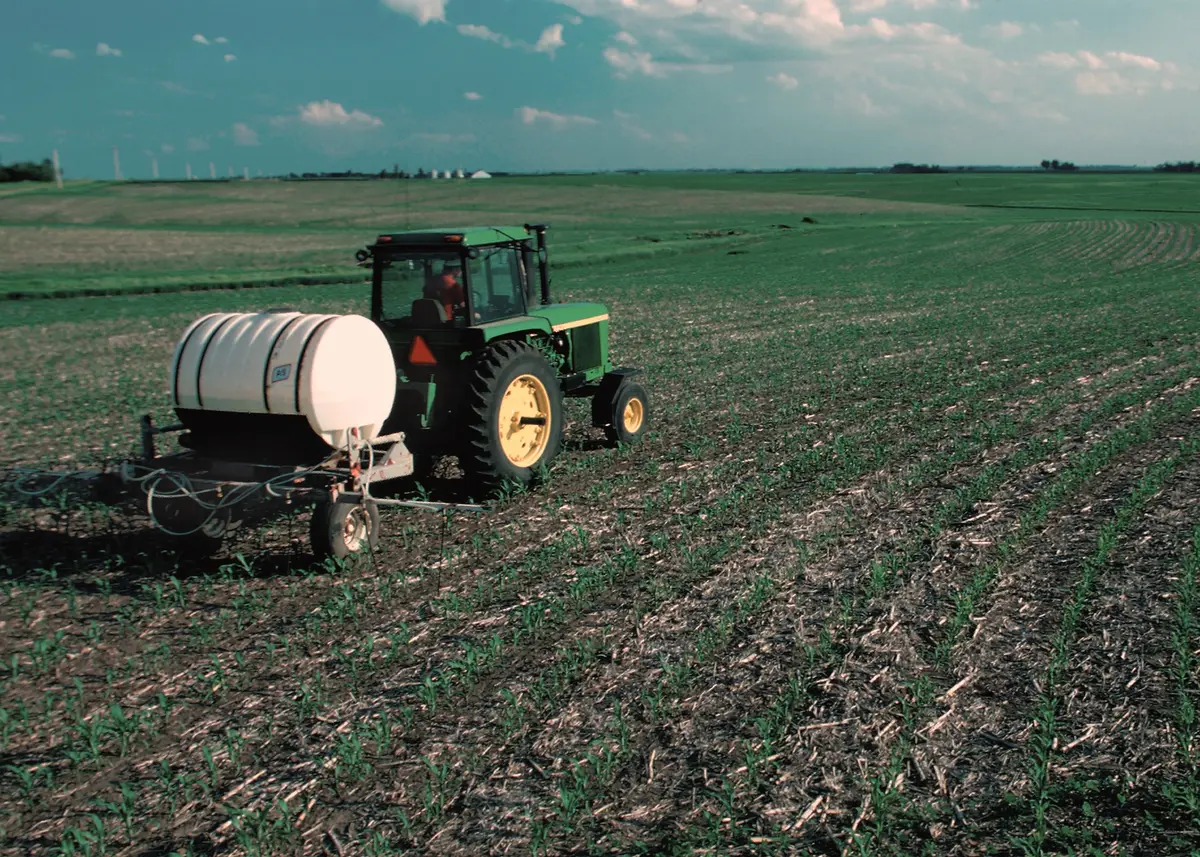
Seventy-eight percent named machinery and inputs such as fertilizer, fuel, seed and chemicals among their three biggest operating challenges. In a separate question, 94 percent expected the Iran war to affect their business by raising energy costs, fertilizer costs or both. About 40 percent said recent increases in urea and anhydrous ammonia prices had a significant or severe effect on fertilizer-purchasing decisions.
The 94 percent figure measures what respondents thought the war would do rather than a verified change in their farm accounts. The poll did not calculate how much of any observed increase came from the conflict, tariffs, weather, earlier supply constraints or other market forces.
Hormuz disruption reaches farms through fuel and fertilizer
The US Energy Information Administration estimated on August 11 that petroleum flows through the Strait of Hormuz averaged about 780,000 cubic meters a day in the second quarter of 2026, down from about 3.43 million cubic meters a day in the fourth quarter of 2025. The agency assumed that shipments would remain severely constrained through August and begin increasing slowly in September.
The US-based American Farm Bureau Federation, a farmer advocacy group, estimates that countries exposed to Persian Gulf disruption account for 49 percent of global urea exports and 30 percent of global ammonia exports. Natural gas is a feedstock for nitrogen fertilizer, while diesel powers planting, harvesting and transport, allowing shipping and energy disruption to reach farm budgets through several channels.
Soybean trade pressure predates the Iran war
US soybean farmers entered 2026 with pressure that predated the conflict. The Associated Press reported that production expenses had risen while soybean prices remained low, and that the 2025 US-China tariff dispute accelerated China's shift toward Brazil and other suppliers.
The US White House said in November 2025 that China would suspend retaliatory tariffs announced since March 4 and buy at least 12 million metric tons of US soybeans in the final two months of 2025, followed by at least 25 million metric tons in each year from 2026 through 2028. AP reported that China's larger reliance on Brazil and ample global supply remained longer-term pressures even after purchases resumed.
US farm aid covers several pressures, not a war-cost estimate
The US Department of Agriculture allocated US$12 billion for one-time bridge payments in 2026, with US$11 billion directed to eligible row-crop producers and US$1 billion reserved for specialty crops and sugar. The department based row-crop payments on 2025 planted area, production-cost estimates, projected yields and projected prices.
The program addressed trade-market disruption and elevated production costs; it was not an estimate of losses caused by the Iran war. Autumn farm finances will also depend on crop yields, commodity prices, fertilizer purchases, diesel costs and completed export sales.
The electoral evidence shows uncertainty, not realignment
The strongest political finding is uncertainty rather than a uniform move toward another party. The sample design and response categories do not support estimates of how many congressional seats may change hands.
Two measurable developments will test the economic side of the story: whether Hormuz shipments recover and whether Chinese soybean purchases match the 2025 commitment. Crop yields, input prices, candidates and turnout will help determine whether the April sentiment persists through the election.
Sources and further reading
- Farmer & Rancher Policy Sentiment Survey, April 2026(Amato Advisors)
- New poll: American farmers sound the alarm on input costs, tariffs and the war with Iran(American Ag Network)
- Short-Term Energy Outlook: Global oil markets(US Energy Information Administration)
- Middle East tensions raise spring planting concerns(American Farm Bureau Federation)
- Key takeaways on the economic headwinds facing Midwest soybean farmers(The Associated Press)
- Fact sheet on US-China economic and trade relations(The White House)
- USDA announces commodity payment rates for Farmer Bridge Assistance Program(US Department of Agriculture, Farm Service Agency)