
England's National Health Service (NHS) says symptoms of a subdural hematoma can begin immediately after a head injury or appear gradually over several weeks. Its warning-sign list includes persistent severe headache, vomiting, confusion, personality or memory changes, drowsiness, slurred speech, vision problems, loss of balance, one-sided weakness, seizures and loss of consciousness.
That delay can obscure the connection with a minor fall, particularly when an older person's first changes look like worsening memory or mobility. A normal appearance immediately after an impact does not rule out a later problem, and symptoms alone cannot distinguish a subdural hematoma from stroke, dementia or another neurological condition.
Weakness, speech changes or worsening alertness need emergency care
Call the local emergency service after a head injury if the person cannot stay awake, has a seizure, develops weakness or numbness, or has new problems with vision, walking, balance, understanding or speech. Loss of consciousness and an increasingly severe headache also require urgent assessment; do not have the affected person drive.
Report the date and circumstances of any fall or blow to the head, even if it happened weeks earlier. Bring an accurate medicine list and identify any anticoagulant or antiplatelet medicine because this can change the assessment and imaging decision.
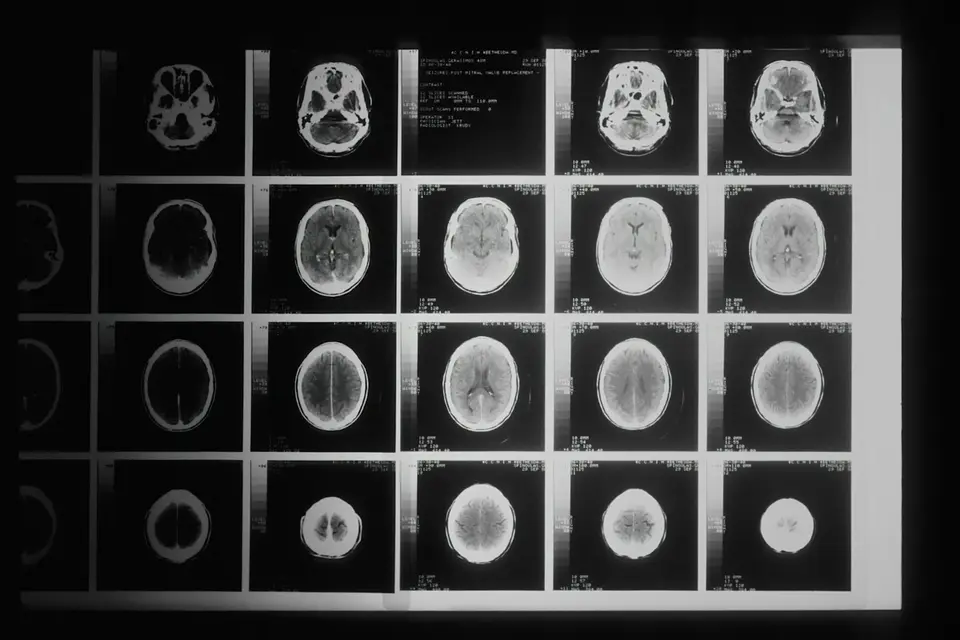
Slow bleeding can produce symptoms weeks after an injury
A subdural hematoma is a collection of blood beneath the dura, the tough outer membrane surrounding the brain. Chronic collections differ from epidural hematomas, which form between the skull and dura, and treatment decisions depend on the scan rather than the name a witness assigns to the injury.
A 2021 clinical review identified head trauma, antithrombotic medicine and age-related space between the brain and skull as factors associated with chronic subdural hematoma. The review describes slow venous bleeding as one part of a more complex process that can include inflammation, fragile new vessels and repeated leakage into the collection.
Age raises concern but does not establish a diagnosis. Headache, confusion, reduced alertness, gait change and limb weakness also occur in other urgent conditions, so clinicians use neurological assessment and brain imaging to identify the cause.

Blood-thinner use changes the head-injury assessment
Anticoagulants and antiplatelet medicines reduce harmful clotting for conditions such as atrial fibrillation, previous stroke and coronary artery disease, but they can also increase bleeding risk. Do not stop or change a prescribed medicine after a fall without instructions from the clinician responsible for it.
Protocols vary by country. The US Centers for Disease Control and Prevention says clinicians should strongly consider imaging after mild head injury in adults taking anticoagulants or antiplatelet treatment other than aspirin and should not use decision rules to exclude the need for CT. Health systems elsewhere may use different rules.
Medication decisions also depend on why the drug was prescribed and what a scan shows. The NHS advises patients to stop anticoagulant medicine only on the advice of a doctor or another health professional.

CT findings and symptoms guide treatment
Computed tomography (CT) is commonly used to detect the collection and show its size and effect on the brain. A small hematoma causing only mild symptoms may be monitored, but the NHS says most subdural hematomas require surgery.
Burr-hole surgery drains the collection through one or more small openings in the skull; a craniotomy removes a larger section of skull temporarily when needed. A systematic review of 21 studies in adults aged 65 or older found that surgery was associated with favorable neurological outcomes, although the reasons for surgery and the treatment threshold varied case by case.
Recovery is not guaranteed, and the hematoma can return. A 2023 systematic review and meta-analysis estimated 12.8 percent recurrence after burr-hole surgery with postoperative drainage in the highest-quality studies it included. The authors reported substantial variation across studies, which limits how precisely that pooled figure predicts an individual's outcome.
Artery embolization has evidence but unresolved limits
Middle meningeal artery embolization blocks vessels thought to sustain a chronic hematoma and may be used alone or alongside standard treatment in selected patients. Its place in care is still being defined, and it is not a substitute for emergency evacuation when a neurosurgical team determines that pressure on the brain requires surgery.
A 2025 meta-analysis of three randomized trials involving 1,432 patients found that embolization did not produce a statistically conclusive reduction in the combined primary outcome of progression or recurrence across all patients. The analysis found a reduction in progression among nonsurgical cohorts, but no improvement in functional outcome and no clear recurrence reduction among surgical cohorts.
Fall prevention addresses the next injury, not the current diagnosis
Once urgent assessment and treatment are complete, a new fall-risk review can address hazards that contributed to the injury. The World Health Organization lists gait and balance training, home assessment and modification, and individualized multifactorial assessment among fall-prevention measures for older people.
These measures do not treat an existing hematoma. New confusion, weakness, speech difficulty or worsening balance after another impact still requires medical assessment rather than observation at home.
Children, pregnancy and chronic illness require individual assessment
Children can also develop subdural hematomas, but this guide's surgical evidence concerns adults and should not be applied as a pediatric treatment rule. A child with warning signs after a head injury needs urgent assessment under local pediatric protocols.
APPI News could not find separate international guidance for chronic subdural hematoma during pregnancy at the time of writing. A pregnant person with head-injury warning signs should receive urgent clinical assessment, with imaging and treatment chosen by the responsible team.
Older adults with chronic heart, kidney or liver disease may have different bleeding, anesthesia and medication risks. Their clinicians need the complete diagnosis list and medicine record; family members should not infer a treatment plan from age or symptoms alone.
Frequently asked questions
Can a minor head injury cause symptoms weeks later?
Yes. The NHS says subdural hematoma symptoms may appear gradually over several weeks, so a clinician should be told about earlier falls or impacts when new neurological symptoms develop.
Can confusion or poor balance be treated as normal aging?
No new neurological change should be assigned to aging without assessment. Confusion, memory or personality change, drowsiness, loss of balance and one-sided weakness are among the symptoms listed by the NHS.
Should blood-thinner medicine be stopped after a fall?
Not without professional instructions. The clinician must balance bleeding risk against the clotting risk for which the medicine was prescribed.
Does every chronic subdural hematoma require surgery?
No. Small collections with mild symptoms may be monitored, while most diagnosed subdural hematomas need surgery; the scan, symptoms and overall health determine the plan.
Does burr-hole drainage prevent recurrence?
It removes the collection but does not eliminate recurrence. A large meta-analysis estimated 12.8 percent recurrence in its highest-quality studies of burr-hole surgery with postoperative drainage.
Sources and further reading
- Subdural haematoma(National Health Service, England)
- Key Recommendations for the Care of Adult Patients with Mild Traumatic Brain Injury(US Centers for Disease Control and Prevention)
- Anticoagulant medicines: considerations(National Health Service, England)
- Chronic Subdural Hematoma: A review of the current state of the art(Brain and Spine)
- Surgical Management of Chronic Subdural Hematoma in Older Adults: A Systematic Review(The Journals of Gerontology: Series A)
- Recurrent Chronic Subdural Hematoma After Burr-Hole Surgery and Postoperative Drainage: A Systematic Review and Meta-Analysis(Operative Neurosurgery)
- Middle meningeal artery embolization for chronic subdural hematoma: meta-analysis of three randomized controlled trials(Acta Neurochirurgica)
- Falls(World Health Organization)