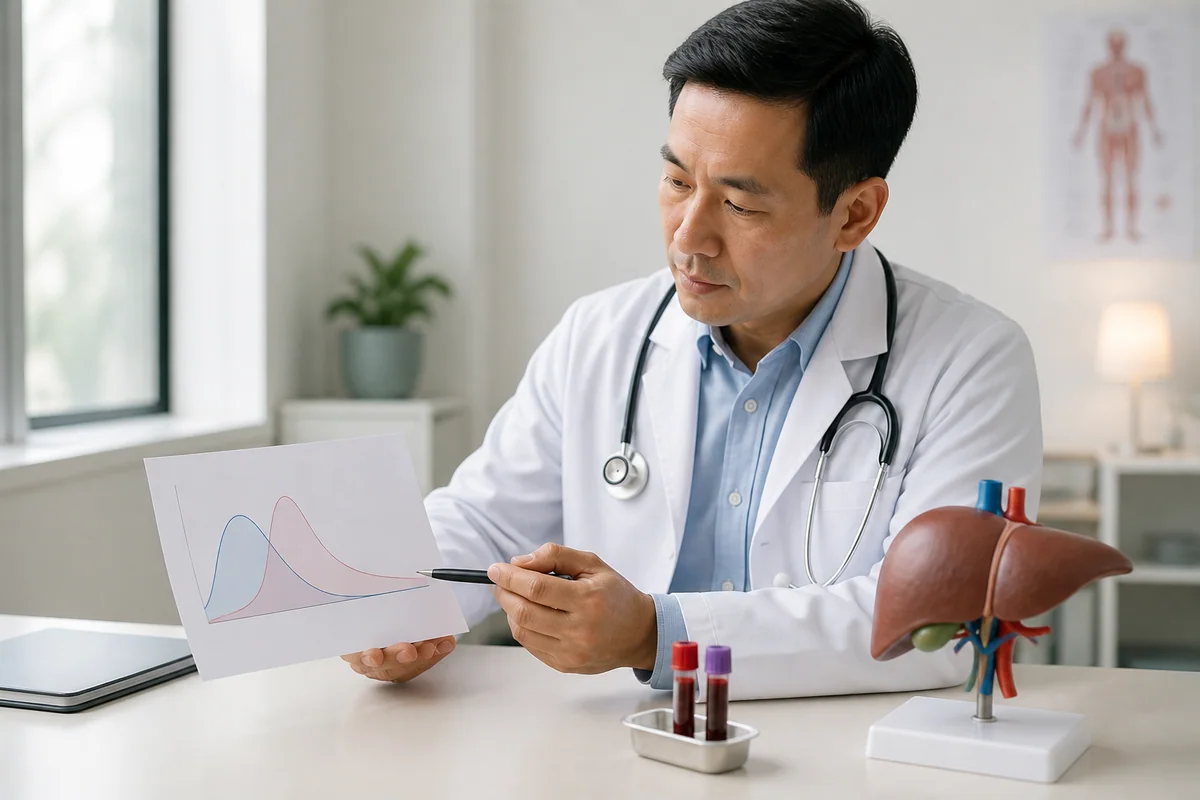
A mildly raised thyroid-stimulating hormone (TSH) result with free thyroxine (free T4) still inside the laboratory range often leads to repeat blood tests rather than immediate treatment. Treatment becomes more likely when the result persists, TSH reaches a higher level, symptoms or thyroid antibodies point to underlying disease, or pregnancy changes the clinical stakes.
This pattern is called subclinical hypothyroidism. It describes laboratory findings, not a conclusion about why the result changed or whether a person needs medicine.
Severe symptoms, pregnancy and a low free T4 need faster assessment
The United Kingdom National Health Service says a body temperature below 35 degrees Celsius is a medical emergency and lists slow breathing, tiredness and confusion among the signs of hypothermia. These features have several possible causes, but the same health service identifies myxedema coma as a rare, life-threatening complication of severe hypothyroidism that requires hospital treatment.
A raised TSH accompanied by free T4 below the reference range is not the subclinical pattern covered by most of this guide and needs clinical review. It should not be managed by following the retesting and treatment thresholds for subclinical hypothyroidism alone.
Anyone who is pregnant or planning pregnancy should contact a clinician promptly after an abnormal thyroid result. Pregnancy uses different reference ranges and treatment thresholds, and an existing levothyroxine dose may need adjustment.

TSH and free T4 answer different questions
The pituitary gland releases TSH to signal the thyroid to make hormone. When circulating thyroid hormone falls, TSH usually rises; when thyroid hormone rises, TSH usually falls. The feedback system makes TSH a sensitive first test, but it also means an isolated result cannot identify the cause.
Subclinical hypothyroidism is the combination of TSH above the relevant reference range and free T4 within range. The European Thyroid Association guideline divides persistent results into mild elevation from 4.0 to 10.0 mIU/L and a higher category above 10 mIU/L. Those categories help organize decisions; they do not override the range printed by the testing laboratory.
Reference limits vary with the assay and population. Age also matters: the same European guideline advises using age-specific TSH ranges in older adults because the upper end of the distribution rises with age.
One raised result does not confirm a persistent condition
TSH can change after a recent illness, with some medicines and through normal biological variation. The European guideline recommends repeating TSH and free T4 and checking thyroid peroxidase antibodies after two to three months when TSH is initially raised but free T4 is normal. The interval helps separate a persistent pattern from a temporary change.
Thyroid peroxidase antibodies can support an autoimmune cause and indicate a greater chance of progression, but a positive antibody test does not determine treatment by itself. Previous thyroid surgery, radioactive iodine treatment, symptoms and other clinical findings also affect the decision.
Normalization without treatment is common at the milder end. The United Kingdom National Institute for Health and Care Excellence (NICE) says TSH between 5 and 10 mIU/L may return to the reference range without treatment in about half of people. Results above 10 mIU/L are less likely to normalize, according to the same evidence review.

Treatment depends on repeated results and clinical context
NICE says clinicians should consider levothyroxine for adults with TSH of at least 10 mIU/L on two tests taken three months apart. For adults younger than 65 whose TSH remains above range but below 10 mIU/L, it recommends considering a six-month trial only when symptoms are present. If symptoms persist after TSH returns to range, the guideline says stopping treatment should be considered.
This is a decision threshold in one national guideline, not a universal instruction to start medicine at a single reading. Symptoms such as fatigue, constipation and weight change are common and can have causes unrelated to the thyroid. A clinician can weigh the pattern of results, symptoms, antibodies, age, heart disease and the risks of overtreatment.
The trial evidence supports restraint for routine treatment of mild cases. A 2018 systematic review of 21 randomized trials involving 2,192 nonpregnant adults found that thyroid hormone therapy did not improve general quality of life or thyroid-related symptoms. Most trials involved mild elevations, and only two had a mean baseline TSH above 10 mIU/L, so the result does not settle every higher-risk case.
Starting or changing levothyroxine remains a clinician-led decision. NICE says TSH suppression from overtreatment raises the risk of harm such as atrial fibrillation, particularly in older adults.
Pregnancy, children and older adults follow different pathways
Pregnancy and plans for pregnancy
General adult cutoffs should not be applied unchanged during pregnancy. The American Thyroid Association uses a pregnancy-specific reference range and recommends levothyroxine for subclinical hypothyroidism when thyroid peroxidase antibodies are positive. It uses a higher TSH level as a treatment guide when the antibodies are absent, while acknowledging limits in the evidence.
Someone already taking levothyroxine should contact the treating clinician as soon as pregnancy is confirmed or suspected. Monitoring and dose decisions are more frequent during pregnancy and should not be copied from a general adult schedule.
Children and adolescents
Adult thresholds are not a treatment guide for children. NICE sets separate recommendations by age and TSH level, while growth, congenital thyroid conditions and symptoms change the assessment. A pediatric clinician should interpret an abnormal result and decide the timing of repeat tests.
Older adults and people with chronic illness or medicines
Age-adjusted reference ranges and a more conservative approach may be appropriate in older adults with a mild elevation. People with heart disease, osteoporosis, another autoimmune condition or medicines that can affect thyroid function need an individualized review before treatment changes. Prescription medicines should not be stopped because of a screening result without advice from the treating clinician.
Kelp and iodine supplements are not a treatment for a high TSH
Iodine is required to make thyroid hormones, but a high TSH result does not establish iodine deficiency. Iodine status varies between countries and with salt-fortification programs, diet and pregnancy, so a population recommendation cannot diagnose an individual's cause.
Seaweed can contain large and highly variable amounts of iodine. The US National Institutes of Health Office of Dietary Supplements says high iodine intake can raise TSH and cause hypothyroidism in susceptible people. People with autoimmune thyroid disease may react adversely at intakes considered safe for the general population.
The same source lists an adult US recommended dietary allowance of 150 micrograms a day, but pregnancy targets and public-health policies differ internationally. That figure is not a supplement instruction. Anyone with thyroid disease, pregnancy, a restricted diet or an iodine-containing medicine should discuss iodine intake with a clinician before adding kelp or iodine supplements.
Frequently asked questions
Does a high TSH mean the thyroid has failed?
No. When free T4 remains within range, the result fits the laboratory definition of subclinical hypothyroidism. Repeat testing and clinical context are needed before deciding whether the finding is persistent or requires treatment.
When should the test be repeated?
The European guideline recommends repeating TSH and free T4 after two to three months and checking thyroid peroxidase antibodies. A clinician may choose a different interval if pregnancy, severe symptoms, a low free T4 or another medical issue changes the urgency.
Does TSH above 10 mIU/L always mean immediate treatment?
Not from one result alone. NICE considers levothyroxine after TSH is at least 10 mIU/L on two tests three months apart. Pregnancy, age and other findings require different pathways.
Will levothyroxine improve fatigue when TSH is mildly raised?
Not reliably. The cited meta-analysis found no average improvement in thyroid-related symptoms or quality of life among nonpregnant adults, most of whom had mild TSH elevation. An individual trial may still be considered under a clinician's supervision when symptoms and repeated results support it.
Should kelp or iodine be added after a high TSH result?
No cause can be inferred from TSH alone. Excess iodine can also disrupt thyroid function, and iodine needs differ with pregnancy, diet and national fortification programs.
Sources and further reading
- Thyroid disease: assessment and management — recommendations(United Kingdom National Institute for Health and Care Excellence)
- Thyroid disease: assessment and management — rationale and impact(United Kingdom National Institute for Health and Care Excellence)
- 2013 ETA Guideline: Management of Subclinical Hypothyroidism(European Thyroid Journal via PubMed Central)
- Association of Thyroid Hormone Therapy With Quality of Life and Thyroid-Related Symptoms(JAMA via PubMed Central)
- Management of Hypothyroidism During Pregnancy: When and how to treat?(American Thyroid Association)
- Iodine: Fact Sheet for Health Professionals(US National Institutes of Health Office of Dietary Supplements)
- Underactive thyroid (hypothyroidism)(United Kingdom National Health Service)
- Hypothermia(United Kingdom National Health Service)