The World Health Organization (WHO) designated PQ.16.1.1 a SARS-CoV-2 variant under monitoring on July 27, 2026. Its initial evaluation rated the additional global public health risk as low while warning that the evidence remained limited and geographically concentrated.
WHO separately rated the overall global COVID-19 risk as moderate on July 30, 2026, with low confidence because surveillance had weakened. The two ratings answer different questions: one concerns COVID-19 globally, while the other asks whether PQ.16.1.1 adds risk relative to other circulating lineages.
Emergency warning signs come before variant labels
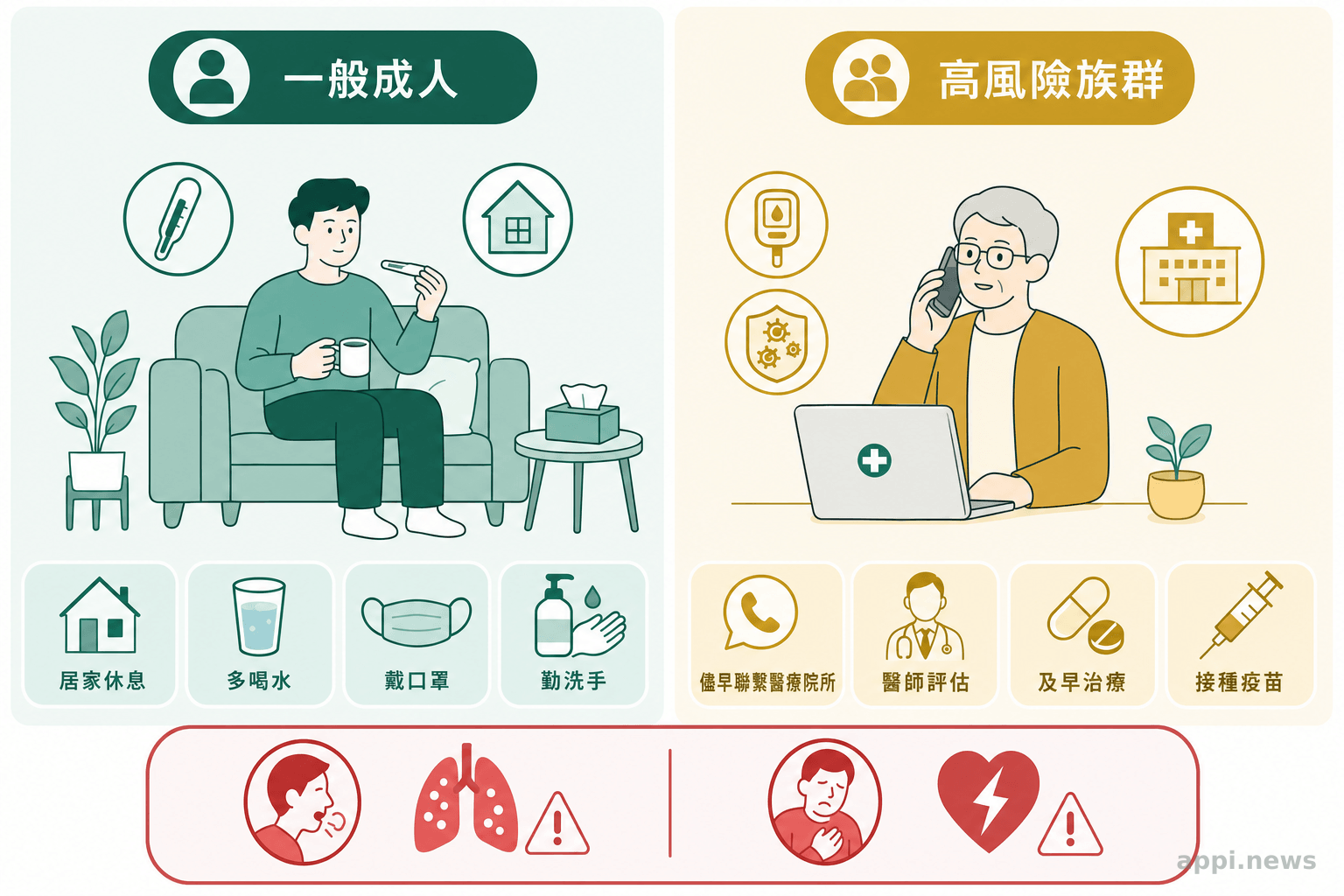
WHO advises immediate medical attention for difficulty breathing at rest or an inability to speak in sentences, confusion, drowsiness or loss of consciousness, persistent chest pain or pressure, cold or clammy skin that turns pale or blue, and loss of speech or movement. These warning signs take priority over waiting for a home-test result or a routine appointment.
The same WHO fact sheet lists fever, chills and sore throat as the most common symptoms reported for circulating variants, with cough, fatigue, congestion, headache and muscle aches among other possible symptoms. Symptoms alone do not determine whether an illness will become severe or which treatment is appropriate.
A monitoring label calls for more evidence
WHO defines a variant under monitoring as a lineage with genetic changes suspected of affecting virus characteristics and early signs of a growth advantage, but unclear epidemiological or biological effects. The classification triggers closer tracking and reassessment; it does not establish greater transmissibility, more severe disease or reduced vaccine performance.
For PQ.16.1.1, WHO found that the mutation pattern might permit extra immune escape, but direct evidence was limited and preliminary plasma results were broadly similar to those for its parent lineage, NB.1.8.1. The mechanism behind the lineage's growth remained uncertain.
Sequence growth comes with large blind spots
As of July 8, WHO's evaluation covered 457 PQ.16.1.1 sequences from eight countries, of which 95.8 percent came from the Western Pacific and 84.9 percent from Singapore. Among available global sequences, the lineage's share rose from 2.7 percent in epidemiological week 18 to 29.6 percent in week 25.
Those percentages describe the mix of submitted sequences, not the share of all infections, confirmed cases or visits to health services. WHO assigned low confidence to the growth assessment because weekly denominators were small or uneven in several places and the estimate was not adjusted for country, sampling intensity, reporting delays or changes in sequencing practice.
WHO had no published comparative study of PQ.16.1.1 clinical severity and no lineage-specific study of diagnostic performance or direct antiviral susceptibility. Available surveillance had not indicated greater severity than other circulating variants, but declining hospitalization and death reporting limited the ability to detect small changes.
Higher-risk groups need earlier clinical assessment
WHO says severe COVID-19 continues to fall disproportionately on older adults, people with comorbidities, people who are immunocompromised and pregnant people. Its 2026 vaccination guidance leaves age cutoffs to countries, so age 65 is not a worldwide boundary for risk or vaccine eligibility.
The WHO fact sheet tells people at risk of severe disease to seek medical care early and lists conditions including diabetes, obesity, chronic lung, heart, liver or kidney disease, cancer, dementia and immune suppression. A clinician still has to assess the condition's severity, current medicines and the course of the infection for the individual patient.
Treatment decisions depend on risk, timing and local rules
WHO says health professionals select COVID-19 treatment according to disease severity, the risk of deterioration, age, symptoms, coexisting conditions and other individual factors that may interfere with a treatment. A test result alone does not establish that a prescription medicine is suitable; treatment remains a clinician's decision.
WHO's August 2025 living guideline contains therapeutic recommendations for people with COVID-19 and separates treatment from drugs intended to prevent infection. Authorization, eligibility, supply and prescribing rules vary by country; no universal medicine list applies across markets.
Pregnancy, children and immune conditions require a separate review
WHO identifies pregnancy and immune suppression as reasons for early medical advice and notes that children can rarely develop a severe inflammatory syndrome several weeks after infection. General adult treatment examples should not be applied to these groups; local pediatric, obstetric or specialist guidance should govern care.
Vaccines target severe outcomes, while access stays national
WHO says real-world evidence continues to show that COVID-19 vaccination reduces severe disease and death, with older adults, care-facility residents and people who are moderately or severely immunocompromised among the highest-priority groups. The agency asks countries to set schedules from local epidemiology, population needs, cost-effectiveness and delivery capacity.
WHO published its current position paper on COVID-19 vaccines on July 31, 2026, covering schedules, product choice and implementation across different populations and settings. National programs still determine which products are authorized, who is eligible and whether vaccination is publicly funded.
WHO had no PQ.16.1.1-specific vaccine-effectiveness estimate, although it expected existing vaccines to continue protecting against severe disease. That expectation does not establish equal protection against infection or the same outcome for every patient.
WHO's prevention guidance includes staying away from others when ill or testing positive, wearing a well-fitted mask around other people when symptomatic, cleaning hands and improving indoor ventilation. Local testing, isolation and workplace requirements can differ.
APPI News did not verify authorization, eligibility, supply, price or public coverage for COVID-19 tests, treatments or vaccines in every market. Regulatory status and availability vary by country, so national guidance and individual clinical judgment remain necessary.
Common questions
Does a variant-under-monitoring label mean PQ.16.1.1 is more dangerous?
No. WHO rated its additional global public health risk as low and found no reported increase in severity, but confidence was limited by sparse clinical and sequencing data.
Do rising sequence proportions show how many people have COVID-19?
No. They show the share of submitted sequences assigned to a lineage and cannot be converted directly into infections, confirmed cases or medical visits.
Has PQ.16.1.1 made vaccination ineffective?
WHO had no lineage-specific effectiveness estimate at the time of its assessment. It expected existing vaccines to retain protection against severe disease, while national schedules and product access continued to differ.
Does a positive home test determine which treatment to use?
No. WHO says health professionals choose treatment from disease severity, risk factors, symptoms, coexisting conditions and other individual considerations.
Sources and further reading
- Tracking SARS-CoV-2 variants(World Health Organization)
- WHO TAG-VE risk evaluation for SARS-CoV-2 variant under monitoring PQ.16.1.1(World Health Organization)
- WHO COVID-19 global risk assessment, version 10(World Health Organization)
- Updated working definitions and primary actions for SARS-CoV-2 variants(World Health Organization)
- Coronavirus disease (COVID-19) fact sheet(World Health Organization)
- Therapeutics and COVID-19: living guideline, August 2025(World Health Organization)
- COVID-19 vaccine guidance(World Health Organization)
- WHO position paper on COVID-19 vaccines, July 2026(World Health Organization)