KTC warned in a notice reported by Fast Technology on August 14, 2026, that higher component costs could force later price increases across its monitor range. AOC had already raised prices across its China monitor range on August 1, but neither report gave a percentage or confirmed a matching global change.
The evidence supports one implemented adjustment and one warning, both reported in China. It does not support a single worldwide increase or a fixed timetable for every model.

AOC made a price change; KTC signaled one
Edmond Technology (Wuhan) Co., Ltd., which operates AOC's monitor business in mainland China, issued the AOC notice reproduced by VideoCardz. The notice covered the full product range and said the amount would vary by product, without listing percentages or new suggested prices.
Fast Technology said KTC issued a notice titled “Explanation and commitment regarding product price adjustments.” The report said higher core-component costs had become difficult for KTC to absorb and that prices across its monitor range might rise later, but it supplied no increase, effective date or model list.
The distinction matters: AOC communicated an effective price change, while KTC communicated the possibility of one. A warning from a vendor is not evidence that every retailer has changed its price.
APPI News could not locate a matching release on either brand's public website at the time of writing. The available record is therefore VideoCardz's reproduction and translation of the AOC notice, plus Fast Technology's account of the KTC notice.
The reports do not establish a global increase
The AOC report explicitly places the adjustment in the company's China distribution channel. Fast Technology's KTC report did not provide an overseas timetable or a market-by-market price list.
Neither source supports treating a China notice as a price change in Europe, Africa, the Americas or the rest of Asia. Local taxes, exchange rates, distributor inventory, promotions and warranty terms can produce different prices for the same model in different countries.
The notices attributed pressure to components and raw materials. Their silence on currencies or tariffs does not prove those factors have no effect on a particular seller; it only limits what can be attributed to the brands from these documents.
How this plays out outside Taiwan
A China distributor notice does not tell a buyer what an AOC or KTC monitor should cost in another market. A useful local check starts with the exact model number, because a retailer may sell a product with a different power cable, warranty channel, panel specification or refresh-rate configuration under a similar name. Record the advertised price, the date, the seller, the delivery charge and whether sales tax is included. A later price that looks higher may reflect tax display or shipping terms rather than a new manufacturer list price.
Singapore is a clear example of why the checkout total matters. The Inland Revenue Authority of Singapore lists the current GST rate as 9 percent, and its guidance says GST-registered businesses generally charge that rate on local sales unless an exception applies. A Singapore comparison should therefore record whether a quoted monitor price is GST-inclusive and whether an overseas seller is charging import-related taxes at checkout. The tax rule does not show that AOC or KTC raised prices; it shows why two listings cannot be compared by headline number alone.
Singapore buyers can also ask the seller for the local warranty provider and the return process before paying. A monitor imported through a marketplace may have a lower listed price but a different route for dead pixels, shipping damage or a replacement. Keep the invoice and the product code. Those records make it possible to distinguish a retailer promotion from a replacement-cost increase if the same listing changes later.
In the United Kingdom, the purchase is governed by a different consumer framework. GOV.UK directs consumers to help for faulty goods and other problems with purchases made in person or remotely. The UK government’s summary of the Consumer Rights Act 2015 describes remedies such as repair or replacement when goods are faulty. For a monitor buyer, that makes the identity of the retailer important: a manufacturer announcement about component costs is not the same thing as a legal change to the customer’s rights, and a seller’s warranty wording does not by itself replace statutory protections.
UK shoppers should save the product page and the invoice if a listing changes after an order. Check whether the displayed price includes delivery and whether the item is sold by the marketplace operator or by a separate merchant. A price cut on an older revision can sit beside a higher price for a newly imported revision. The AOC and KTC reports do not provide the model-level evidence needed to connect either event to the August notices.
Australia adds another useful distinction between an overseas listing and a local remedy. The Australian Competition and Consumer Commission says Australian Consumer Law consumer guarantees can apply when an overseas business sells directly to Australian consumers, while also warning that obtaining a repair, replacement or refund from an overseas business can be difficult in practice. The ACCC explains that the business that sold the product is generally the first contact for a problem. A buyer comparing an imported monitor with one supplied by an Australian retailer should therefore compare not only the price, but also who will handle a faulty unit and where it must be returned.
That is the practical test for readers outside China: use the local seller’s dated listing as evidence of a local price, use the tax authority’s guidance to interpret the total, and use the consumer agency’s rules to assess the cost of a defect. None of these sources confirms a worldwide AOC or KTC increase. They show why the answer can differ by market even when the product name is the same. APPI News could not verify a standardized public price series covering both brands across these countries, so readers should treat a local quote as evidence for that model and seller only.
Panel concentration is real, but the closure scenario is conditional
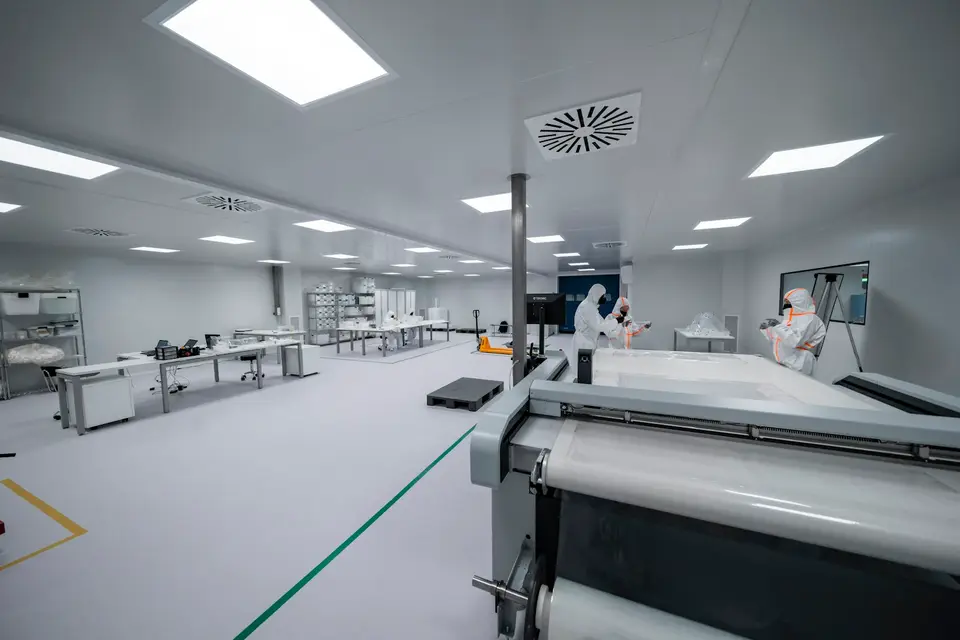
TrendForce estimated that China's three largest panel makers would supply 74 percent of global LCD monitor panels in 2026, while LG Display continued reducing LCD production in favor of OLED. The research firm said the LCD monitor panel supply-demand balance was expected to become increasingly stable.
TrendForce also said global LCD monitor panel supply would fall by nearly 5 million units if Taiwan-based panel maker AUO closed its L6A fab. The word “if” is central: the report modeled a possible closure rather than reporting a final decision.
Those figures describe supplier concentration and a potential removal of capacity. They do not show that monitor panels were already in a global shortage in August, and they do not forecast a retail price for any AOC or KTC model.

Component pressure does not set a retail percentage
AOC's notice identified chips and motherboards, while the KTC report referred more broadly to core components. Neither disclosed how much those inputs had risen or what share of a monitor's total cost they represented.
A manufacturer can absorb part of an increase, change discounts, alter a configuration or pass the cost through after older inventory is sold. That is why an upstream increase cannot be applied directly to a store price without a model-specific notice or dated retail evidence.
Neither notice tied the change to DRAM, NAND Flash or AI data centers. Separate memory-price forecasts for computers and graphics cards cannot establish the cause or size of a monitor adjustment without data linking those markets.
A purchase decision needs local, model-specific evidence
A usable comparison starts with the same model number, screen technology, resolution, refresh rate and warranty in the same country. Prices should include taxes and delivery, because a lower headline figure may reflect different terms rather than a cheaper monitor.
Dated quotes or price histories from several authorized sellers can show whether a local price has moved. A promotion on older stock can coexist with higher replacement costs, while a brand warning can appear before any retailer changes a listing.
An urgent replacement and an optional upgrade create different timing constraints. The reports justify monitoring local offers, but they do not support a universal instruction to buy immediately or a prediction that prices will rise by a particular amount.
Frequently asked questions
Did both brands confirm a monitor price increase?
No. AOC's reproduced notice described an effective increase for its China range from August 1, while the KTC report described a possible later increase.
How large is the increase?
Neither report supplied a percentage, a new price list or model-level amounts. AOC said the adjustment varied by product, and KTC did not give an effective date.
Are AOC and KTC monitors becoming more expensive worldwide?
The cited evidence does not establish that. AOC's notice was specific to China, and the KTC report documented no matching rollout in other markets.
Does the TrendForce report prove an immediate panel shortage?
No. It projected high supplier concentration and modeled tighter conditions if AUO closed L6A, while also saying the LCD monitor panel balance was expected to become increasingly stable.
Sources and further reading
- AOC raises monitor prices in China starting this month(VideoCardz)
- KTC says monitor prices may rise as component costs climb(Fast Technology)
- Capacity Rationalization by Taiwan's Two Panel Giants to Reshape TV, Monitor, and Notebook Panel Supply by 2028(TrendForce)
- Consumer rights(GOV.UK)
- Consumer rights and guarantees(Australian Competition and Consumer Commission)
- Current GST rates(Inland Revenue Authority of Singapore)