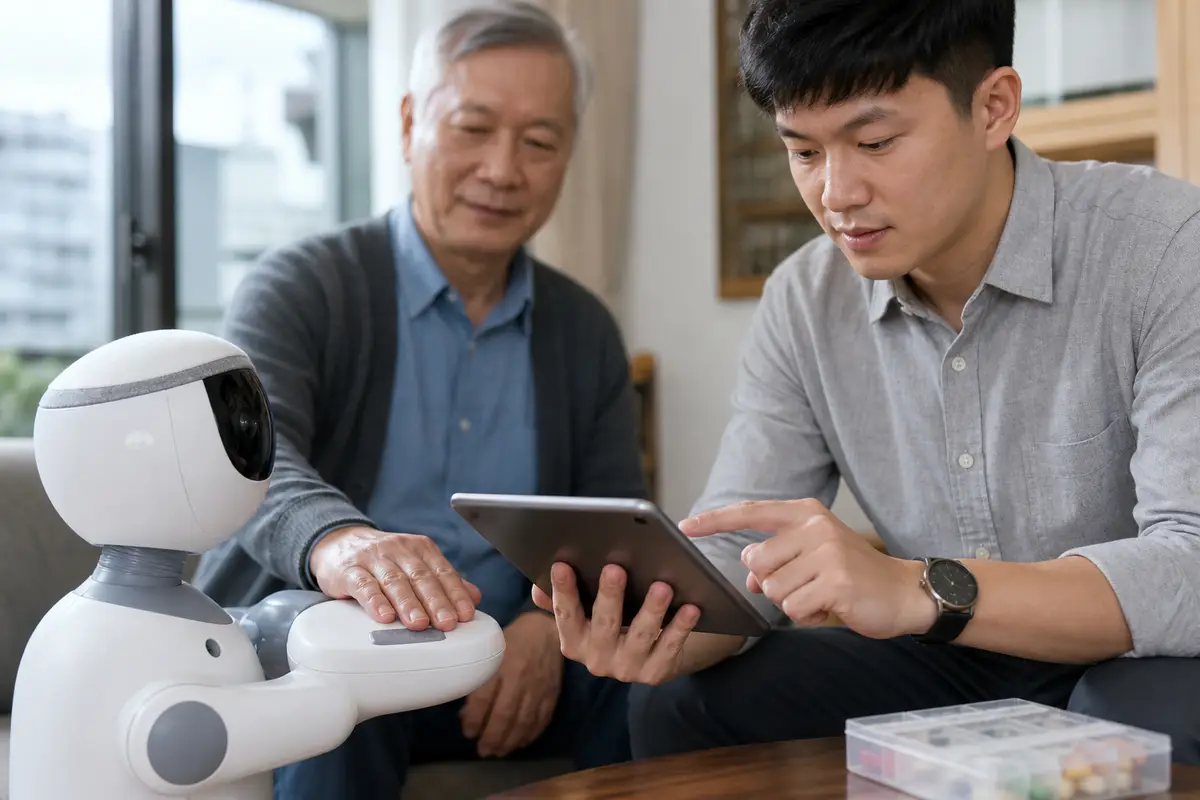
Taiwan added 17 smart assistive products to a long-term-care rental benefit on July 1, 2026. Taiwan's Ministry of Health and Welfare, which administers the country's health and social-care policies, said the first group covers mobility, toileting and bathing, home care beds, and safety monitoring.
The benefit provides up to NT$60,000 every three years. That was about US$1,900 using Bank of Taiwan's quoted spot rate on August 9, 2026. The larger issue for families and care assessors is what the public documents do not show: product-level error rates, test conditions and an explanation of how each monitoring system reaches a decision.
The published list does not define the technology
The ministry uses “smart assistive products” as an administrative category. It says eligible equipment can be assessed for function, information and communications features, and safety certifications, but that wording does not mean every listed product uses artificial intelligence.
The ministry's one-page list identifies each product by name, model, supplier and payment code. Several names include “AI” or “AIoT,” while others use terms such as “smart” or “sensing.” The document does not state whether a device uses a learned model, fixed rules or both, and it does not report false alarms or missed events.
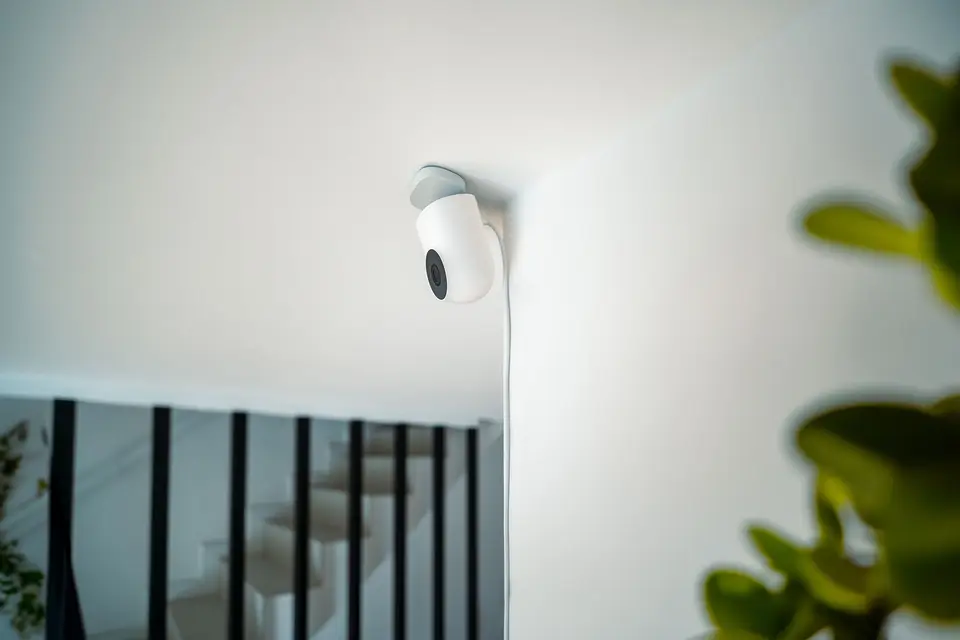
AI and fixed thresholds can operate in the same system
A simple AI-versus-sensor split can also misdescribe how fall-detection systems work. Sensors collect signals; software then interprets those signals through rules, statistical models or a combination of methods. The label attached to the product does not reveal that processing chain.
One research system, mmFall, shows the overlap. The system used millimeter-wave radar point clouds and a recurrent autoencoder to learn patterns in normal movement, then combined the model's anomaly score with a fixed 0.6-meter threshold for a drop in body-centroid height. Calling it either purely adaptive AI or purely threshold-based would leave out part of its design.
The researchers detected 49 of 50 staged falls with two false alarms in an apartment dataset. That result describes a prototype and its chosen test conditions, not the 17 products in Taiwan's program. It also illustrates why a percentage without the number and type of trials gives buyers little basis for comparison.
Test setting matters as much as the headline number
A separate peer-reviewed study published in February 2026 tested a multi-radar system in a 12-by-12-meter indoor area. The study reported 97.9 percent overall accuracy across simulated multi-person scenarios, while the false-negative rate rose as more people entered the monitored area.
The experiment involved 10 healthy adults, not frail older adults experiencing unplanned falls. Its authors said simulated soft falls could not fully represent real events and that obstacles may affect performance. Those limits are material in homes, where furniture, room layout, visitors and the position of the sensor vary.
Earlier evidence points to the same validation gap. A systematic review of 92 fall-detection projects found that only 7.1 percent of wearable-device projects had monitored older adults in real-world settings, while none of the nonwearable projects had tested with older adults in laboratory or real-world settings. The review covered literature through June 2013, so it does not measure the current market, but its call for standardized, real-world evaluation remains relevant to how performance claims are read.

Procurement needs specifications, not marketing categories
The distinction matters beyond whether a product carries an AI label. Monitoring equipment can differ in the events it detects, the rooms and positions in which it was tested, the time before an alert is sent, and the rates of false alarms and missed events. Camera use, local or cloud processing, retention periods and access permissions create separate privacy questions.
World Health Organization guidance for assistive-product procurement says specifications should set minimum requirements for technical performance and function. The guidance covers 26 product types and is not a standard for home fall detectors, but its procurement principle provides a useful benchmark: a category name alone is not a performance specification.
Taiwan's announcement says professional groups review product function, communications features and safety certifications before assigning payment codes. The public list does not show the resulting evidence at product level. APPI News could not find public false-alarm and missed-event results for all 17 products at the time of writing.
Frequently asked questions
Does Taiwan's “smart assistive product” label mean a device uses AI?
No such conclusion can be drawn from the published list. The list includes AI-branded and smart-branded products but does not describe each product's decision method.
Is a machine-learning fall detector always better than a fixed-rule device?
The cited evidence does not support that general claim. Performance depends on the sensor, algorithm, installation, monitored population and test conditions. Some systems combine learned models with fixed thresholds.
What information is missing from the subsidy list?
The one-page document does not publish product-level false-alarm rates, missed-event rates, evaluation populations, room configurations or decision methods. Those details would be needed for evidence-based comparisons.
Sources and further reading
- Smart assistive-device rental scheme begins with 17 products(Taiwan Ministry of Health and Welfare)
- First smart assistive products listed on the long-term-care database(Taiwan Ministry of Health and Welfare)
- Foreign exchange rate(Bank of Taiwan)
- Assistive product specifications and how to use them(World Health Organization)
- Fall detection devices and their use with older adults: a systematic review(Journal of Geriatric Physical Therapy via PubMed)
- mmFall: Fall Detection using 4D MmWave Radar and a Hybrid Variational RNN AutoEncoder(arXiv)
- Millimeter-wave technology for multi-person fall detection validated through wearable sensors and real-life scenarios(Scientific Reports)