Nvidia entered into multiple residual-value guarantee agreements with SB Energy, a US data center and power developer, on August 17, 2026. The agreements cover leases for about 4.25 gigawatts of information technology load (IT-GW) at the PORTS-Pike Technology Campus in the US state of Ohio, and Nvidia's filing with the US Securities and Exchange Commission (SEC) caps the aggregate payment obligation for that initial commitment at US$105 billion. The figure is a cumulative ceiling on conditional payments, not money already transferred to OpenAI or SB Energy.
OpenAI is the tenant under the leases covered by the guarantees. The obligation generally begins only when an applicable lease starts and SB Energy has met the relevant ready-for-service conditions, which Nvidia expects from 2028.
How the residual-value backstop works
The filing identifies two trigger events: an OpenAI insolvency that causes a lease default, or a failure by OpenAI to make lease payments. Nvidia would then generally cover the shortfall between a contractually defined minimum lease value and the amount recovered through a replacement lease or sale.
Nvidia may instead assume a lease, require SB Energy to seek another tenant, start a sale process, allow the lease to end or defer those remedies for up to one year while paying specified project costs. OpenAI has agreed to reimburse and indemnify Nvidia for amounts the chipmaker actually pays under the guarantees.
The US$105 billion cap therefore does not measure a current cash outlay or an expected loss. Nvidia's filing does not estimate the probability of a trigger or disclose the complete formulas used to calculate the guaranteed minimum value.
Nvidia adds equity and an exclusive supplier role
Nvidia said it will invest US$1.5 billion in SB Energy and serve as the campus's exclusive AI compute infrastructure provider. The first deployment is designed for 4.25 IT-GW, and Nvidia has an option to extend its role across the remaining 3.75 IT-GW. The equity investment is separate from the conditional guarantee exposure.
The Ohio agreement follows a January 2026 transaction in which OpenAI and Japan's SoftBank Group each invested US$500 million in SB Energy. Taken together, the official disclosures show commercial links among the developer, tenant and hardware supplier through equity, leases and credit support; the US$105 billion cap applies to contingent guarantee payments, not an upfront order for Nvidia systems.
Nvidia rejects the circular-financing label
The circular-financing concern arises because Nvidia occupies three roles in the same project: investor in the developer, provider of a conditional backstop tied to the tenant's leases and exclusive supplier of the computing systems. Those links do not establish that OpenAI's demand is artificial, but they place Nvidia's sales opportunity and some of its financial exposure in the same project.
Huang said Nvidia's remaining exposure should decline as OpenAI pays rent and capacity enters service. The SEC filing still records a contingent obligation: if a specified default occurs, Nvidia may have to absorb a shortfall that remains after reletting or a sale.
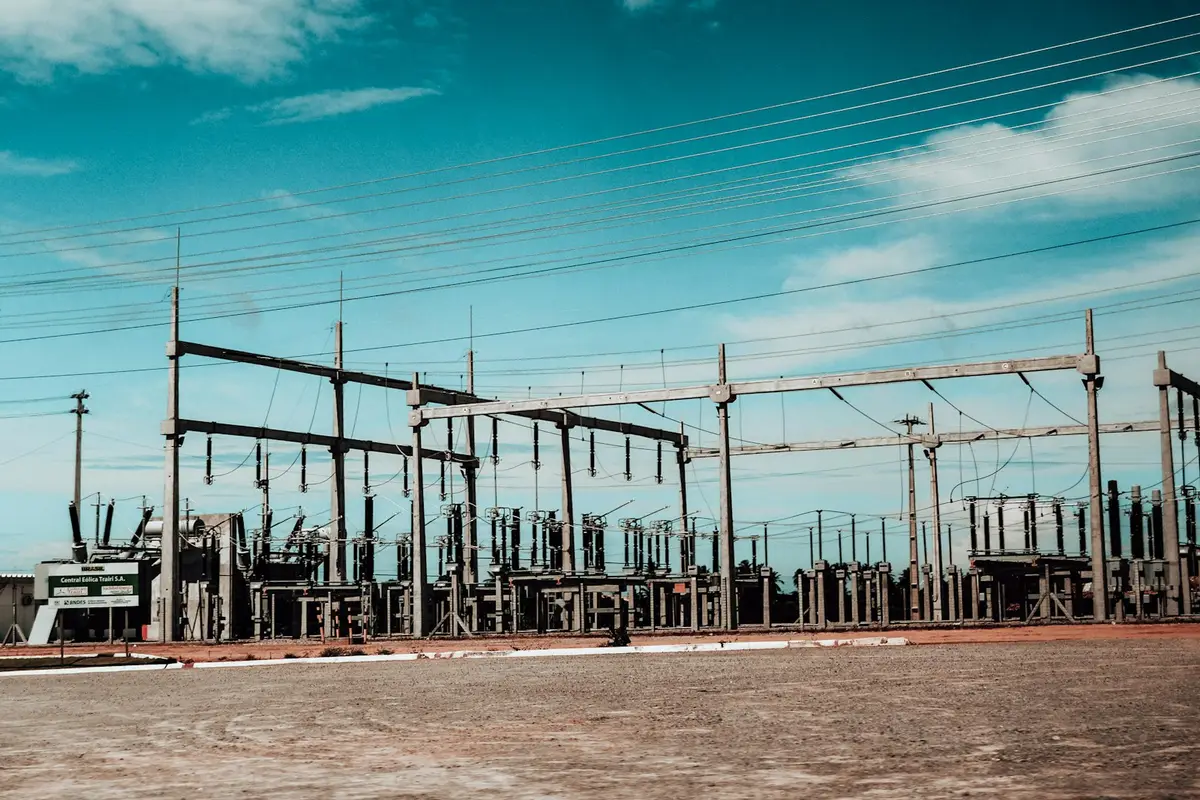
The 8 IT-GW campus depends on a larger power buildout

AEP Ohio said the planned investment, if approved, would include new 765-kilovolt transmission infrastructure and that SB Energy had committed to pay US$4.2 billion for the work. The utility expects power to begin flowing through the new infrastructure in 2029. The 2028 and 2029 dates describe different stages: OpenAI ties the first phase largely to existing equipment, while AEP Ohio's schedule concerns the new transmission buildout.
OpenAI said later development also requires new grid-connected power plants, including natural gas generation. It said the project remains dependent on infrastructure, permits, environmental reviews and financing, so the first 800 MW does not establish that the full 8 IT-GW will arrive on schedule.
Full guarantee contracts remain unpublished
Nvidia's regulatory filing says the forms of the guarantee agreements will be filed with its quarterly report for the fiscal quarter that ended July 26, 2026. APPI News could not review those forms at the time of writing, leaving the complete minimum-value formulas and project-specific conditions outside the current public record.
The filing also makes additional support for about 3.8 IT-GW optional at Nvidia's sole discretion. The announced 8 IT-GW lease and the initial 4.25 IT-GW guarantee commitment are related but different figures, and neither represents completed operating capacity.