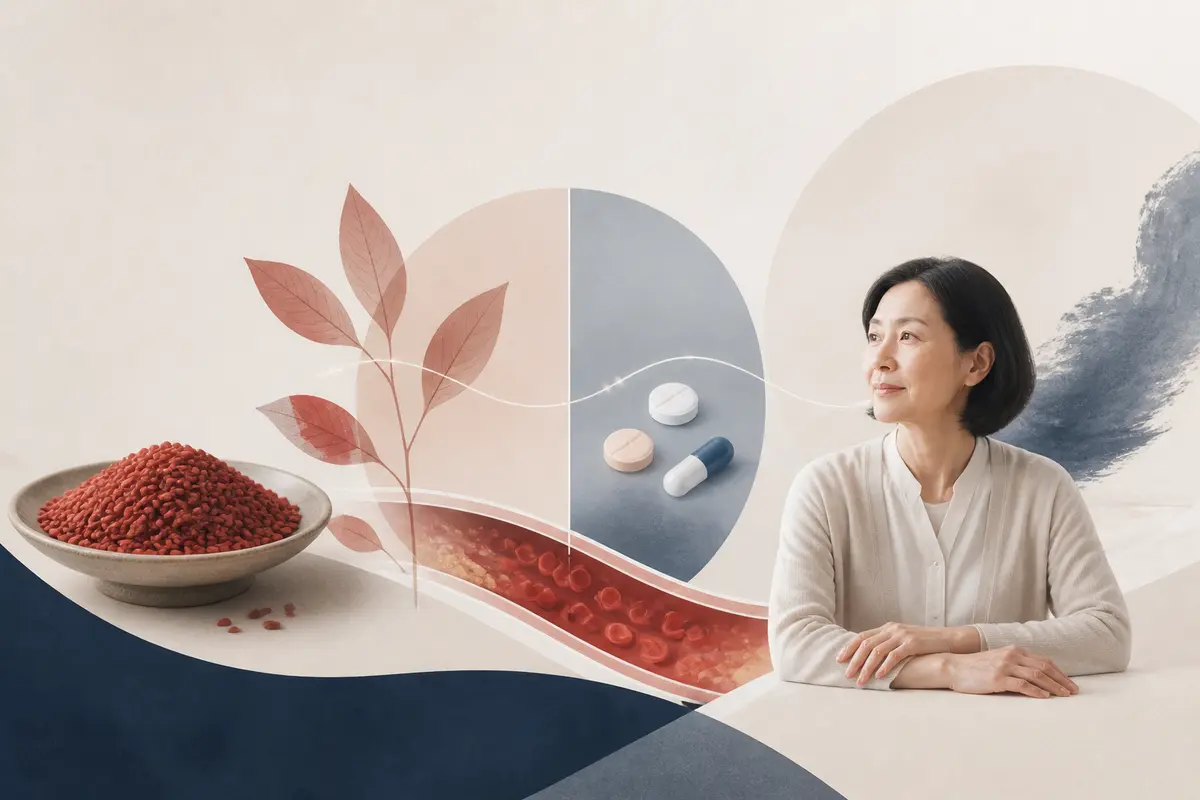
European food-safety assessors said in 2025 that available evidence still could not establish a safe daily intake of monacolins from red yeast rice supplements. Monacolin K is structurally identical to lovastatin, and products may vary in strength and contamination risk.
That combination makes “natural” a poor proxy for safety. Red yeast rice is made by fermenting rice with a fungus, and the resulting monacolins can produce drug-like effects even when sold as food supplements rather than medicines.
When symptoms need urgent care
Stop taking the supplement and seek urgent medical care for unexplained muscle pain, tenderness or weakness, especially with fever or dark-colored urine. Yellowing of the skin or eyes, unusual bleeding, severe fatigue, difficulty breathing or swelling of the face or throat also needs urgent assessment. The US National Library of Medicine lists these among serious symptoms that can occur with lovastatin, the compound structurally identical to monacolin K.
Pregnant or breastfeeding people, children, older adults, and people with liver, kidney or muscle disorders should not assume general adult advice applies to them. Anyone taking prescription medicine, particularly cholesterol-lowering treatment, should ask a clinician or pharmacist to check for duplication and interactions before using a red yeast rice supplement.
Monacolin K is not a gentler substitute for a statin
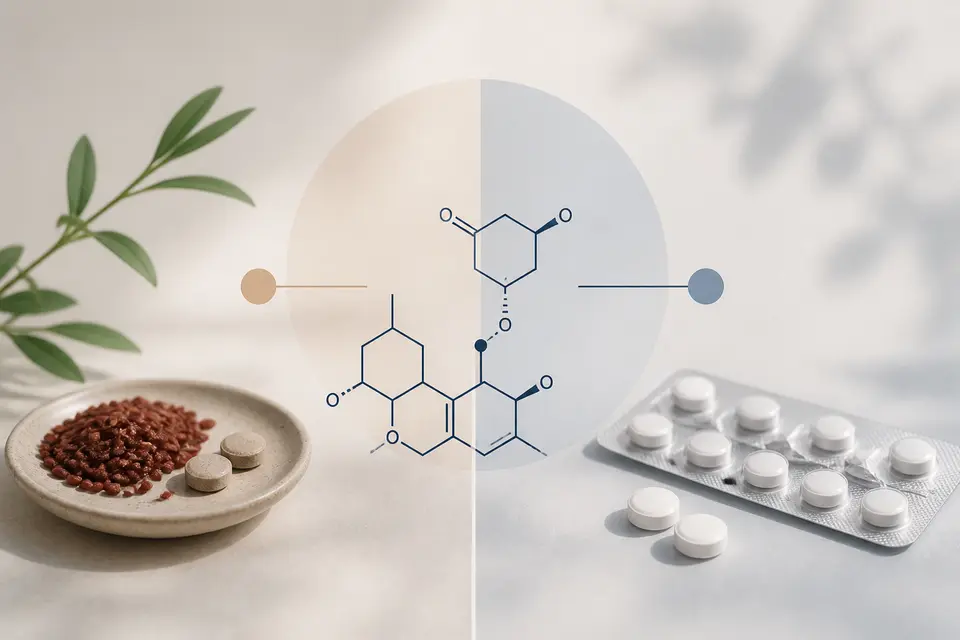
The US National Center for Complementary and Integrative Health says monacolin K is structurally identical to lovastatin. It also says red yeast rice products containing substantial amounts can have the same kinds of muscle, kidney and liver effects and the same kinds of drug interactions as statins.
The amount in a package is not necessarily predictable from the name of the ingredient. The same US health agency cites a 2017 analysis of 28 brands in which none disclosed monacolin K content; among the 26 products with detectable monacolin K, the amount per 1,200 mg of red yeast rice varied more than 60-fold. That US sample does not describe products sold in every country, but it shows why findings from one formulation cannot be applied automatically to another.
This variability also limits claims about cholesterol reduction. A trial of a standardized extract measures that preparation, dose and study population, not every capsule marketed as red yeast rice. Replacing prescribed treatment or adding a supplement to a cholesterol-lowering medicine without clinical review can therefore create an unknown dose and interaction risk.
EFSA still could not identify a safe daily intake
The European Food Safety Authority (EFSA) concluded in its 2025 assessment that the submitted evidence did not establish the safety of monacolins from red yeast rice. It reiterated its concern that exposure at intake levels as low as 3 mg a day could cause severe effects on muscle and liver systems.
EFSA said new post-market surveillance data reinforced its earlier concern that monacolin K exposure at 3 mg a day could cause severe musculoskeletal effects, including rhabdomyolysis, and liver injury. Reports of severe reactions cannot show their frequency by themselves, while trials may be too small or short to detect rare events. Those limitations explain why evidence of average tolerability in a trial does not erase serious case reports.
European Union rules adopted in 2022 require each daily portion to provide less than 3 mg of monacolins from red yeast rice. Labels must state the monacolin content and warn against use by pregnant or breastfeeding people, anyone under 18 or over 70, people taking cholesterol-lowering medicine, and people already consuming another red yeast rice product.
In May 2026, a European Union committee gave a favorable opinion on a European Commission draft that would prohibit monacolins from red yeast rice in food. The cited document records a proposed 12-month transition period; it is a committee report on a draft, not the final regulation.
The current European Union limit is a regional legal rule, not a worldwide dose recommendation. Supplement classifications, permitted composition and labeling requirements differ by country, and a product legal in one market may not meet another market's rules.
Citrinin is one concern, but not the cause found in Japan
Fermentation can introduce risks beyond monacolins. The US National Center for Complementary and Integrative Health says citrinin is a mycotoxin that can damage the kidneys, and its presence depends on production and quality control. A “citrinin-free” claim does not establish that a product has consistent monacolin content or excludes every unintended contaminant.
A 2024 laboratory study tested 35 red yeast rice supplements bought online in Europe and found at least four with a potential safety concern from excessive monacolins or severe bacterial contamination. This was a limited market sample rather than a global failure rate, but it demonstrates that chemical strength and microbiological quality are separate control problems.

The 2024 Kobayashi Pharmaceutical incident in Japan involved another contaminant. Japan's Ministry of Health, Labour and Welfare said Penicillium adametzioides contaminated the factory fermentation process and produced puberulic acid, which caused renal dysfunction in testing. The ministry said two other compounds formed during co-incubation did not cause the renal dysfunction.
The finding does not make citrinin controls irrelevant, and it does not show that all red yeast rice contains puberulic acid. It shows that a limit for one known contaminant cannot prevent every production failure. The Japanese recall and disposal orders applied to three named Kobayashi Pharmaceutical products, not to the entire ingredient category worldwide.
What labels and test reports can and cannot establish
A useful label identifies monacolin content per daily portion, the manufacturer, the lot and the market where the product is legally sold. An independent certificate can support a claim about the tested lot only if it identifies the laboratory, method, detection limit and sample. Neither a label nor a certificate establishes suitability for a person taking medicines or living with a health condition.
Ingredient lists also need to be assessed as a whole. Combining several cholesterol-related ingredients can make it harder to attribute benefits or adverse effects, while taking more than one red yeast rice product can duplicate exposure. A pharmacist or clinician needs the exact products and a complete medicine list to assess that risk.
APPI News could not find a current global survey comparing monacolin content and contaminants across all major markets at the time of writing. Readers should therefore avoid treating the European and US product samples cited here as estimates for other countries.
Frequently asked questions
Is red yeast rice safer because it is natural?
No evidence cited here establishes that conclusion. Products with substantial monacolin K can have the same kinds of side effects and drug interactions as statins because monacolin K is structurally identical to lovastatin.
Can red yeast rice replace a prescribed statin?
It should not be substituted or added without review by the prescribing clinician. Product strength can vary, and combining it with cholesterol-lowering medicine may duplicate exposure.
Does a citrinin-free label remove the main risks?
No. Such a claim addresses one contaminant and does not establish monacolin strength, freedom from other contaminants or suitability alongside medicines.
Was citrinin responsible for the Kobayashi incident?
Japan's health ministry identified puberulic acid produced after factory mold contamination as the compound that caused renal dysfunction in testing. That conclusion concerned the recalled products and should not be generalized to every red yeast rice supplement.
Sources and further reading
- Commission Regulation (EU) 2022/860 on monacolins from red yeast rice(Official Journal of the European Union)
- Summary report of the May 2026 Standing Committee meeting on monacolins(European Commission)
- Red Yeast Rice: What You Need To Know(US National Center for Complementary and Integrative Health)
- Lovastatin drug information(MedlinePlus, US National Library of Medicine)
- Information on adverse events associated with Beni-koji products(Japan's Ministry of Health, Labour and Welfare)
- Quality control and safety assessment of online-purchased red yeast rice supplements(Foods via Ghent University Academic Bibliography)