Uganda's parliament approved a troop deployment to the planned International Stabilization Force (ISF) for Gaza on August 6, making the East African country the sixth prospective contributor. Uganda has not announced the size of its contingent or when it could deploy, and the force has yet to reach its planned strength.
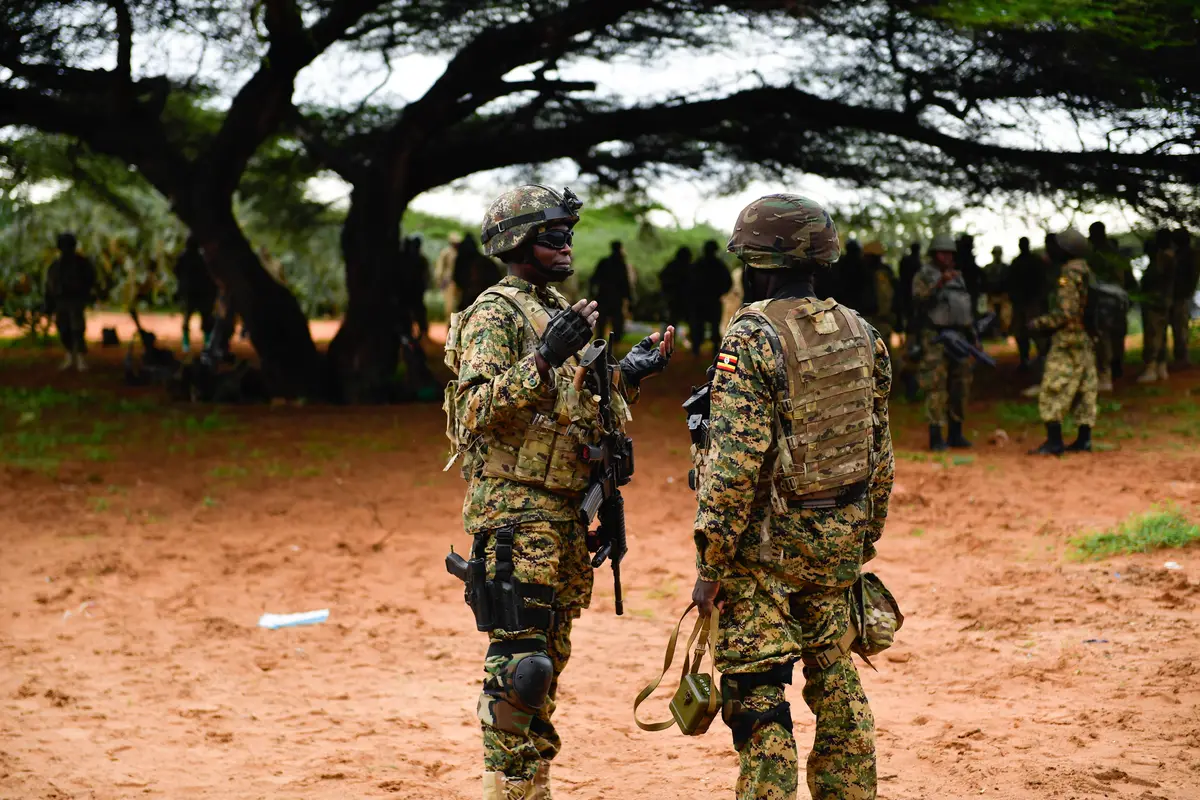
The Associated Press reported that Defense Minister Kiryowa Kiwanuka secured parliamentary approval after citing Uganda's military experience in African Union operations in Somalia. The vote was Uganda's first public commitment to the Gaza force.
Opposition lawmakers question the mission
Opposition lawmaker Hassan Kirumira said a deployment could create diplomatic concerns because Uganda belongs to the Organization of Islamic Cooperation. He asked supporters of the motion to explain which side Ugandan troops would be fighting for.
The available reports do not give the parliamentary vote tally or describe the Ugandan contingent's proposed rules of engagement. They also do not say whether Kampala's commitment is subject to further military or diplomatic agreements.
The force has a UN mandate but is not a UN operation
The UN Security Council authorized the temporary stabilization force in Resolution 2803 on November 17, 2025, by a 13-0 vote, with China and Russia abstaining. The resolution permits participating states and the Board of Peace to establish the ISF under a unified command and authorizes it to provide security, support demilitarization and help secure humanitarian aid flows.
The authorization does not make the ISF a conventional United Nations peacekeeping mission commanded by the UN. The resolution places the force within the Board of Peace framework, requires consultation with Egypt and Israel, and authorizes the board and force through December 31, 2027.
US Maj. Gen. Jasper Jeffers leads the force. At the Board of Peace's February meeting, Jeffers said plans called for 20,000 soldiers and 12,000 Palestinian police.
Uganda joins five earlier prospective contributors
Indonesia, Morocco, Kazakhstan, Kosovo and Albania announced troop pledges in February. Egypt and Jordan separately offered to train Palestinian police, but that role does not make them troop contributors to the ISF.
Those announcements did not produce a force ready to enter Gaza. AP reported in late May that none of the five countries had made a substantial deployment and that Indonesia had put its planned contribution of up to 8,000 troops on indefinite hold. Uganda's approval expands the prospective coalition, but it does not resolve the shortfall between pledges and personnel on the ground.
Deployment depends on the ceasefire's next phase
The latest US-brokered framework links the arrival of international forces to a phased Israeli withdrawal and the decommissioning of Hamas weapons. The sequence remains contested, leaving the ISF's deployment timetable uncertain.
Israel told the United States that it had serious security concerns about the proposed disarmament agreement and would not withdraw before Hamas disarmed. AP also reported that the agreement ties the storage and destruction of heavy weapons to the arrival of a Palestinian administrative committee, international forces and a phased Israeli withdrawal.
That sequencing creates the central operational problem for prospective contributors: troops may be expected to help secure a transition before the parties agree on how the transition begins. Uganda's decision authorizes participation, but the mission's size, entry date and operating conditions remain unresolved.
Sources and further reading
- Uganda approves sending troops for international force in Gaza(Associated Press)
- UN approves the Trump administration's plan for the future of Gaza(Associated Press)
- Trump gets pledges for Gaza reconstruction and troop commitments at inaugural Board of Peace talks(Associated Press)
- Plans for the Gaza International Stabilization Force are in question as troop pledges stall(Associated Press)
- Israel says it has serious concerns with Hamas disarmament deal(Associated Press)