Reform UK proposed on August 3 that British military forces intercept migrant boats in the English Channel and return their passengers to France or Belgium if the party forms a future government. The plan, called Operation Fortress, is not current British policy and has no announced agreement from either country that would receive the boats.
Reform UK's home affairs spokesperson Zia Yusuf said the party would establish a joint command involving the Royal Navy, Royal Marines, Royal Air Force and British Army. He described the proposal as the largest military operation in the Channel since World War II.
The proposal puts military forces at the border
Under the plan described by the party, military crews would approach unauthorized boats, take the people aboard and provide food, water and medical assessment. They would then seek to disembark the passengers at a French or Belgian port rather than bring them to the United Kingdom.
Yusuf argued that maritime rules would oblige France to receive people picked up near its coast. That is the party's legal position, not a settled conclusion in the material APPI News reviewed, and the proposal does not explain how asylum claims or disputes over a safe place of disembarkation would be handled.
French consent is the central gap
Yusuf said Royal Marines would take intercepted passengers onto the French beach from which they had departed if French authorities refused to accept them at a port. The cited reporting carried no French or Belgian commitment to accept those terms.
A unilateral landing would raise questions about French sovereignty, operational safety and the authority under which British personnel could act on French territory. Reform UK had not published a detailed operational document answering those questions when the proposal was announced.
Britain and France already fund a separate enforcement program
The British and French governments signed a three-year border enforcement agreement on April 23, 2026. It is separate from Operation Fortress and concentrates personnel, surveillance and infrastructure on the French side of the Channel.
The British Home Office said the agreement provides £500 million for enforcement in northern France and up to £161 million for additional measures tied to their effect on preventing crossings. The department also said the partnership would increase funded personnel from 907 in the 2023-2026 cycle to 1,392 in 2026-2029.
Those arrangements show that current cross-Channel enforcement rests on negotiated cooperation. They do not authorize Reform UK's proposed naval returns or landings by Royal Marines.
A former commander questions the ships and the mission
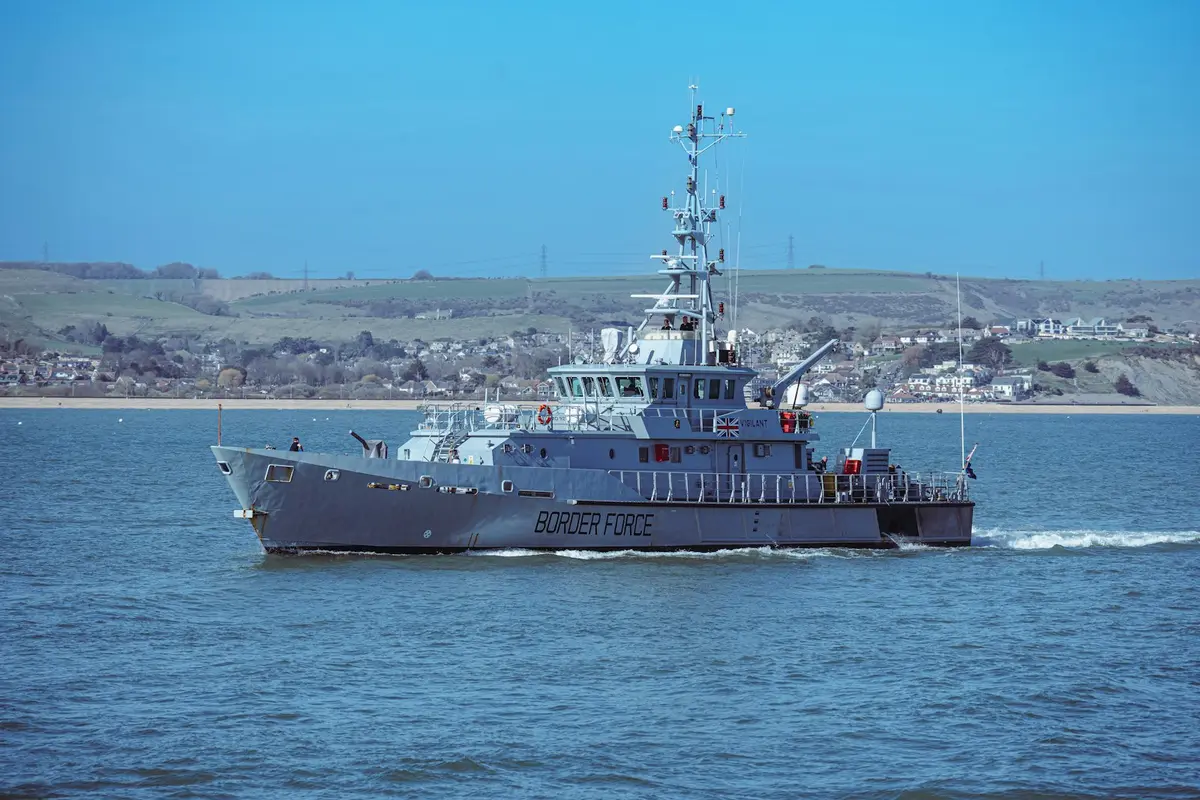
Retired Royal Navy Commander Tom Sharpe said the service had too few suitable ships and that high-cost warships designed for air defense or anti-submarine work were a poor fit for transporting people. He said the British Border Force already had vessels for the task and argued that France was unlikely to consent to the plan.
Sharpe's comments are one former officer's assessment, not a published British Ministry of Defence review. Reform UK also had not released force numbers, a cost estimate or rules governing encounters with French authorities, leaving the plan's military requirements untested.
What would have to happen next
Reform UK would first have to win a British general election and form a government. Any administration seeking to implement the plan would then need to define the legal authority, obtain military resources and address cooperation with France and Belgium.
Until those conditions are met, Operation Fortress remains a campaign proposal. The available reporting does not establish that intercepted boats could be returned without the receiving country's agreement.
Frequently asked questions
Is Operation Fortress current British policy?
No. Reform UK presented it as a policy for a government it might form after a future general election.
What forces would take part?
Reform UK said a joint command would draw on the Royal Navy, Royal Marines, Royal Air Force and British Army.
What would happen if France refused a port return?
Yusuf said Royal Marines would disembark people on a French beach. The proposal did not show that France had agreed or explain the authority for such an operation.
Does the existing British-French agreement cover the proposal?
No. The April 2026 agreement funds personnel, surveillance and other enforcement work in northern France; it does not authorize Operation Fortress.
Sources and further reading
- France will have to take migrants if they are picked up by Navy, says Zia Yusuf(Bracknell News (Newsquest))
- Hard-right Reform UK vows to use navy to stop small migrant boats crossing Channel(Euronews)
- Former Navy Commander Monsters Reform's Plan To Send Small Boat Migrants Back To France(HuffPost UK)
- New UK-France agreement to reduce illegal crossings(UK Home Office)