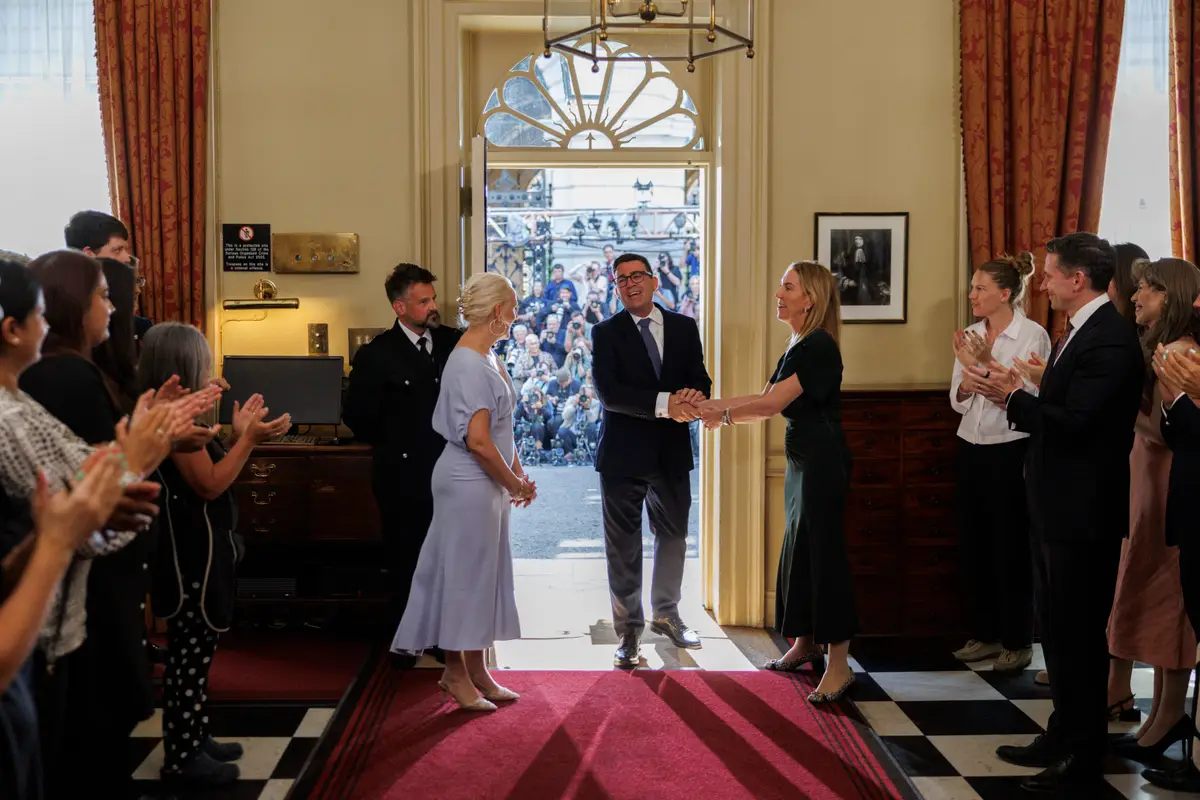
Reports published August 17, 2026, said British Prime Minister Andy Burnham exchanged messages with an impostor posing as Susie Wiles, chief of staff to US President Donald Trump, before becoming suspicious and ending the exchange. The exact timing and full content have not been made public.
AP said Politico's initial report cited four unnamed officials, while a Downing Street spokesperson declined to discuss what it called a national security matter. Burnham later told reporters that the exchange was minimal and not consequential and that he reported it quickly after recognizing the problem. The British Embassy in Washington also raised the incident with the White House.
The White House denied a new hack of Wiles's devices
The White House said Burnham's exchange had nothing to do with Wiles's devices being hacked. Public reporting does not explain how the impersonator selected Burnham, obtained a way to reach him or presented the contact as authentic.
In a separate May 2025 episode, the US government investigated calls and messages sent to elected officials, business executives and other prominent people by someone posing as Wiles. The contacts came from numbers other than Wiles's, and some recipients heard a voice that sounded like hers; AP reported that the voice may have been generated with artificial intelligence.
The chief of staff oversees the US president's closest advisers
The White House describes the chief of staff as overseeing the Executive Office of the President, which has traditionally housed many of the US president's closest advisers. The title carries institutional authority, but no published account establishes why the person who contacted Burnham chose Wiles's identity.
The FBI has documented a broader impersonation campaign
The FBI said in a December 19, 2025, advisory that actors had impersonated senior officials in US state governments, the White House and the Cabinet, along with members of Congress, since at least 2023, using text and AI-generated voice messages. The bureau said some approaches shifted quickly to encrypted messaging apps before seeking authentication codes, personal documents, overseas wire transfers or introductions to other contacts.
The FBI recommends checking a purported sender through a separately sourced phone number or a previously confirmed communication channel. Because the advisory predates the Burnham exchange, it cannot establish that the same actor or method was involved.
British officials have faced earlier political hoaxes
In June 2024, the UK Foreign Office said then-Foreign Secretary David Cameron exchanged text messages and held a brief video call with someone posing as former Ukrainian President Petro Poroshenko. The department said Cameron stopped responding after the caller requested other people's contact details and later confirmed that the exchange was a hoax.
A 2025 UK government guide records that hoax callers posing as Ukraine's prime minister reached British ministers in March 2022 and that Downing Street publicly attributed the calls to the Russian state. The guide says the resulting videos were treated as part of an influence operation intended to embarrass the UK government and weaken its support for Ukraine.
The sender and method remain unverified
APPI News could not find a public statement identifying the impersonator or explaining how Burnham was contacted as of August 20, 2026. No published evidence reviewed for this report connects the exchange to the actor behind the 2025 Wiles impersonation effort, the FBI's broader campaign or the earlier UK hoaxes.
Sources and further reading
- British leader reportedly exchanged messages with impostor of top White House official(Associated Press)
- British PM Andy Burnham exchanged messages with someone impersonating Trump's chief of staff(CNN via KEYT)
- US government is investigating messages impersonating Trump's chief of staff, Susie Wiles(Associated Press)
- The Executive Branch(The White House)
- Senior U.S. Officials Continue To Be Impersonated in Malicious Messaging Campaign(Federal Bureau of Investigation)
- David Cameron falls victim to hoax call from former Ukraine president(The Guardian)
- Guide to the UK National Security Community 2025(UK Government)