The US-based American College of Sports Medicine (ACSM) announced an updated resistance-training position stand on March 18, 2026, drawing on evidence from more than 30,000 participants. The statement found that progressive resistance training improves muscle function and size in healthy adults.
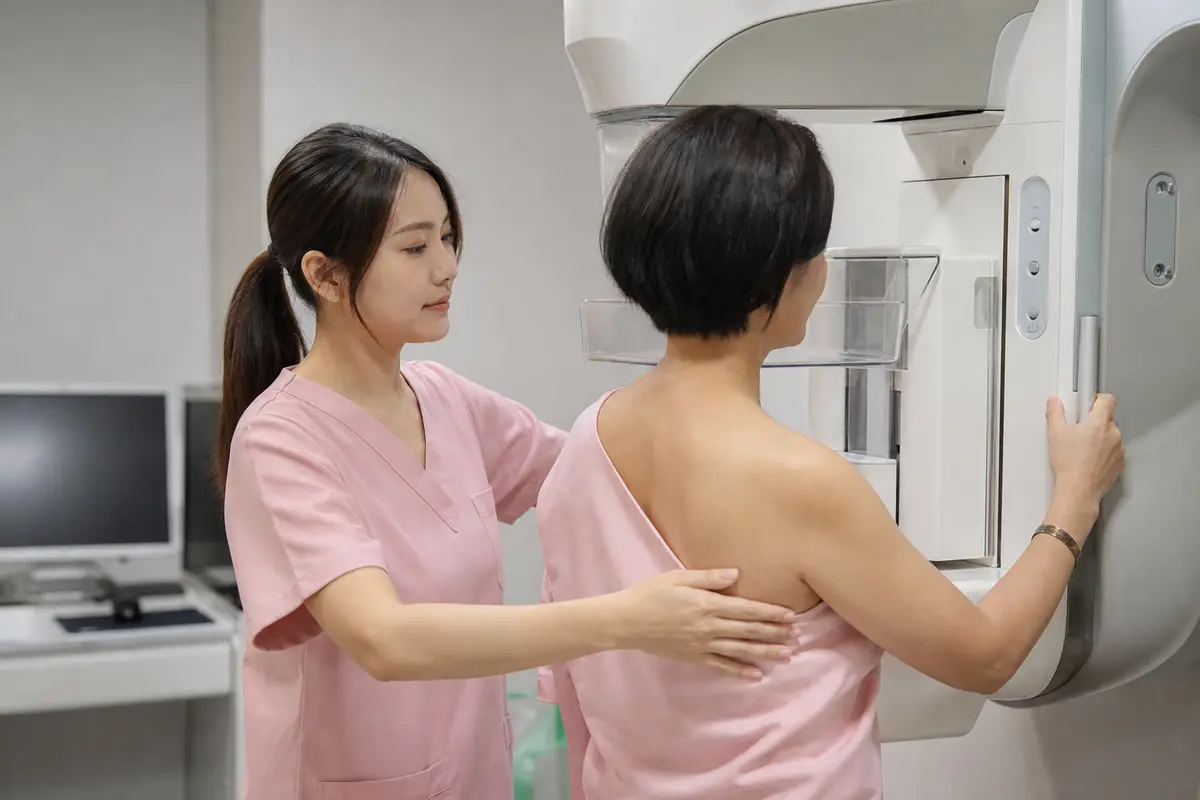
A US National Cancer Institute anatomy module says the breast contains fat, lobes, lobules and ducts, has no muscle tissue of its own, and rests on the pectoralis major muscle. Presses and push-ups can load that underlying skeletal muscle, but they do not directly add fat or glandular tissue to the breast.

Chest pain and dark urine need urgent assessment
England's National Health Service says sudden chest pain that does not go away, or chest pain accompanied by sweating, nausea, light-headedness or shortness of breath, requires immediate medical help. Contact the local emergency medical service rather than assuming the pain comes from a worked chest muscle.
The US Centers for Disease Control and Prevention lists unexpectedly severe muscle pain, tea- or cola-colored urine and unusual weakness or tiredness as warning signs that need immediate medical assessment. These symptoms may appear hours or days after muscle injury, and symptoms alone cannot diagnose rhabdomyolysis.
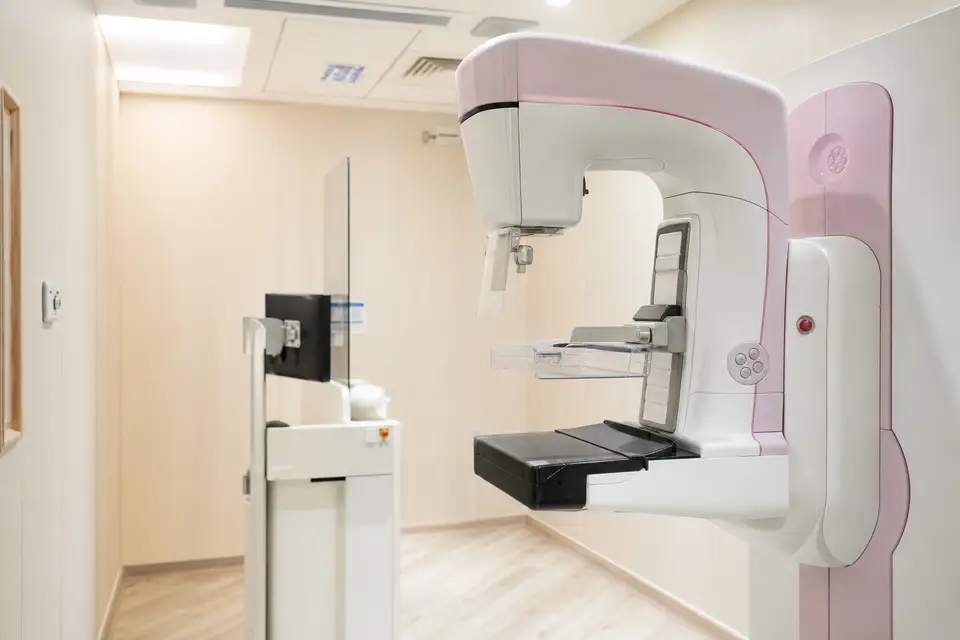
The US National Cancer Institute advises clinical follow-up for a new breast lump or firm area, a change in breast size or shape, nipple discharge, or persistent skin changes such as dimpling or puckering. An exercise program cannot determine the cause of a new breast change.
Breast tissue and pectoral muscle are separate layers
Fat contributes to breast size and shape, while lobules and ducts form part of the glandular system. The pectoralis major sits behind the breast against the chest wall. Resistance exercise acts on skeletal muscle, so breast fat and glandular tissue do not turn into muscle during training.
A thicker pectoral muscle may alter the contour of the chest wall beneath the breast. The visible result will vary with anatomy, body composition and the amount of muscle gained, and no anatomical formula converts that change into a bra cup size. A change in the underlying muscle is not the same outcome as an increase in breast-tissue volume.
Evidence in women measures muscle, not cup size
A 2020 systematic review and meta-analysis included 24 resistance-training studies in healthy adult women, with programs lasting from four weeks to 12 months. Fifteen studies assessed upper-body strength and 15 assessed muscular hypertrophy. The pooled results found gains in upper- and lower-body strength and a moderate effect on skeletal-muscle hypertrophy.
The reviewers rated the included studies' methodological quality as moderate and adjusted the strength estimates after detecting publication bias. The review did not isolate the pectoralis major as an outcome and did not measure breast volume, breast shape or bra cup size. It supports the conclusion that women can gain skeletal muscle, but it cannot quantify a breast-appearance change.
ACSM's 2026 position stand synthesized 137 systematic reviews involving more than 30,000 participants and found that resistance training improved strength, muscle size, power, endurance and several measures of physical function compared with no exercise. Its eligible reviews covered healthy adults aged 18 or older who trained for at least six weeks, so the findings are not a chest-specific trial or evidence of breast enlargement.
How this plays out outside Taiwan
The practical question for an English-language reader is not which country has a special chest exercise. It is where the local public-health guidance places resistance training, and where a reader should check if a new symptom needs assessment. The same anatomical limit applies across markets: a push-up or press loads the pectoralis major, while changes in breast tissue need to be assessed through the health system in the country where the reader lives.
In the United States, the Office of Disease Prevention and Health Promotion's Physical Activity Guidelines describe lifting weights and push-ups as muscle-strengthening activity and recommend that adults work all major muscle groups on at least two days each week. That is a public-health recommendation, not a rule requiring a gym membership, a trainer or a particular machine. The US guidance also separates the general adult recommendation from advice for pregnancy, the postpartum period, chronic conditions and disabilities. A reader comparing a chest routine with the US guideline should therefore check the population section that matches them instead of treating the healthy-adult wording as a personalized prescription. The US National Cancer Institute's breast-change material is the relevant place to review a new lump, discharge or persistent skin change; it is not a reason to assume that exercise caused or corrected the change.
In the United Kingdom, the Chief Medical Officers' physical-activity guidance likewise includes activities that develop or maintain strength in the major muscle groups on at least two days a week. The UK page is useful because it distinguishes a national recommendation from a particular commercial program: it gives examples such as resistance exercise, carrying heavy shopping and other activities that challenge muscle, but it does not set a universal gym routine or promise a change in breast size. For urgent chest symptoms, readers in England can use the National Health Service chest-pain page, which directs people to call 999 when immediate help is needed. Readers in Scotland, Wales and Northern Ireland should use their local emergency arrangements and health service information. The point is operational: a new or severe symptom should not be classified as ordinary post-training soreness solely because the person had trained their chest.
Singapore's Health Promotion Board publishes a national physical-activity guide through HealthHub. For healthy adults, it describes 150 to 300 minutes of moderate-intensity aerobic activity across the week and muscle-strengthening activity for the major muscle groups at least twice a week. Its examples include bodyweight movements, resistance bands and weight training, so the availability question is broader than access to a full gym. A reader in Singapore can use the HealthHub guide to compare the type and frequency of activity being considered, then use Singapore's public healthcare or private clinical services for a symptom that falls outside ordinary training discomfort. The guide does not convert the two-day recommendation into a promise about cup size, breast contour or the speed of muscle growth.
Australia's Department of Health, Disability and Ageing uses 24-hour movement guidelines. For adults aged 18 to 64, the current page lists moderate- to vigorous-intensity activity on most days, muscle-strengthening activity on two or more days each week, and functional activities for mobility, balance and coordination on three or more days. It also has separate pages for pregnancy and older adults. This matters for readers who are tempted to copy the healthy-adult volume discussed earlier: Australia's official guidance treats age, pregnancy and functional needs as separate contexts. For breast changes, the Australian Government-backed healthdirect service tells people to arrange medical review for new or unusual changes, including a lump, nipple discharge or dimpling. That pathway is about finding the cause of a change; it does not imply that a chest workout enlarges or reshapes breast tissue.
Across these four markets, the comparable public guidance is the frequency of muscle-strengthening activity, not a shared rule about exercise selection, gym prices or breast appearance. Membership fees, personal-training costs, equipment access and referral procedures vary by city and provider, so this article does not assign a price or claim that one service is available everywhere. Readers can check the official national guidance first, then ask a local clinician or qualified exercise professional about a program when pregnancy, recent surgery, a chronic condition, disability or medication may affect exercise tolerance. That check is also the appropriate route when pain, unusual weakness, dark urine or a new breast change does not fit ordinary training soreness.
Training guidance applies to the muscle outcome
ACSM's 2026 summary recommends training all major muscle groups at least two days a week and building the workload gradually. For muscle growth, it identifies about 10 sets per muscle group each week as a higher-volume target rather than a guaranteed threshold.
The same guidance says bodyweight movements, elastic bands and home-based training can improve strength and function. It also found no consistent advantage from machine rather than free-weight exercise, or from taking every set to momentary muscle failure, for the average healthy adult. A wall, incline or floor push-up and a machine or free-weight press are therefore equipment choices, not different routes to growing breast tissue.
A starting variation should allow controlled movement, and resistance can increase as technique and recovery permit. The chest is only one major muscle group, so a balanced program also trains the back, legs, shoulders, arms and trunk. More chest work does not override the anatomical limit on breast-tissue growth.
Some groups need a different starting point
The World Health Organization publishes separate physical-activity recommendations for children and adolescents, pregnant and postpartum women, older adults, and people living with chronic conditions or disability. The healthy-adult ACSM volume guidance should not be copied across those groups without considering the relevant recommendation and individual limitations.
People recovering from breast, chest or shoulder surgery need a plan matched to the procedure and stage of rehabilitation. Pregnant or postpartum people, children, people with chronic illness or disability, and anyone taking medicines that may change exercise tolerance should ask a clinician whether the movement, load or progression needs adjustment. Access to rehabilitation and qualified exercise professionals varies by country.
APPI News could not find a modern systematic review that measured breast volume or bra cup size after chest-focused resistance training at the time of writing. The available higher-level evidence addresses skeletal-muscle strength and hypertrophy, leaving no verified basis for promising a particular cup-size or shape change.
Frequently asked questions
Can chest exercises increase bra cup size?
No reliable cup-size increase can be predicted from chest training. Presses and push-ups train the pectoralis major beneath the breast rather than directly increasing its fatty or glandular tissue.
Can women build pectoral muscle?
Women can gain strength and skeletal-muscle size through resistance training, according to the 2020 meta-analysis. That review did not measure breast size, so its muscle results should not be recast as evidence of breast enlargement.
Which chest exercise is required?
No single movement is required for the average healthy adult. Push-up variations and machine or free-weight presses offer different ways to apply resistance, while gradual progression and a balanced whole-body program matter more than the equipment choice.
Sources and further reading
- Science Spotlight: ACSM releases new position stand on resistance training(American College of Sports Medicine)
- Anatomy of the female breast(US National Cancer Institute, Surveillance, Epidemiology, and End Results Program)
- The effect of resistance training in women on dynamic strength and muscular hypertrophy(Sports Medicine via PubMed)
- Resistance training prescription for muscle function, hypertrophy, and physical performance in healthy adults(Medicine & Science in Sports & Exercise via PubMed)
- 5 things to know about creating an effective resistance training plan(American College of Sports Medicine)
- Chest pain(National Health Service in England)
- Signs and symptoms of rhabdomyolysis(US Centers for Disease Control and Prevention)
- Understanding breast changes and conditions(US National Cancer Institute)
- WHO guidelines on physical activity and sedentary behaviour(World Health Organization)
- Top 10 Things to Know About the Second Edition of the Physical Activity Guidelines for Americans(US Office of Disease Prevention and Health Promotion)
- Physical activity guidelines: UK Chief Medical Officers' report(UK Department of Health and Social Care)
- How Much Exercise Is Enough for a Healthier You(Singapore Health Promotion Board)
- Recommendations for adults (18 to 64 years)(Australian Government Department of Health, Disability and Ageing)
- Breast checks to detect breast cancer(healthdirect Australia)